
Meta faces potential $1.4 trillion fine over addictive youth products
Mark Zuckerberg's company prepares for a pivotal trial in August, accused by several states of violating consumer protection and child privacy laws.


The potential $1.4 trillion penalty, a figure close to Meta's roughly $1.5 trillion market value, places the company at the center of an unprecedented legal battle. According to calculations from several states' attorneys general, the tech giant is gearing up for a pivotal trial set to begin in August in Oakland, California.
California, Colorado, Kentucky, and New Jersey allege that Meta violated state consumer protection laws by creating addictive products specifically designed for children and teens. The company, for its part, vehemently denies these allegations.
"A sanction of that size has no analog in the history of consumer protection enforcement," the company stated in its court filing.
Meta has labeled the proposed penalty as "unsupported by the evidence." Earlier hearings in June revealed that the states calculated potential penalties by multiplying the number of alleged violations by the fines allowed under state law. These alleged violations are based on the estimated number of children and teenagers affected by its platforms.
Furthermore, the August trial before U.S. District Judge Yvonne Gonzalez Rogers will also consider claims brought by 29 additional states. These states accuse Meta of violating the federal Children's Online Privacy Protection Act (COPPA) by collecting children's data without proper parental consent.
Meta's defense argues that "social media addiction" is not an established psychiatric diagnosis. Therefore, it contends that its statements denying its platforms are addictive could not have been false. This point is a central contention in the legal dispute, challenging the plaintiffs' narrative.
Last month, Judge Rogers rejected Meta's request to delay the August proceedings. Her ruling indicated that unresolved factual disputes exist over whether its platforms are addictive, whether the company falsely denied designing them that way, and whether Meta intentionally targeted children. California Attorney General Rob Bonta accused Meta of prioritizing profits over children's safety and pledged to hold the company "fully accountable" for its alleged role in the youth mental health crisis.
This case is not an isolated incident; Meta is one of several social media companies facing mounting legal pressure. Companies like Snap, Alphabet-owned YouTube, and ByteDance-owned TikTok are also battling thousands of lawsuits. These allege they intentionally designed their platforms to keep children and teenagers hooked, contributing to widespread mental health problems.
A significant precedent was set in March when New Mexico became the first state to take such claims to trial. A jury awarded a $375 million verdict after finding that the company had misled consumers. Currently, a judge is considering whether to award additional damages and order changes to Instagram, Facebook, and WhatsApp, key Meta products.
Beyond the August trial, Meta faces additional legal battles. Fourteen more states are pursuing similar claims under their own laws, with a separate trial scheduled for February. The resolution of these cases could radically redefine how social media platforms operate and design their products aimed at young users.
Keep reading online — scan the code
https://go.tricuatro.com/meta-fac
© tricuatro.com
Article topics
Related articles

Amazon Leo Reaches 396 Satellites, Satellite Internet Service Launching This Year
Amazon Leo, the company's low-orbit satellite network, now has enough units to offer continuous service in initial latitudes, preparing for its launch this year and competing with Starlink.

X Launches Creator Studio for Live Streams with Monetization Features
X is introducing "Creator Studio," a new hub for managing live broadcasts, offering moderation tools and monetization options for content creators.
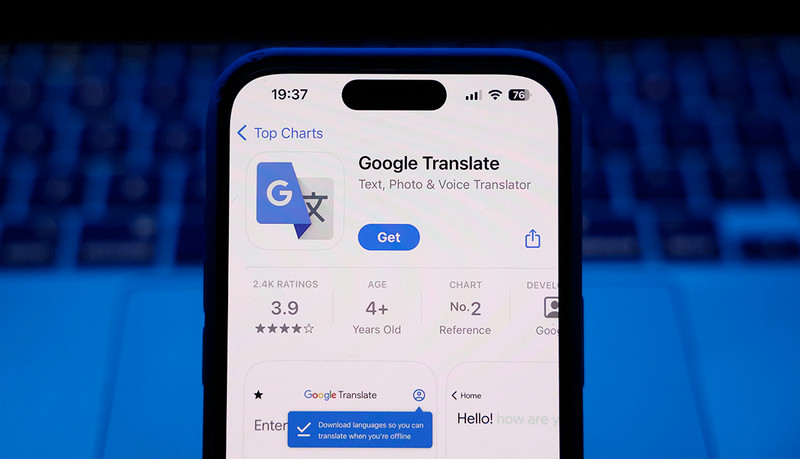
Google Translate Adds Duolingo-Style Widget to Boost Language Learning
Google's translation app aims to transform into a daily learning platform, integrating a streak system and AI conversations on Android.
Latest news
View all
China's Great Green Wall: Artificial Forests Outpace Natural Growth
China planted 66 billion trees over nearly half a century to combat desertification, and a new study shows they grow faster than natural forests, albeit with important nuances.

Mercado Libre Launches CLIC, a Free AI-Powered Platform for SMEs
Mercado Libre's CLIC initiative aims to democratize e-commerce in Latin America, offering training and AI-driven tools for entrepreneurs.

Samsung's RAM Crisis Profits Outpace Last 40 Years, Driven by AI
Samsung's semiconductor division earned more in one year from the RAM crisis than in the past four decades combined, driven by scarcity and AI chip demand.
Comments (0)
No comments yet. Be the first!
Only registered readers can comment.