
Mark Zuckerberg: AI Should Empower, Not Fully Automate Work
Meta's CEO warns against the risks of fully automating knowledge work with artificial intelligence, advocating for an approach that empowers employees and creates more jobs. His vision contrasts with other industry leaders amidst widespread AI-driven layoffs.
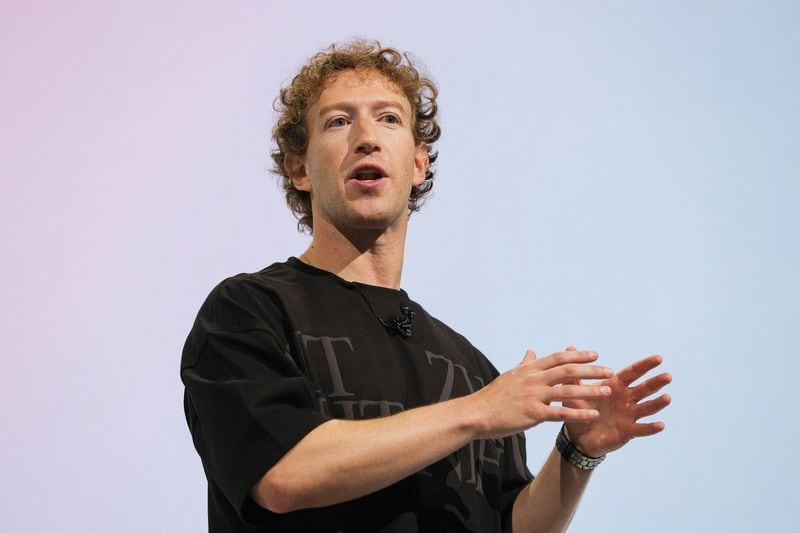
While some artificial intelligence leaders project a wave of massive job losses, Mark Zuckerberg, CEO of Meta, offers a different vision for the future of work. The entrepreneur warned that automating all knowledge work with AI would be "not very good," instead advocating for a model focused on "personal superintelligence" to empower workers rather than replace them.
Zuckerberg's perspective, shared in an interview for Complex's Idea Generation, challenges the notion that widespread job displacement due to artificial intelligence is an inevitable outcome. "I think people assume that that's inevitable. I actually don't think that," he stated, drawing a clear distinction from other industry heavyweights.
His stance notably contrasts with that of Dario Amodei, CEO of Anthropic. Amodei suggested that up to half of entry-level office jobs could disappear within the next one to five years, a prediction that underscores widespread concern about AI's labor impact.
For Zuckerberg, the true balance lies in companies prioritizing making people more productive, rather than solely focusing on automating their functions. This approach seeks a symbiosis between technology and human talent, where AI serves as an amplification tool.
"If you focus on empowering people and making them more productive and that happens at a faster rate than companies get better at automating things, then in theory there should be more jobs in the future, not fewer," Mark Zuckerberg stated.
Despite this optimistic outlook, Meta itself has not been immune to workforce adjustments. In May 2026, the company eliminated approximately 8,000 jobs, equivalent to 10% of its workforce, in key areas such as Integrity, cybersecurity, and content design, as reported by Business Insider. These cuts reflect the complex reality of transitioning to a more AI-driven economy.
Layoffs in the tech sector due to artificial intelligence have become a significant trend over the past year. Major corporations have restructured their workforces, citing efficiency and the need to invest in new AI capabilities as primary motivations.
A clear example is Amazon, which in January 2026 confirmed a round of layoffs affecting some 16,000 corporate employees worldwide. This measure, part of an internal reorganization process initiated in October 2025, aimed to simplify the company's structure, reduce bureaucracy, and accelerate the adoption of artificial intelligence in its operations. This adjustment followed a previous wave of cuts that had impacted approximately 14,000 administrative and management positions, totaling about 30,000 corporate jobs eliminated, representing around 10% of the company's global workforce.
Oracle, the technology company founded by Larry Ellison, also made a significant adjustment, laying off 30,000 employees in March 2026. Workers received notification via email announcing "a broader organizational restructuring." The goal of this measure is to free up to USD 10 billion for investment in artificial intelligence infrastructure, according to ABC7. This adjustment affected approximately 18% of the 162,000 employees in the global workforce and aims to strengthen the company's strategy in the face of technological change.
In April, Snap, the company behind Snapchat, laid off 1,000 full-time employees, 16% of its workforce. The company also eliminated over 300 vacant positions. As of December 2025, it had approximately 5,261 full-time employees, according to the Stock Analysis platform. According to CEO Evan Spiegel, the decision is directly linked to advancements in artificial intelligence, which allow for process optimization and the reduction of repetitive tasks.
In a statement, Spiegel asserted that the changes "are necessary to leverage Snap's long-term potential" and that "rapid advancements in artificial intelligence enable our teams to reduce repetitive work, increase speed, and provide better support for our community, partners, and advertisers." The executive added that leaner teams are already utilizing AI tools to achieve breakthroughs in initiatives such as Snapchat+, advertising platform performance, and Snap Lite infrastructure efficiency. The company projects that these cuts will allow it to reduce its annual costs by more than USD 500 million by the second half of 2026, facilitating "a more defined path to net profitability."
Article topics
Related articles

Anthropic restores global access to Claude Fable 5 after export controls lifted
The US government lifted export restrictions on Anthropic's Claude Fable 5 and Mythos 5 models, making Fable 5 globally available starting July 1, 2026.
Schneider Electric acquires Cognite for $3.1 billion to boost industrial AI
French industrial giant Schneider Electric SE has agreed to buy Cognite, an industrial data and AI software firm, in a $3.1 billion transaction.

OpenAI Launches GPT-5.6 Series: Sol, Terra, and Luna with Enhanced Safety
OpenAI introduces a limited preview of its new GPT-5.6 models, showcasing significant advancements in coding, biology, and cybersecurity, alongside a reinforced safety framework and more accessible pricing for certain models.
Latest news
View all
Godox C100 Redefines Compact Photography with its Innovative Transparent Display
Godox launches the C100, an ultra-light 65-gram camera with an "avant-garde" design and an active transparent screen that prioritizes immersion in the moment.

Supergirl Faces Million-Dollar Losses After Challenging Box Office Debut
The DC film, starring Milly Alcock, grossed only $68 million on its opening weekend, with Warner Bros. projected to lose up to $120 million, according to reports.

AMD Zen 6 to Feature Low-Power Cores for Enhanced Efficiency
A discovery in the Linux kernel and an AMD engineer's confirmation reveal that upcoming Zen 6 processors will adopt a hybrid core strategy to optimize power consumption.
Comments (0)
No comments yet. Be the first!
Only registered readers can comment.