
OpenAI Launches GPT-5.6 Series: Sol, Terra, and Luna with Enhanced Safety
OpenAI introduces a limited preview of its new GPT-5.6 models, showcasing significant advancements in coding, biology, and cybersecurity, alongside a reinforced safety framework and more accessible pricing for certain models.
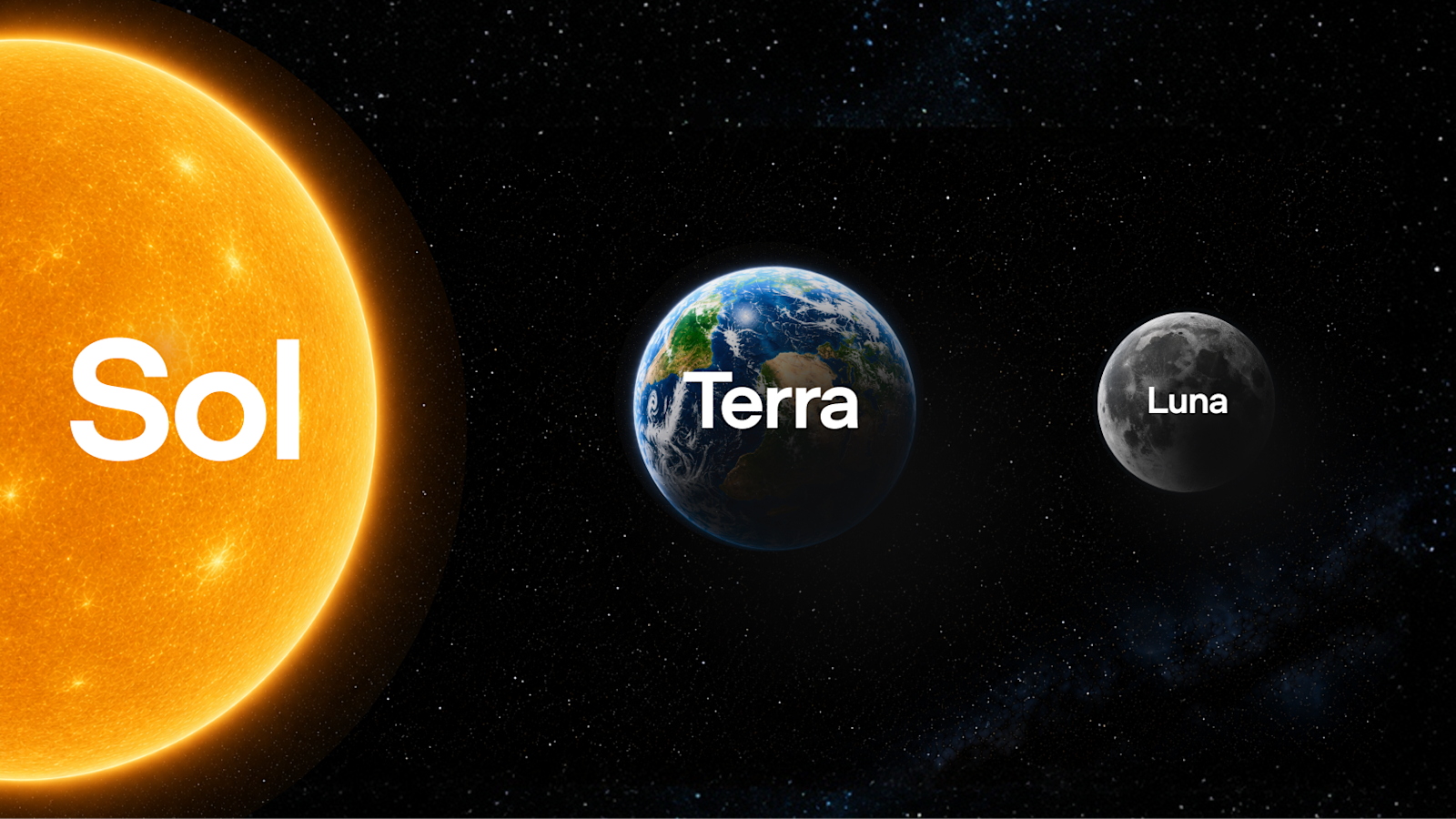
OpenAI has just launched a limited preview of its GPT-5.6 series, which includes the Sol, Terra, and Luna models, promising significant advancements in coding, biology, and cybersecurity capabilities, along with a robust safety system and more accessible pricing for some models.
This new generation of models arrives with the most robust safety stack to date, designed to protect against higher-risk activity and repeated misuse. OpenAI spent multiple weeks finding weaknesses, pressure-testing their system, and hardening it against real-world attacks, as reported by the company.
The GPT-5.6 series comprises three distinct models: Sol, the flagship and most powerful model; Terra, a balanced model optimized for everyday work that is 2x cheaper than GPT-5.5; and Luna, a fast and affordable option bringing strong capability at the lowest cost. These models are planned to be generally available in the coming weeks.
The company emphasized that its goal is to make prohibited offensive activity more difficult, uncertain, and detectable, without unnecessarily limiting beneficial defensive uses.
As part of its ongoing engagement with the U.S. government, OpenAI previewed its plans and the models’ capabilities ahead of today’s launch. While the company does not believe this kind of government access process should become the long-term default, it considers it a necessary short-term step to ensure broader availability, as they work with the Administration to develop the cyber Executive Order framework.
GPT-5.6 Sol is positioned as OpenAI's strongest model yet. For developers, this translates into improved agentic capabilities in key areas. The company introduced a new "max" reasoning effort for Sol to reason deeply, and an "ultra" mode that goes beyond a single agent, leveraging subagents to accelerate complex work.
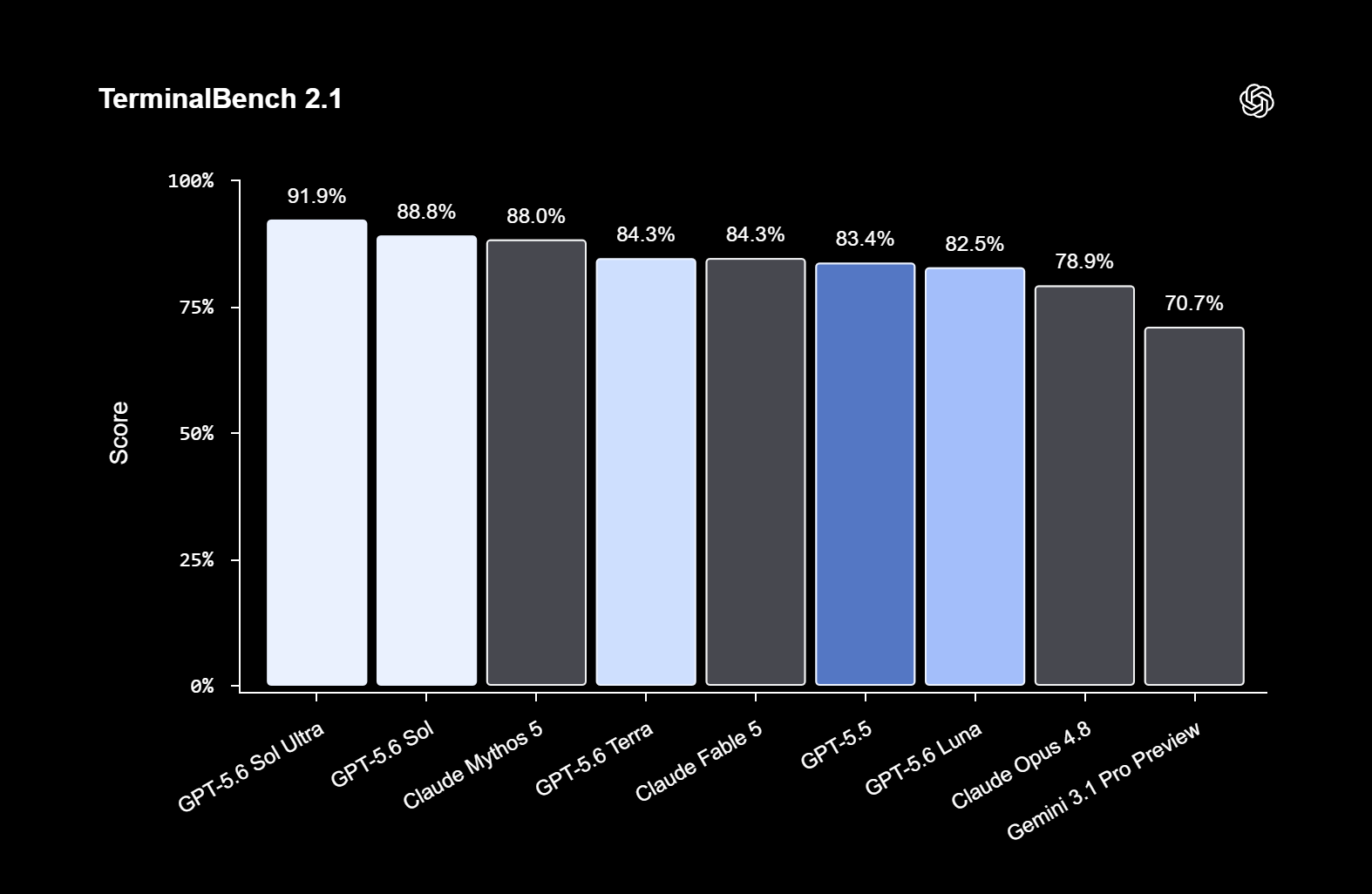
In the coding domain, GPT-5.6 Sol sets a new state of the art on Terminal-Bench 2.1, an evaluation testing command-line workflows requiring planning, iteration, and tool coordination. For biology, the model shows broad improvements on GeneBench v1, achieving stronger results than GPT-5.5 with fewer tokens in long-horizon genomics and quantitative-biology analyses.
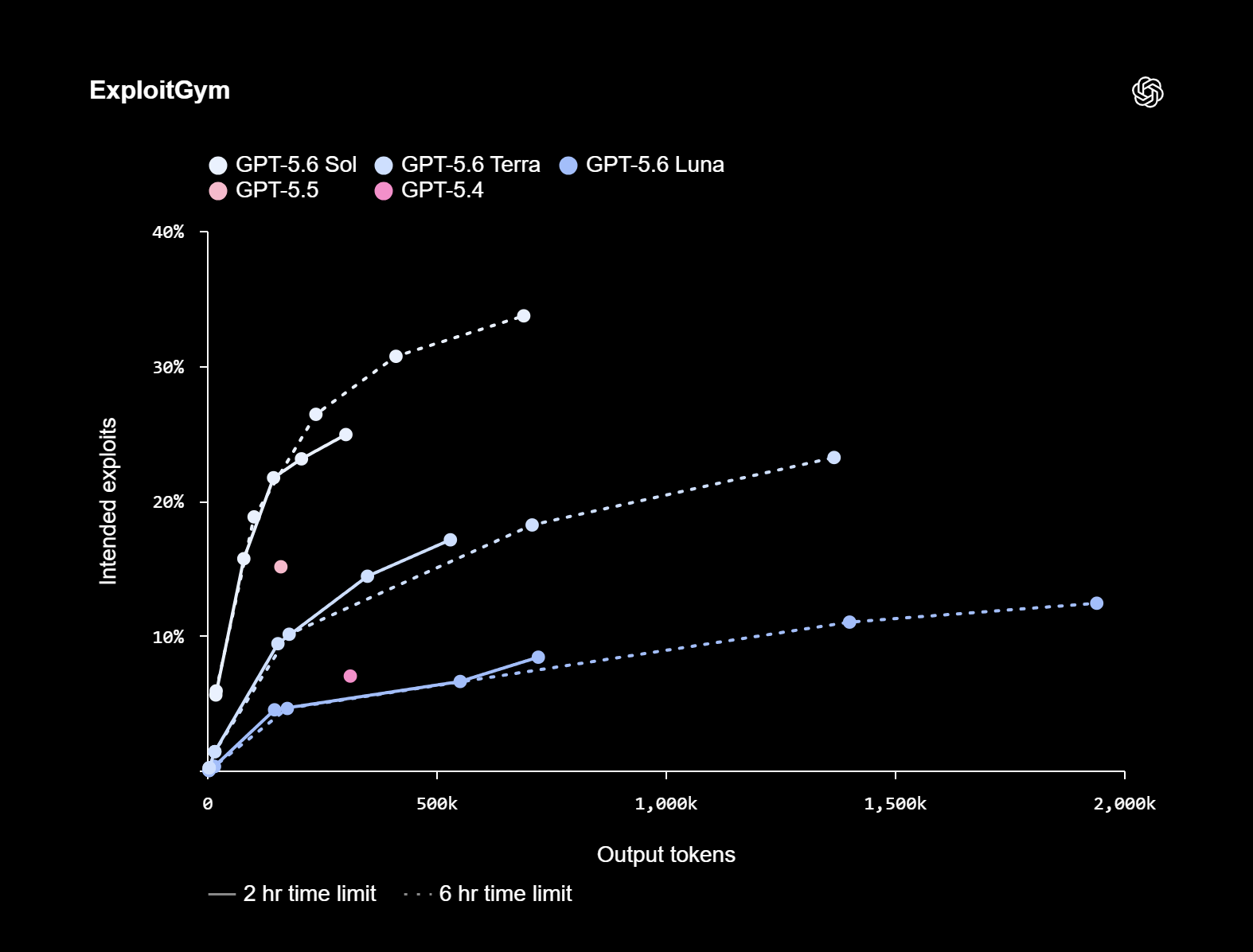
Cybersecurity is another area where GPT-5.6 Sol shines, being OpenAI's most capable model yet for this discipline. It shifts the performance-efficiency frontier for long-horizon security tasks, including vulnerability research and exploitation. On ExploitBench, GPT-5.6 Sol is competitive with Mythos Preview using only about one-third of the output tokens, while on ExploitGym, a benchmark created by UC Berkeley researchers in collaboration with OpenAI, all GPT-5.6 models demonstrate strong improvements.
OpenAI implemented a layered safeguard stack for GPT-5.6. This includes protections trained into the model to refuse prohibited cyber assistance, even when users attempt to disguise their intent or jailbreak the model. Real-time cyber and biology misuse classifiers are also used, which can pause generation and review the conversation context if a potential violation is detected, withholding the output before it reaches the user.
Furthermore, flagged activity can trigger account-level review, helping to distinguish persistent malicious behavior from legitimate dual-use security work. These combined layers make the overall approach more robust than any single safeguard, preserving important defensive work without making the most sensitive capabilities broadly available by default.
The company also dedicated over 700,000 A100-equivalent GPU hours to automated red teaming, aimed at finding universal jailbreaks that can work across many prompts or contexts. This approach allows for exploring far more attack patterns than human testing alone could cover, identifying failure patterns earlier, and shortening the path from finding a weakness to addressing it.
Regarding availability and pricing, the GPT-5.6 models are launched with a new naming system: the number identifies the model’s generation, while Sol, Terra, and Luna identify durable capability tiers. Pricing per 1 million tokens is: Sol at $5 input and $30 output; Terra at $2.50 input and $15 output; and Luna at $1 input and $6 output. Additionally, OpenAI plans to launch GPT-5.6 Sol on Cerebras in July, offering up to 750 tokens per second for select customers, representing an impressive leap in frontier AI processing speed.
Related articles
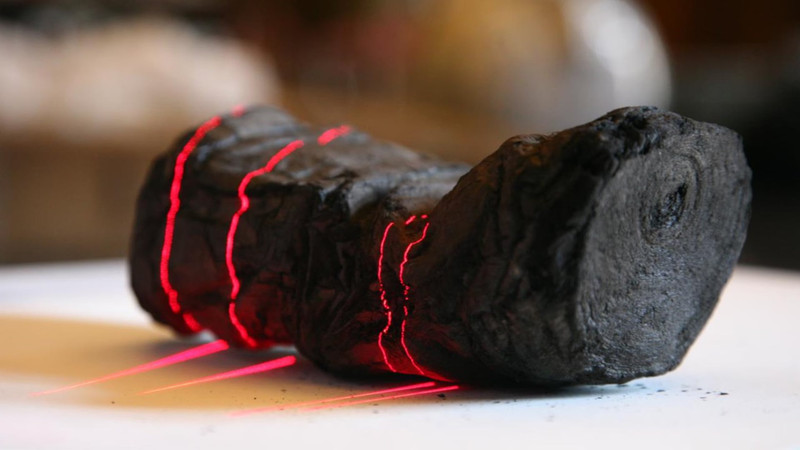
AI Deciphers Vesuvius Papyrus, Reveals New Philodemus Book
Researchers successfully read "Philodemus, On the Gods, Book 8" from a charred scroll, a Vesuvius Challenge milestone expanding knowledge of the Greek philosopher.

SAP Predicts the End of the Keyboard: AI and Voice to Dominate Interaction in Two Years
SAP CEO Christian Klein anticipates a revolution in business data input, marking the decline of the traditional keyboard in favor of artificial intelligence and voice recognition.

Humanoid Robots Deployed in US Schools as Teacher Assistants
A pilot program in the Salamanca City Central school district will integrate Realbotix's M-Series robots and Optio AI assistant to enhance student engagement.
Latest news
View all
WhatsApp Introduces Usernames to Keep Phone Numbers Private
The popular messaging platform is rolling out a new feature allowing users to start chats and join groups without sharing their phone numbers, prioritizing personal data protection.

Silo Season 3 Hailed as the Best Season Yet by Critics
The acclaimed dystopian sci-fi series "Silo" returns to Apple TV this Friday, July 3, with its third season, already praised by critics as the series' most outstanding installment.
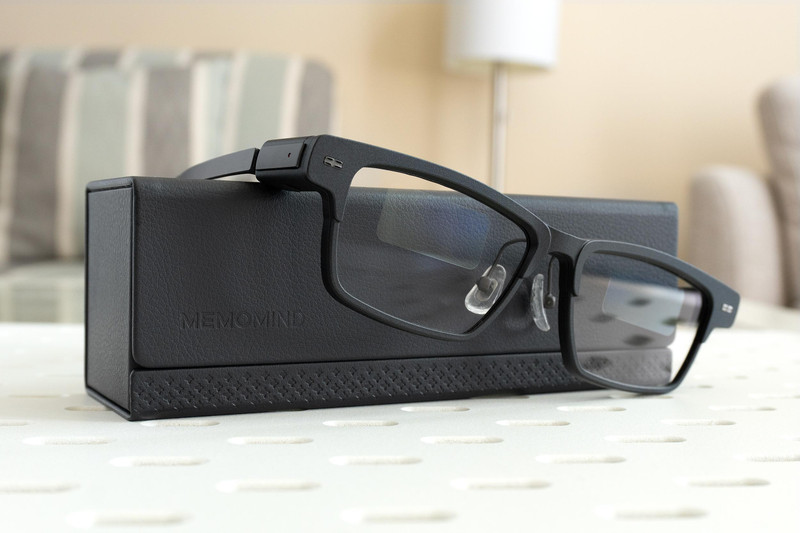
Xgimi MemoMind One: Camera-Free Smart Glasses with AI on Kickstarter
Xgimi's new smart glasses, launched on Kickstarter, aim to deliver private information directly to your vision, though current functionality has limitations.
Comments (0)
No comments yet. Be the first!
Only registered readers can comment.