
Google Gemini Levels Up: Interactive 3D Models and Simulations Now Available
Google has updated its AI assistant, Gemini, to generate interactive 3D models and functional simulations, transforming user interaction with artificial intelligence.

Google has made a significant leap in artificial intelligence evolution. Its AI assistant, Gemini, can now generate interactive 3D models and functional simulations. This update completely transforms the user experience with AI. Users no longer just receive textual explanations; they can also experience and manipulate real-time visualizations. This opens new doors for learning and prototyping.
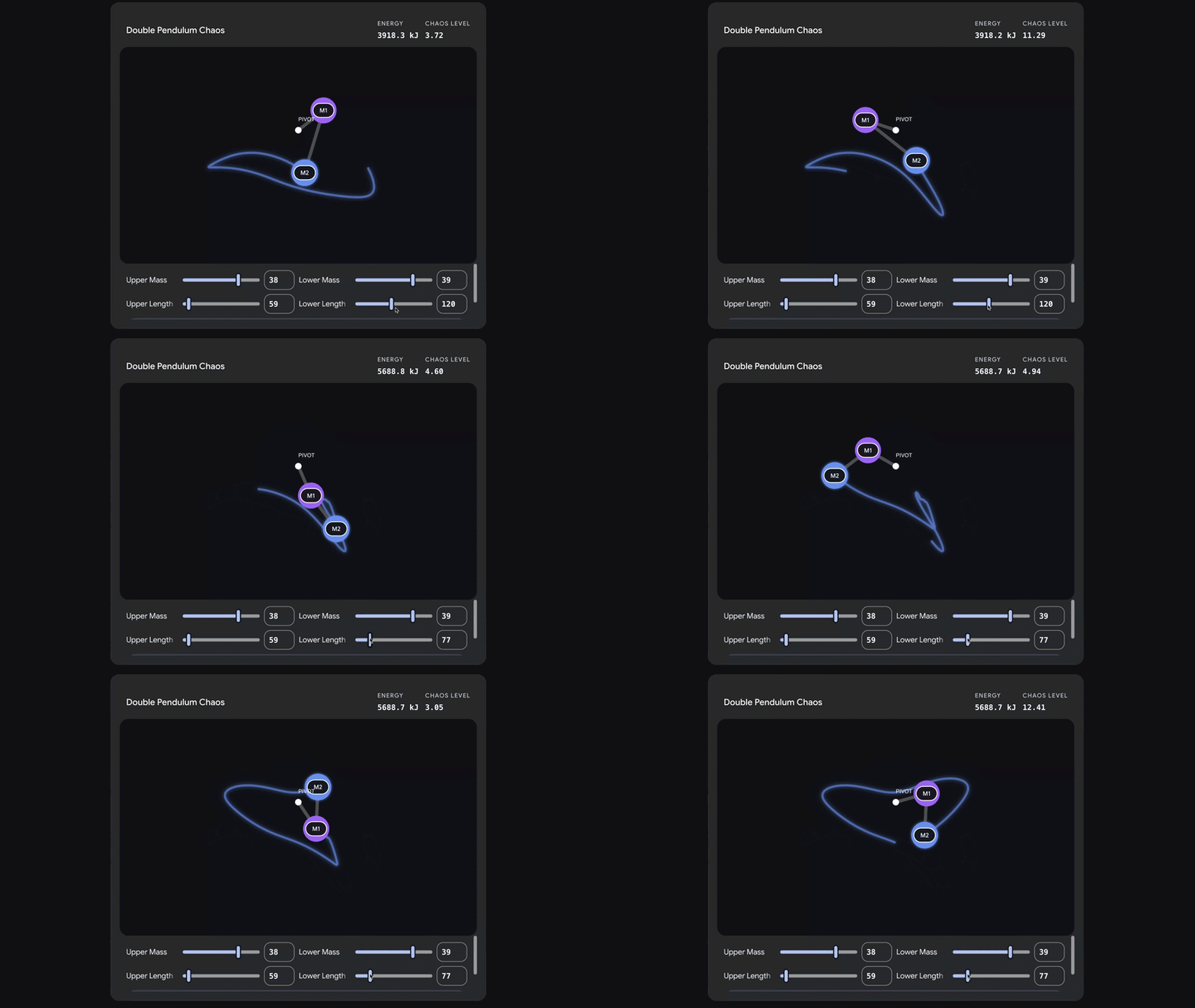
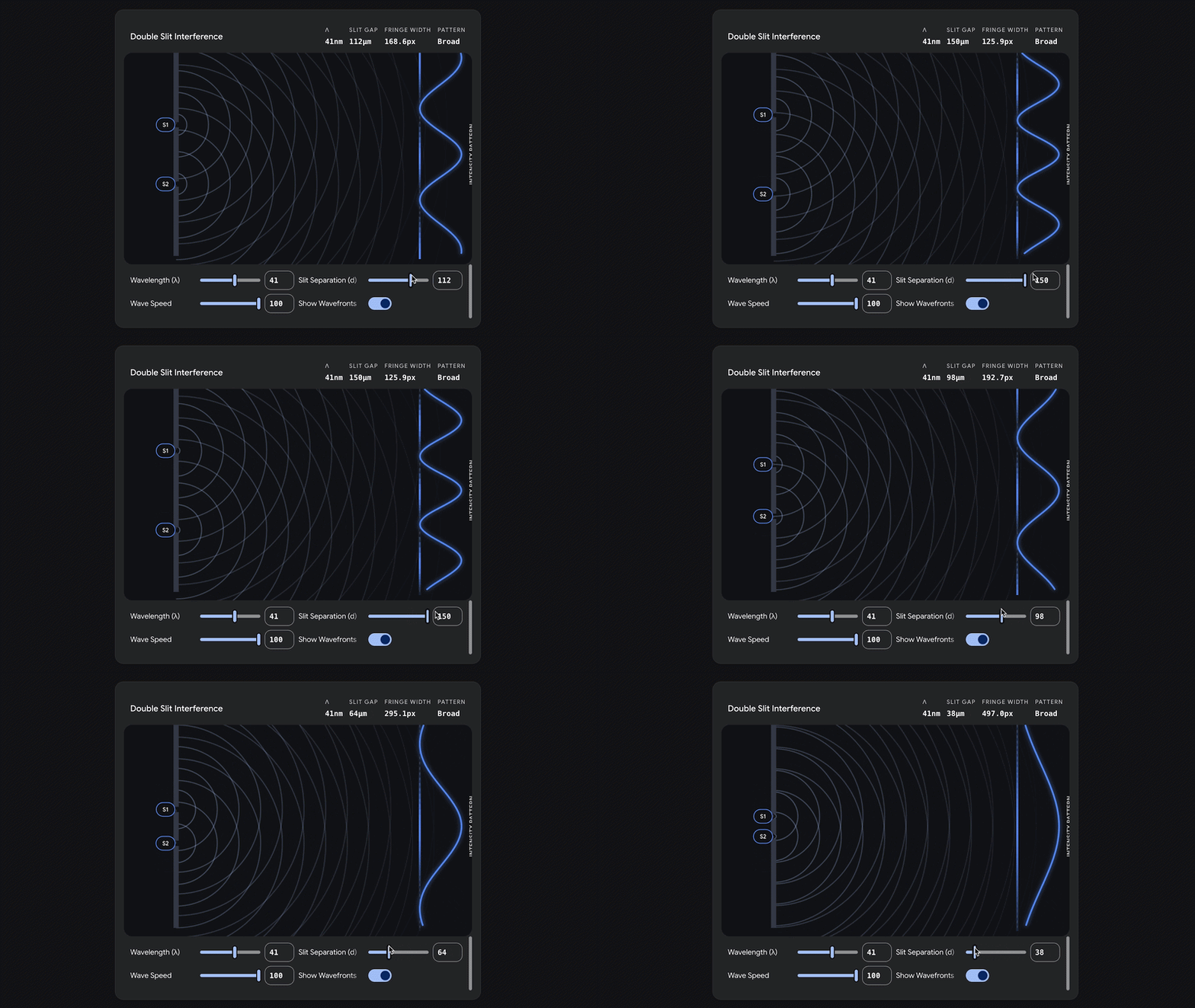
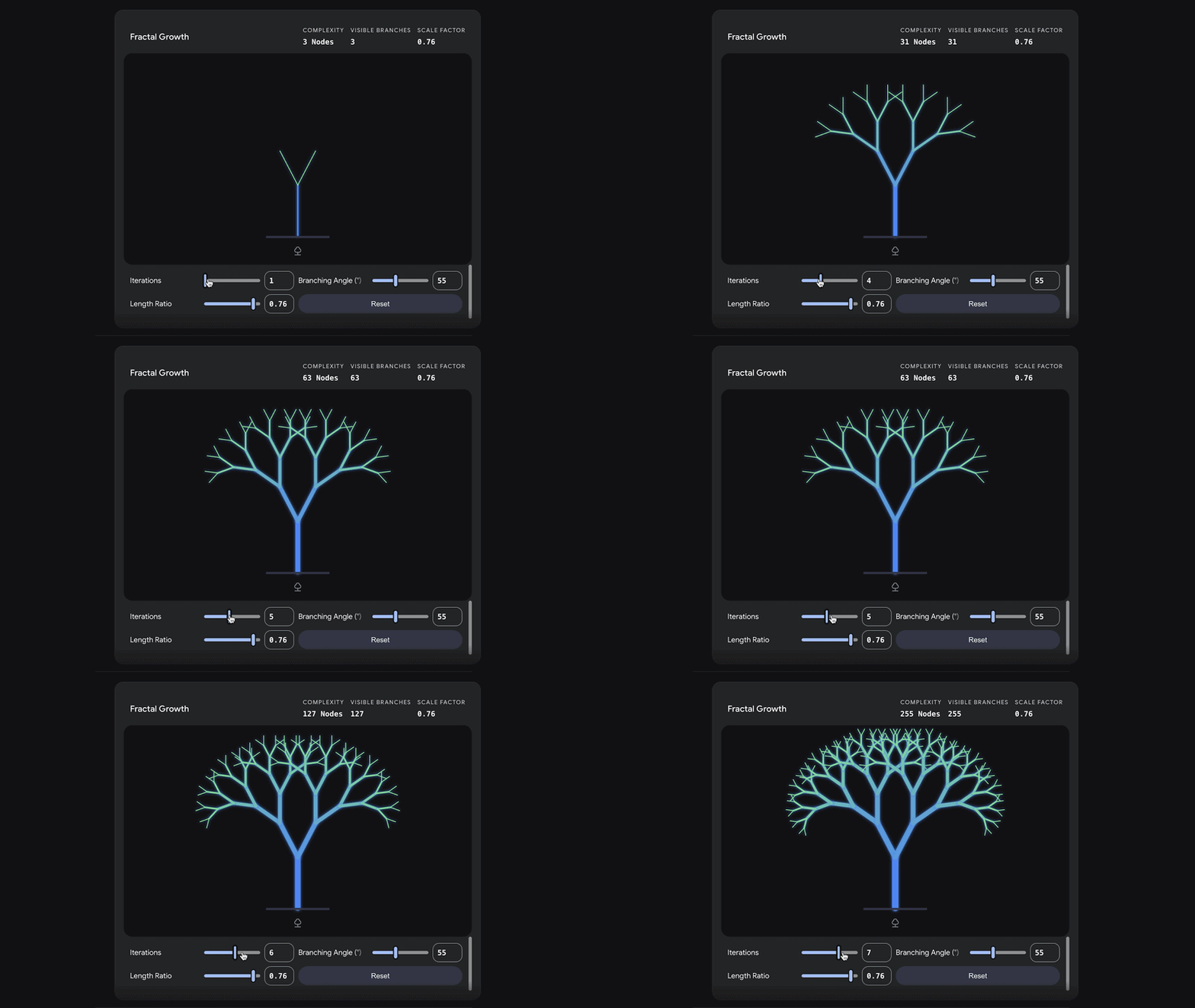
Traditionally, AI assistants explained complex concepts. However, their ability to visually illustrate these was limited to static images or lengthy descriptions. With Gemini's latest update, Google introduces the capability to create simulations and 3D models. These can be rotated, manipulated, and modified by adjusting variables.
Imagine requesting a simulation of the moon's orbit. Now you can change the moon's speed, hide trajectories, or pause the animation. You can also observe the model from different angles. This interactivity makes Gemini a much more powerful educational and professional tool. It allows users to experiment with scientific and mathematical concepts practically.
The impact of this update extends beyond traditional learning. For students and educators, manipulating real-time simulations simplifies understanding abstract phenomena. This includes orbital mechanics, chemical bond formation, or the behavior of complex physical systems. It feels like having an interactive textbook, where each concept can be explored from multiple perspectives.
For researchers, engineers, and designers, Gemini becomes a rapid prototyping tool. Simply describe a geometric shape, a physical system, or a data trend. The AI then generates a 3D model that can be explored, rotated, and analyzed in detail. This functionality streamlines idea evaluation and the communication of technical concepts in real time.
The trend in multimodal AI has focused on generating images or videos. However, Google's bet with Gemini is on "visual computing." These are tools that not only display information but also allow interaction and experimentation with data and concepts. This differentiates Gemini from alternatives like ChatGPT, which prioritize static or less manipulable representations. The ability to adjust variables and observe real-time results positions Gemini as a practical choice.
Keep reading online — scan the code
https://go.tricuatro.com/lilFt
© tricuatro.com
Article topics
Related articles
TikTok tests AI tool to protect creators from deepfakes
The video platform is rolling out an opt-in feature allowing users to verify their identity and report unauthorized AI-generated likenesses.

Apple Sues OpenAI Over Alleged Hardware Trade Secret Theft
The Cupertino giant accuses former key employees, including Tang Tan, of stealing confidential hardware information for OpenAI's benefit and its expansion into consumer hardware.

Anthropic Tackles AI's Toughest Questions for a Responsible Future
The company launches an initiative to understand public concerns and transparently address the challenges of artificial intelligence development.
Latest news
View all
MIT Chip Converts Invisible Infrared Light into Crucial Data
MIT researchers developed an innovative chip detecting methane and propane using mid-infrared light, with potential for millions of pixels and optical computing.

Assassin's Creed Black Flag Resynced Smashes 3 Million Sales, New Game Plus Announced
Ubisoft's successful re-release of the pirate classic continues to break records, confirming one of the most requested features from the gaming community.

Tesla Launches Electric Cybertruck Replica for Kids in the US
Tesla introduces its scaled-down Cybertruck for children aged 6 to 12, an electric vehicle priced at USD 1,500, currently exclusive to the US market.
Comments (0)
No comments yet. Be the first!
Only registered readers can comment.