
Science Protects Metabolism in Microgravity, but Muscles Remain a Challenge
A recent study reveals that metabolism and muscle deterioration do not always progress in tandem under weightless conditions, a key finding for astronauts and patients with reduced mobility.
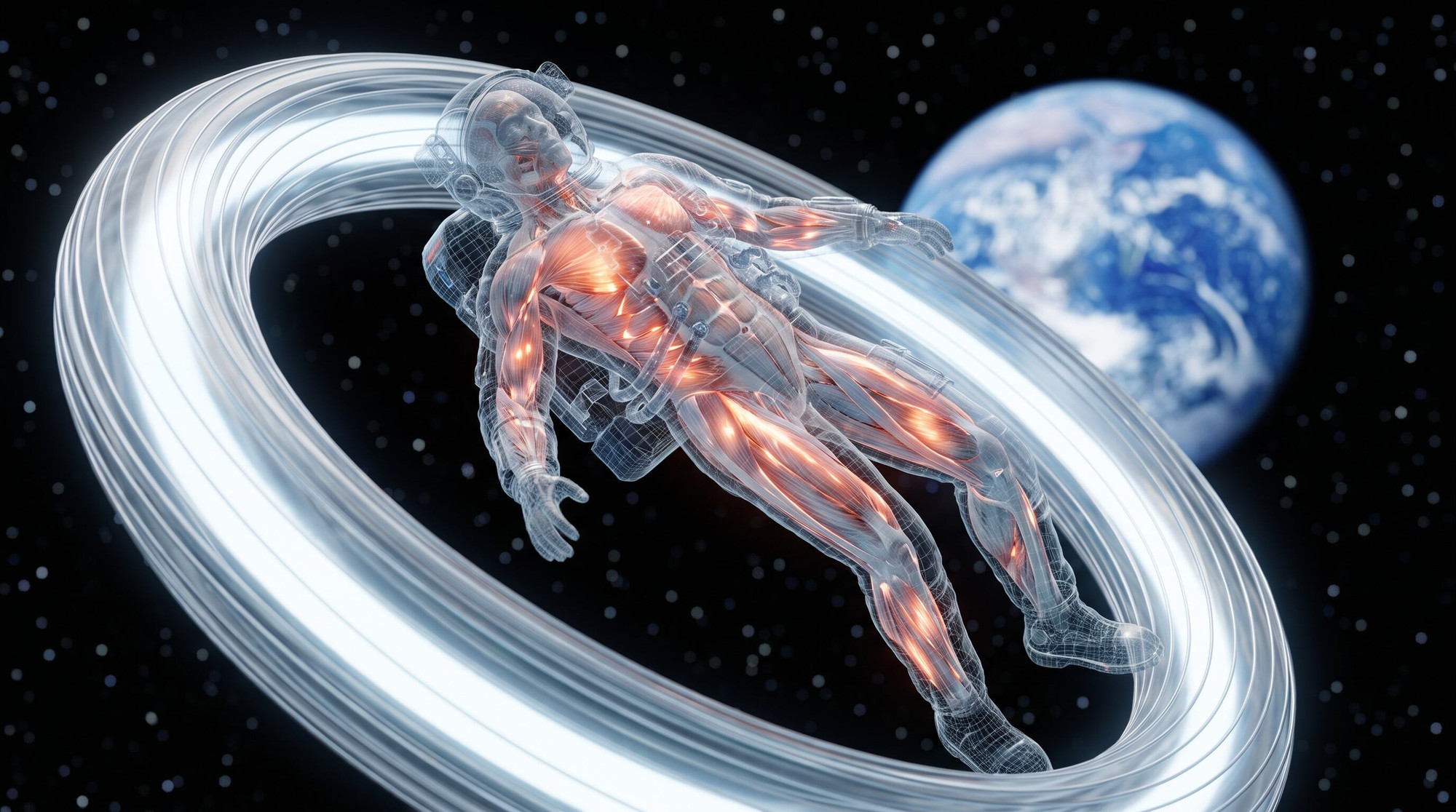
A recent study, published in The Journal of Physiology and reported by Muy Interesante, has unveiled a crucial finding: metabolism and muscle deterioration do not always advance along the same path when the human body is exposed to microgravity. This distinction challenges previous assumptions and opens new avenues for protecting human physiology in extreme environments.
Microgravity has for years been one of the greatest challenges for human physiology. Spending weeks or months without the usual load of Earth's weight alters bones, muscles, and processes linked to energy use. This problem extends beyond space exploration, as the changes caused by prolonged lack of movement resemble those seen in long hospitalizations, immobilization, and aging.
To better understand these effects, the research team utilized a terrestrial model that space agencies have employed for decades. It involves keeping participants lying down with a six-degree head-down tilt, reproducing some of the effects of weightlessness without leaving the planet.
In this study, 24 healthy men remained in absolute bed rest for 60 days under this regimen. The researchers divided them into three groups: one received no intervention, another performed regular horizontal cycling sessions, and the third carried out the same training inside a centrifuge that generated artificial gravity through controlled rotation.

During the trial, the authors measured resting energy expenditure, body composition, physiological fuel use, strength, physical power, and other indicators. According to Muy Interesante, the initial hypothesis was that limiting the wear from immobilization would also cushion the decline in metabolism and muscle performance.
The results did not entirely follow this prediction. The group subjected only to bed rest recorded the expected reduction in basal metabolism, while exercise without artificial gravity produced a moderate improvement. The most marked difference appeared in those who combined training and centrifugation, where resting energy expenditure remained very close to pre-experiment values, and the use of fats as an energy source was also better preserved.
The organism was able to sustain higher metabolic activity while contractile capacity continued to decline.
However, this effect did not fully translate to the muscular system. Although the combined strategy favored some lean mass indicators and increased specific performance in cycling tests, it did not prevent the decrease in maximum strength or neuromuscular decline after two months of immobilization. The separation between these two outcomes is the central point of the work.
At first glance, this conclusion seems contradictory because muscle tissue consumes a significant part of the body's energy even at rest. If muscle mass or operation decreases, an automatic drop in resting energy expenditure would be expected. The authors suggest that more factors are involved.
They observed that the combination of exercise and artificial gravity helped preserve body compartments with high metabolic activity and sustained more efficient fat oxidation than in the other participants. This change was reflected in the respiratory quotient, an indicator that shows which fuel the body preferentially uses for energy.
To reach this interpretation, the team applied multivariate statistical models with dozens of variables on body composition, muscle performance, and aerobic condition. The analysis indicated that resting energy expenditure does not depend solely on the volume of lean mass but also on the behavior of these tissues and how the body manages its energy reserves, correcting a widespread idea in scientific literature.
The practical implications of the study reach several fields. According to Muy Interesante, understanding the separate mechanisms that regulate strength and metabolism can help better address aging, when both changes do not always progress at the same pace. For space exploration, artificial gravity, at least with the protocol used, did not fully reproduce the protective effect that terrestrial gravity exerts on the locomotor system, pointing to the need for combined and specific interventions for future long-duration missions.
Article topics
Related articles

James Webb Telescope Discovers Water Vapor on Exoplanet TOI-421 b
NASA's space telescope made an unprecedented finding on TOI-421 b, a sub-Neptune with a surprisingly clear atmosphere, potentially reshaping our understanding of planetary formation.
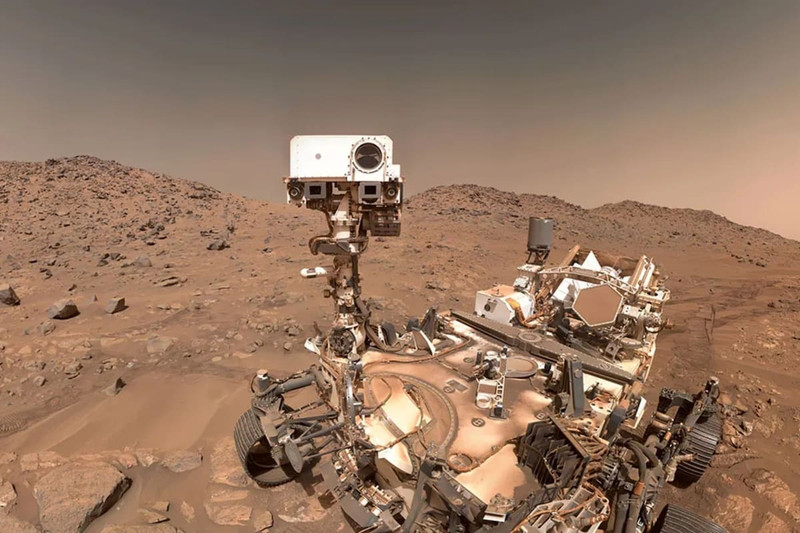
NASA Confirms Ancient Lake Sediments on Mars, Key to Life Search
The Perseverance rover discovered evidence of a lake over 3.5 billion years old in Jezero Crater, Mars, containing clay minerals that could preserve signs of ancient life. This finding is crucial for the mission to seek biosignatures on the Red Planet.

NASA Enhances Asteroid Detection and Deflection Capabilities
The US space agency advances planetary defense techniques following the successful DART mission and the upcoming NEO Surveyor observatory.
Latest news
View all
Huawei Unveils LogicFolding 3D Chips Bypassing EUV Dependency
The Chinese tech giant introduced its LogicFolding architecture and Tau (τ) scaling law, aiming for 1.4 nm equivalent density by 2031 without ASML's EUV machines.

Apple Raises Prices for Mac, iPad, Vision Pro Due to Component Costs
The Cupertino giant increases the value of several key products, with some hikes exceeding 20%, driven by a sharp rise in memory and critical component costs.

Fox Acquires Roku to Boost Free Streaming Strategy
Fox Corporation has announced its acquisition of the Smart TV platform Roku for $160 per share, aiming to consolidate its presence in the competitive streaming market and direct users to its content.
Comments (0)
No comments yet. Be the first!
Only registered readers can comment.