
Humanoid Robot Pemba Climbs Chimborazo, Sets Sights on Everest Summit
The humanoid robot Pemba, an adaptation of the Unitree G1, recently ascended over 6,000 meters on Chimborazo and now aims to conquer Mount Everest. This technological feat paves the way for new forms of exploration in extreme environments.
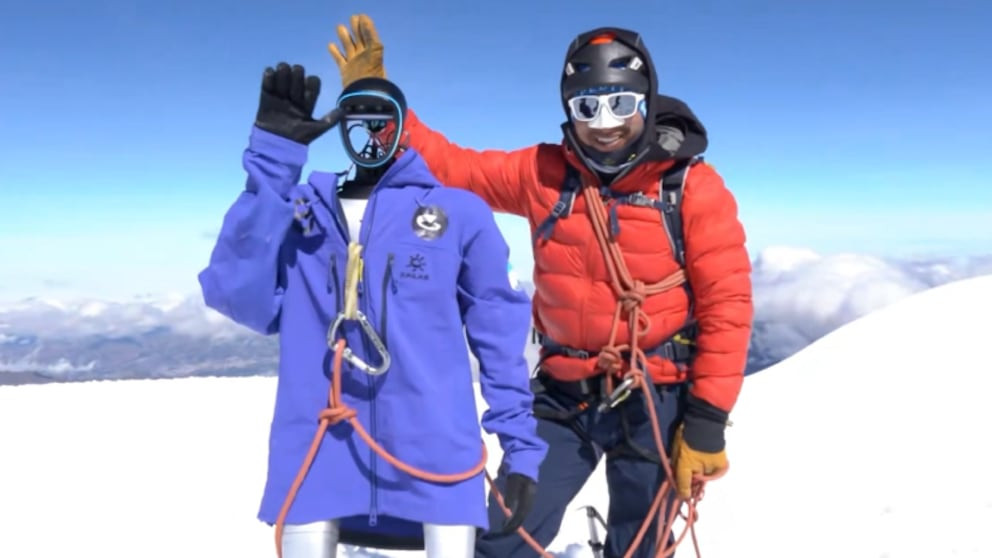
A groundbreaking achievement marks a new chapter in robotics: the humanoid robot Pemba recently ascended over 6,000 meters on the Chimborazo volcano, considered one of Earth's highest points when measured from the planet's center. This ambitious 16-hour expedition challenged both the human team and the machine, with the ultimate goal now set on Mount Everest.
Pemba is a modified version of the commercial Unitree G1 model, manufactured by Unitree Robotics. Engineer Pablo Berlanga and his firm Geologic Dome, which specializes in environmental conservation and technology for extreme environments, adapted the robot. This expert team successfully prepared Pemba to endure conditions that would typically disable conventional electronic devices.
Pemba didn't just climb; it did so by confronting cold, snow, and increasingly thin air, conditions that often incapacitate conventional electronic devices.
To enable Pemba to withstand Chimborazo's frigid environment and low atmospheric pressure, the team implemented several crucial enhancements. These included advanced thermal management systems, structural reinforcements to endure extreme temperature fluctuations, optimized artificial intelligence, and new navigation algorithms. These improvements allowed Pemba to move more efficiently across complex terrains.
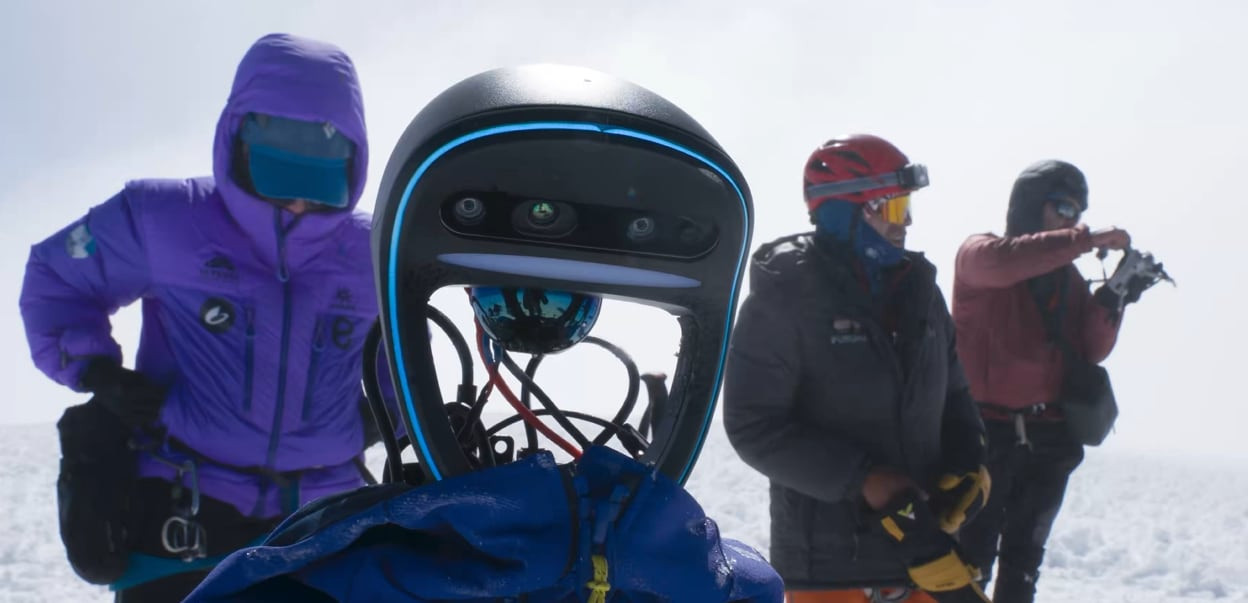
The result of these innovations was a machine capable of walking on slopes up to 30 degrees. While its autonomy was limited in the most hazardous areas, Pemba demonstrated remarkable ability to advance independently in less technical sections. During its ascent, it continuously collected real-time environmental data using its integrated cameras and sensors.
Despite these technological advancements, Pemba's autonomy has clear limits. In the most technical and high-risk sections of the Chimborazo route, the robot required direct human assistance. Alpinists manually carried it through stretches where any error could have been fatal for the machine or jeopardized the expedition's safety.
Chimborazo, with its irregular terrain, snow concealing crevices, and atmospheric pressure affecting both people and electronic systems, served as a relentless testing ground. Pemba's partial autonomy—its ability to move independently on gentler slopes—was sufficient to classify the ascent as a serious field test, validating its design beyond laboratory demonstrations.
Pemba's development was a collaborative effort between Unitree Robotics and Geologic Dome, with additional support from the Fortune Peaks Expedition organization. This multidisciplinary team equipped the robot with artificial intelligence, cameras, environmental sensors, and satellite communication, providing essential tools for gathering information and monitoring hard-to-reach areas.
These capabilities open a wide range of possibilities for Pemba, allowing it to undertake monitoring, patrolling, and data collection tasks in zones where human presence is either too costly or dangerous. Imagine a future where robots like Pemba assist in glacier surveillance or disaster zone assessment without risking human lives.
The success on Chimborazo is just the beginning. The team behind Pemba is already working on an even more ambitious project: making it the first humanoid robot to reach the summit of Everest. This challenge not only involves overcoming new technical and logistical hurdles but also addressing significant regulatory issues. Nepalese authorities are already evaluating the legal framework required for robotic expeditions on the world's highest mountain, aware that a malfunctioning robot could become an obstacle or necessitate a complex and costly rescue operation.
The goal of taking Pemba to Everest extends beyond symbolism. Developers propose that the robot could be instrumental in collecting accumulated trash on ascent routes and monitoring glaciers, tasks that require operating at over 8,000 meters altitude. Such an expedition would also allow for measuring the platform's performance in extreme conditions, collecting valuable data on joint stress, energy consumption, and the system's environmental resilience.
The experience gained on Chimborazo represents a significant step forward for the use of humanoid robots in critical operations. This includes search and rescue, scientific exploration, and natural disaster response, particularly in terrains where human intervention becomes extremely difficult or hazardous.
Article topics
Related articles

Stanford's STEHM Model Optimizes Search for Habitable Exoplanets
Stanford University introduces STEHM, a new tool that filters exoplanets based on their ability to maintain stable atmospheres, a key condition for life.
NASA's Maven Mars Orbiter Declared Out of Service After Six Months of Silence
Following an anomaly that disrupted its orbit and depleted its batteries, the Maven spacecraft, vital for understanding Mars' atmosphere, has ended its active mission. Its scientific data remains an invaluable legacy.

NASA Reveals New Path for Earth's Essential Life Elements
A recent study, published in Science Advances, uncovers how early Earth may have received phosphorus and nitrogen, highlighting Jupiter's critical role.
Latest news
View all
Google Launches Gemini 3.5 Live Translate for Instant Voice Translation
Google expands real-time translation availability with Gemini 3.5 Live Translate, offering lower latency and support for over 70 languages.

Windows 95 Runs on Texas Instruments Graphing Calculator
A modder successfully ported Windows 95 to a TI-Nspire CX II, showcasing modern calculator hardware capabilities.

SpaceX IPO Values Company at $1.77 Trillion on Nasdaq
SpaceX's anticipated public offering on the Nasdaq positions it as the seventh most valuable U.S. listed company, marking a significant financial milestone.
Comments (0)
No comments yet. Be the first!
Leave a comment