
Diagnostic Ultrasound Could "Break" Envelopes of Viruses Like SARS-CoV-2 and H1N1
Researchers successfully tested in the laboratory a physical method using high-frequency sound waves to destabilize and destroy viruses without harming human tissues.
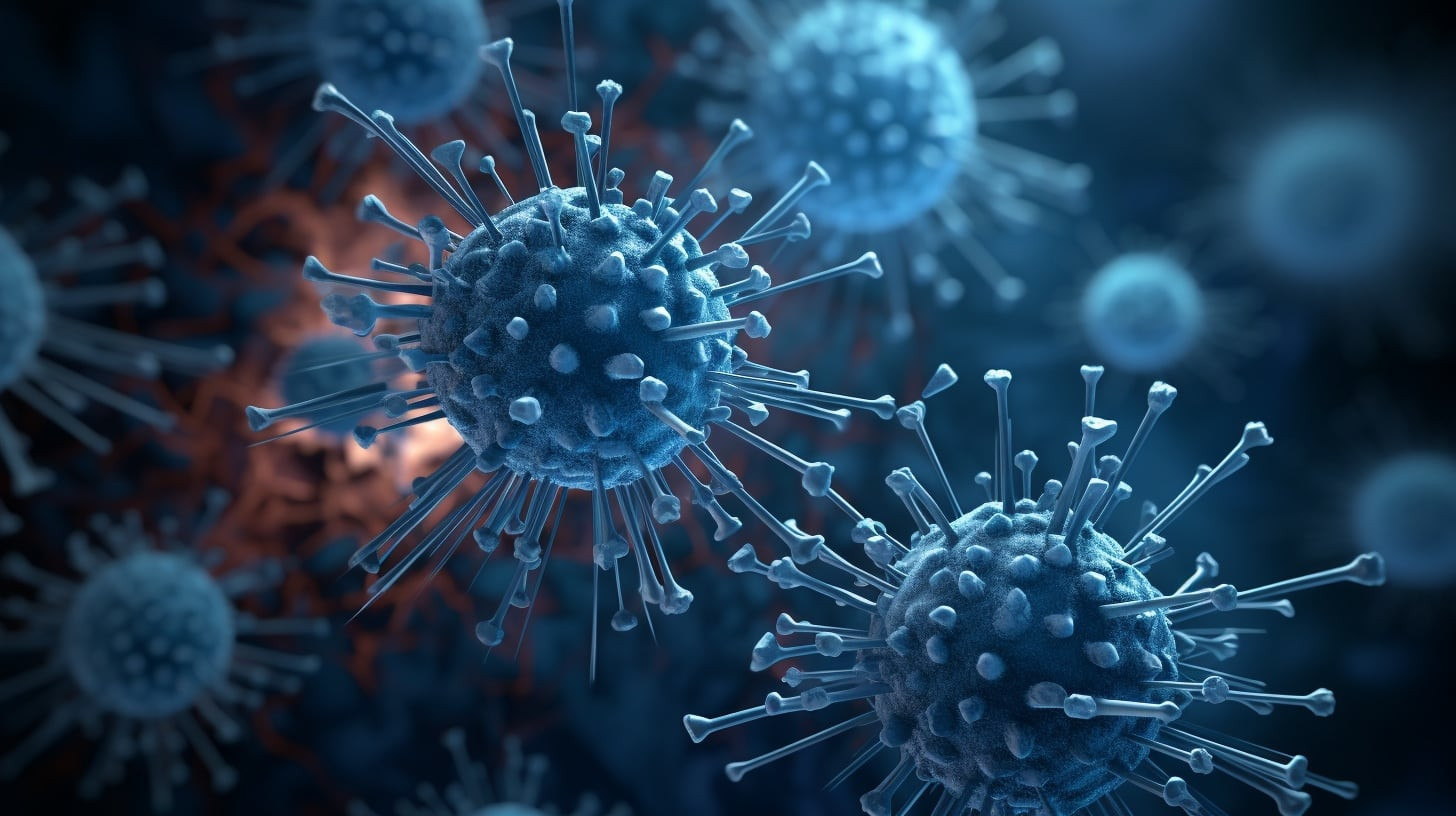
SARS-CoV-2 and H1N1 viruses, exposed to ultrasound between 3 and 20 MHz, showed collapsed and fragmented envelopes in laboratory tests. This promising technology aims to destroy viruses without harming human tissue, offering new hope in the fight against infections.
The battle against viruses is constant; today's treatments may be ineffective tomorrow, and developing new antivirals takes years. Existing physical methods like ultraviolet radiation or heat destroy viruses but unfortunately also damage human body tissues, preventing their direct use as medical therapies.
Facing this challenge, a team of researchers wondered if diagnostic ultrasound, a tool already common in hospitals worldwide, could directly affect the structure of viruses. The key was to destabilize and destroy the envelopes of viruses like SARS-CoV-2 and H1N1, without altering the temperature or chemistry of their environment.
To test this hypothesis, scientists took samples of SARS-CoV-2, including its Wuhan, Gamma, and Delta variants, along with influenza A (H1N1) virus. They exposed these to ultrasound in a range of 3 to 20 MHz for periods varying from 1 to 30 minutes, using clinical diagnostic imaging equipment—the same devices found in any healthcare facility.
To observe the effects, they employed scanning electron microscopy, which provides highly detailed images of the viral surface, and atomic force microscopy, capable of measuring the shape and stiffness of particles at the nanometer scale. These tools offered an unprecedented view of the structural changes.
The images revealed a dramatic impact: treated viral particles exhibited irregular surfaces, collapsed envelopes, and clear fragmentation. SARS-CoV-2 particles, initially measuring around 107 nanometers, were reduced to fragments of just 1.5 and 4.9 nanometers after ultrasound exposure, an unequivocal sign that the virus had disintegrated.
SARS-CoV-2 particles, initially measuring around 107 nanometers, were reduced to fragments of just 1.5 and 4.9 nanometers after ultrasound exposure, an unequivocal sign that the virus had disintegrated.
For H1N1, the destruction was even more extensive, with particles disappearing completely from the detection range. Crucially, throughout the process, scientists monitored the temperature and pH of the medium, confirming that neither parameter changed. This rules out indirect thermal or chemical effects as the mechanism of action for the ultrasound.
To confirm that the structural damage had biological consequences, researchers used the treated viral samples to infect cells in the laboratory. The infectivity of SARS-CoV-2 was markedly reduced, with significantly lower viral loads in cells exposed to the weakened virus.
The mechanism behind this phenomenon is called acoustic resonance. At specific frequencies, sound waves couple with the physical structure of the virus, causing its envelope to vibrate until it breaks. This process depends on the virus's size and shape, not its chemical composition.
The study's authors suggest this technology could serve as a complement to existing antiviral treatments, as damaging the viral envelope would enhance the action of drugs. They also propose exploring its application for disinfection in clinical environments, opening a range of possibilities.
The primary limitation is that all experiments were conducted in the laboratory, outside the human body. It remains unknown how this method would behave in living tissues or its effects on healthy cells within a real organism. Therefore, researchers recommend moving towards testing in animal models and organoids, structures that mimic human organs, to validate its safety and efficacy before considering direct clinical applications.
Article topics
Related articles
NASA Reveals New Path for Earth's Essential Life Elements
A recent study, published in Science Advances, uncovers how early Earth may have received phosphorus and nitrogen, highlighting Jupiter's critical role.
NASA's Maven Mars Orbiter Declared Out of Service After Six Months of Silence
Following an anomaly that disrupted its orbit and depleted its batteries, the Maven spacecraft, vital for understanding Mars' atmosphere, has ended its active mission. Its scientific data remains an invaluable legacy.
NASA Space Robotics Challenge
NASA invites U.S. researchers to submit proposals for experiments using a robotic arm that will be sent to low Earth orbit as part of the Fly Foundational Robots mission.
Latest news
View all
Stuntman Hollywood: Returns After 19 Years to PS5, Xbox Series, and PC
The iconic action and vehicular stunt franchise makes its comeback courtesy of Saber Interactive, promising a dose of nostalgia and adrenaline for the new generation.

Windows Drops NTLM: Microsoft Boosts Security with Kerberos
Microsoft is taking a crucial step to bolster security in Windows 11, announcing the deprecation of NTLM, its oldest authentication protocol, in favor of Kerberos.

Google Launches Gemma 4 12B: Local AI for Your Laptop with 16GB RAM
Google's new artificial intelligence model aims to democratize access to generative AI, allowing it to run on average consumer computers.
Comments (0)
No comments yet. Be the first!
Leave a comment