
Google Launches Gemma 4 12B: Local AI for Your Laptop with 16GB RAM
Google's new artificial intelligence model aims to democratize access to generative AI, allowing it to run on average consumer computers.
With the cost of RAM soaring due to the generative AI boom, Google has released a new Gemma 4 12B model designed to run on average consumer laptops with just 16GB of RAM, a move that democratizes access to local artificial intelligence.
This upward trend in memory prices is a key factor in the sector, and Google, as a major player, aims to offer local AI solutions that require fewer resources. The company is responding to the need for efficient models that do not depend on expensive, specialized hardware.
The company is responding to the need for efficient models that do not depend on expensive, specialized hardware.
Earlier this year, Google had already introduced the Gemma 4 family, marking a significant shift towards a more open Apache 2.0 license. This approach allows more developers and users to experiment with their AI models.
In April, the initial Gemma 4 series included four distinct models. There were two mobile-optimized options, the E2B and E4B versions, designed for efficiency in resource-constrained environments. For more serious work, Google offered the 26B Mixture of Experts and the 31B Dense.
However, a considerable space remained unfilled in the middle of that range, between the mobile and high-performance models. This is precisely where the new Gemma 4 12B fits, offering a balance between capability and accessibility.
Gemma 4 12B is considerably more powerful than the mobile-optimized versions. Most impressively, it won't require a $20,000 AI accelerator to run locally, as communicated by Google. The company highlights that this 12-billion-parameter model can operate on many consumer laptops without sacrificing quality.
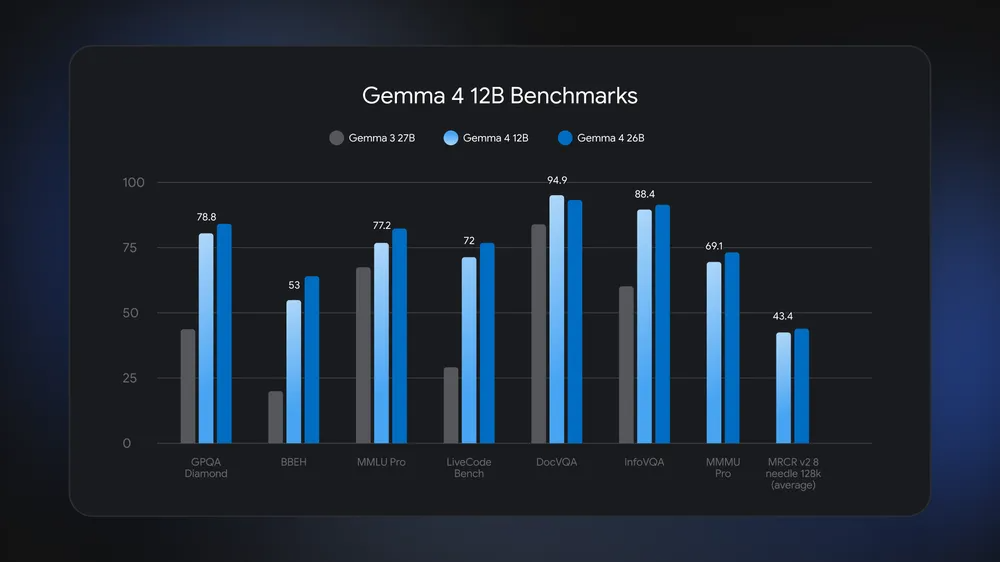
With just 16GB of system RAM or VRAM, this model becomes active, representing approximately half the total memory footprint of the Gemma 4 26B MoE. Google claims that, in terms of benchmarks, the new model is almost as capable as its larger sibling, the 26B MoE.
This means that the power of generative AI, once confined to the cloud or very expensive machines, is now within reach of a much wider audience. Users with common laptops will be able to experiment with advanced models directly on their devices, opening new possibilities for personal creativity and productivity.
The availability of models like Gemma 4 12B with an Apache 2.0 license reinforces the trend towards more open and accessible AI, allowing innovation to extend beyond large data centers.
Article topics
Related articles
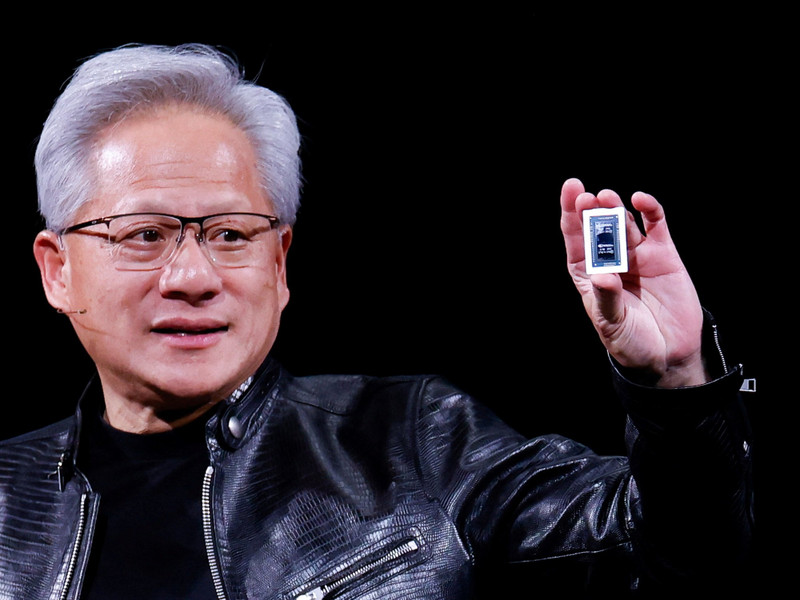
Nvidia Challenges Intel and AMD with RTX Spark Superchip for PCs
Nvidia introduced RTX Spark, a processor promising to bring advanced artificial intelligence directly to your PC, without cloud dependence, and boost gaming to unprecedented levels on conventional machines.
Anthropic's Claude Opus 4.8 boosts "honesty" and reduces code flaws
Anthropic's new AI model, Claude Opus 4.8, launches this Thursday with a focus on transparency and error reduction, giving users more control over computational effort.

Roku's home screen gets an AI-powered refresh for 2026
Roku is rolling out a significant update to its main interface, promising a more personalized experience with integrated advertising.
Latest news
View all
Stuntman Hollywood: Returns After 19 Years to PS5, Xbox Series, and PC
The iconic action and vehicular stunt franchise makes its comeback courtesy of Saber Interactive, promising a dose of nostalgia and adrenaline for the new generation.
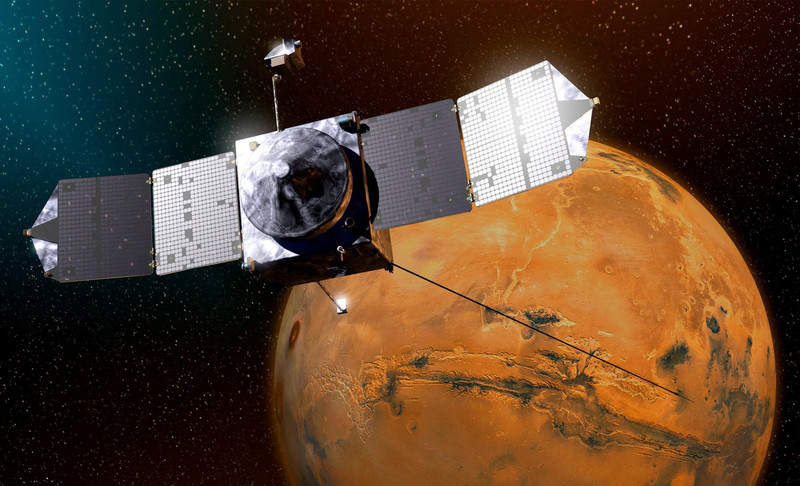
NASA's Maven Mars Orbiter Declared Out of Service After Six Months of Silence
Following an anomaly that disrupted its orbit and depleted its batteries, the Maven spacecraft, vital for understanding Mars' atmosphere, has ended its active mission. Its scientific data remains an invaluable legacy.

Windows Drops NTLM: Microsoft Boosts Security with Kerberos
Microsoft is taking a crucial step to bolster security in Windows 11, announcing the deprecation of NTLM, its oldest authentication protocol, in favor of Kerberos.
Comments (0)
No comments yet. Be the first!
Leave a comment