
Nvidia Challenges Intel and AMD with RTX Spark Superchip for PCs
Nvidia introduced RTX Spark, a processor promising to bring advanced artificial intelligence directly to your PC, without cloud dependence, and boost gaming to unprecedented levels on conventional machines.
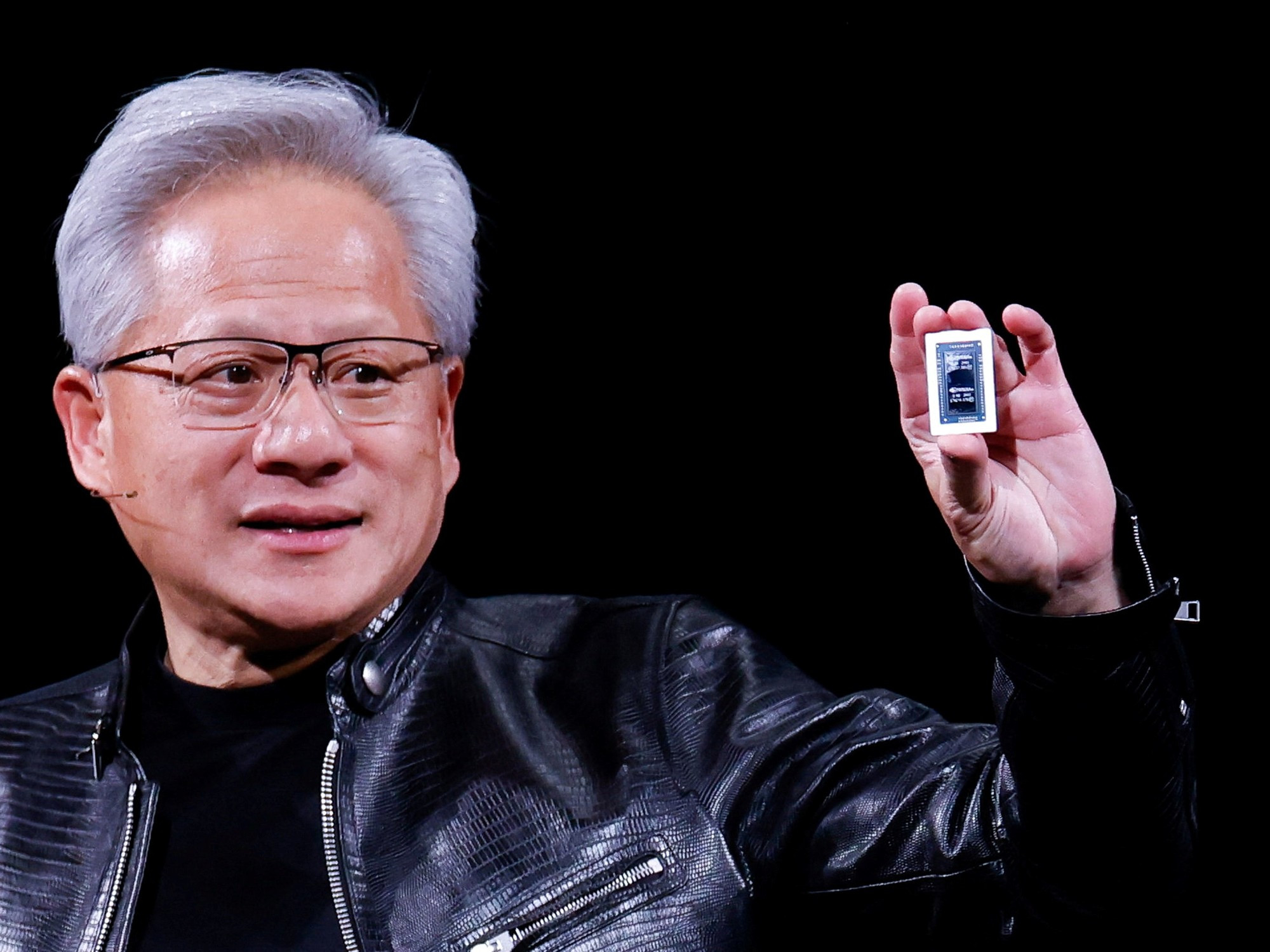
If you use your PC for gaming or artificial intelligence tasks, prepare for a radical shift. Nvidia has just launched RTX Spark, a “superchip” set to transform the personal computer experience by integrating advanced AI directly into the hardware, challenging giants like Intel and AMD.
During an impressive demonstration, Nvidia showcased RTX Spark’s power with the games Forza Horizon 6 and 007 First Light. Both titles ran at an impressive 100 frames per second (FPS) in 1440p resolution, a fluidity that until recently was exclusively reserved for high-end PCs.
RTX Spark will not be limited to notebooks. Nvidia confirmed that the chip will arrive for both laptops and desktop computers, expanding its reach within the PC market.
One of RTX Spark’s most revolutionary features is its ability to run advanced artificial intelligence tools without needing to connect to external servers. This means your AI assistant will function directly on your device, ensuring greater privacy and eliminating reliance on a monthly subscription.
This processor is designed to run AI models of up to 120 billion parameters locally, without cloud intervention. The PC will cease to be merely a tool for running programs and will become an intelligent platform, ready to interact permanently with AI systems.
Nvidia’s vision is similar to what other major companies like Microsoft, Apple, and Qualcomm are already pursuing, as they also seek to integrate smart functions directly into hardware. This move marks a turning point in the industry.
RTX Spark represents one of Nvidia’s most ambitious moves within the mass personal computer market. Although the company has spent years developing processors for data centers and supercomputers, this is its first offering with the explicit goal of challenging Intel and AMD in the main Windows PC segment. Several analysts already consider this launch the beginning of a “new stage for the industry.”
The first computers equipped with RTX Spark are expected to be available between September and November this year, though exact dates and prices have not yet been confirmed. Among the manufacturers who have already announced their initial models are ASUS, Dell, HP, Lenovo, and MSI, with Acer and Gigabyte joining subsequently.
Microsoft took advantage of the announcement to unveil its brand-new Surface Laptop Ultra, a laptop with a formidable configuration: a 15-inch Mini-LED touchscreen, one petaflop of AI compute, up to 128 GB of unified memory, a large haptic touchpad, an Nvidia RTX Spark 20-core ARM CPU, and a Blackwell GPU with 6144 CUDA cores.
Nvidia’s strategy is clear: leverage its leadership in artificial intelligence to bring that experience directly to the personal computer market. If they succeed in convincing manufacturers and consumers, they could disrupt a decades-long market balance and open a new chapter in PC history.
Article topics
Related articles
Google Launches Gemma 4 12B: Local AI for Your Laptop with 16GB RAM
Google's new artificial intelligence model aims to democratize access to generative AI, allowing it to run on average consumer computers.

Anthropic's Claude Opus 4.8 boosts "honesty" and reduces code flaws
Anthropic's new AI model, Claude Opus 4.8, launches this Thursday with a focus on transparency and error reduction, giving users more control over computational effort.

Roku's home screen gets an AI-powered refresh for 2026
Roku is rolling out a significant update to its main interface, promising a more personalized experience with integrated advertising.
Latest news
View all
Stuntman Hollywood: Returns After 19 Years to PS5, Xbox Series, and PC
The iconic action and vehicular stunt franchise makes its comeback courtesy of Saber Interactive, promising a dose of nostalgia and adrenaline for the new generation.
NASA's Maven Mars Orbiter Declared Out of Service After Six Months of Silence
Following an anomaly that disrupted its orbit and depleted its batteries, the Maven spacecraft, vital for understanding Mars' atmosphere, has ended its active mission. Its scientific data remains an invaluable legacy.

Windows Drops NTLM: Microsoft Boosts Security with Kerberos
Microsoft is taking a crucial step to bolster security in Windows 11, announcing the deprecation of NTLM, its oldest authentication protocol, in favor of Kerberos.
Comments (0)
No comments yet. Be the first!
Leave a comment