
NASA Unveils 2026 Technology Priorities to Boost Space Exploration
The agency released its '2026 Civil Space Shortfall Ranking' report, identifying key development areas for future space missions based on extensive feedback from industry, government, and academia.


NASA released its '2026 Civil Space Shortfall Ranking' list on May 20, 2026, a pivotal document that integrates over 400 responses from industry organizations, government agencies, and academia. This report aims to identify and rank the most pervasive technology shortfalls requiring further development to meet future exploration, science, and other mission needs.
The primary goal of this initiative is to strategically guide NASA’s space technology development and investment. By consolidating feedback from a broad spectrum of collaborators, the agency seeks to ensure its efforts are focused on the most pressing challenges with the greatest potential impact for advancing space exploration.
As NASA lays the groundwork for long-term missions to the Moon and paves the way for human exploration on Mars, the top-ranked shortfalls reflect the challenges industry is most eager to solve. These include developing infrastructure and capabilities for assets to operate for extended durations in the lunar environment, providing surface mobility and logistics for crew and assets on planetary surfaces, and developing on-board advanced computing capabilities for space operations.
From this year’s public call for feedback, NASA received 454 total external responses, each considered the input of a single individual. The cross-cutting nature of this feedback underscores the importance of public-private partnership to drive U.S. leadership in space technology and energize the space economy.
“This feedback provides an invaluable dataset,” said Angela Krenn, acting chief architect for NASA Technology. Krenn emphasized that “as our process matures, each round of input helps target our resources, ensuring America’s space industry can tackle tomorrow’s greatest challenges. By tapping into the collective expertise of our stakeholders, we turn their insights into fuel for NASA’s next giant leap.”
The 2026 shortfalls process builds on NASA’s first shortfall ranking, which asked participants to rank 187 civil space shortfalls. Leveraging the feedback provided by stakeholders, this year’s exercise streamlined the process by consolidating the shortfalls into 32 broader, integrated categories. This restructuring maintains the original content’s depth while creating a more efficient and accessible feedback mechanism for participants.
Using the 2026 shortfalls results, NASA Technology selected 40 primary focus areas for its fiscal year 2026 investments. These focus areas combine the quantitative data of the shortfall rankings with considerations from NASA’s Ignition initiatives, science and technology, while establishing paths for collaboration with industry, ensuring relevance with academia, and leveraging overlaps in interests with other government agencies.
The 40 focus areas include several capabilities to enable NASA’s future lunar infrastructure. These range from landing at lunar South Pole exploration sites in various illumination conditions with accuracy, to excavating and transporting lunar regolith at a scale relevant for a demonstration mission. Also prioritized is providing low power, thermal management, and actuation for distributed surface assets to survive and operate in the lunar environment, challenges vividly highlighted by the recent Artemis II crew’s flyby of the Moon on April 6, 2026, captured through the Orion spacecraft window.
Keep reading online — scan the code
https://go.tricuatro.com/F91aM
© tricuatro.com
Article topics
Related articles
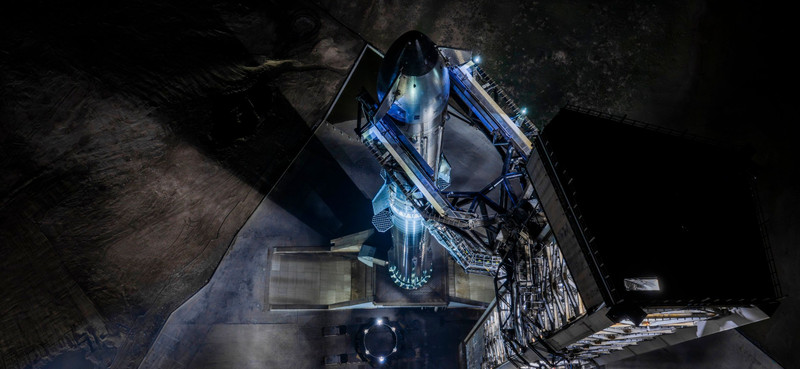
SpaceX Scrubs Starship Test Flight in South Texas
Computer systems detected an anomaly during the Super Heavy booster's engine startup sequence, forcing the mission's abort.
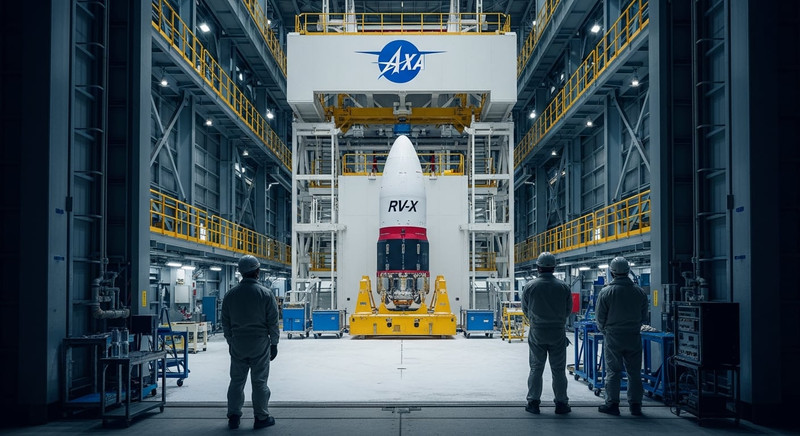
JAXA's RV-X Reusable Rocket Successfully Completes First Flight
Japan's space agency JAXA successfully tested its RV-X prototype, a critical step towards reducing costs and boosting competitiveness in the global space market.

China's Great Green Wall: Artificial Forests Outpace Natural Growth
China planted 66 billion trees over nearly half a century to combat desertification, and a new study shows they grow faster than natural forests, albeit with important nuances.
Latest news
View all
MIT Chip Converts Invisible Infrared Light into Crucial Data
MIT researchers developed an innovative chip detecting methane and propane using mid-infrared light, with potential for millions of pixels and optical computing.

Assassin's Creed Black Flag Resynced Smashes 3 Million Sales, New Game Plus Announced
Ubisoft's successful re-release of the pirate classic continues to break records, confirming one of the most requested features from the gaming community.

TikTok tests AI tool to protect creators from deepfakes
The video platform is rolling out an opt-in feature allowing users to verify their identity and report unauthorized AI-generated likenesses.
Comments (0)
No comments yet. Be the first!
Only registered readers can comment.