
NASA Reveals New Path for Earth's Essential Life Elements
A recent study, published in Science Advances, uncovers how early Earth may have received phosphorus and nitrogen, highlighting Jupiter's critical role.
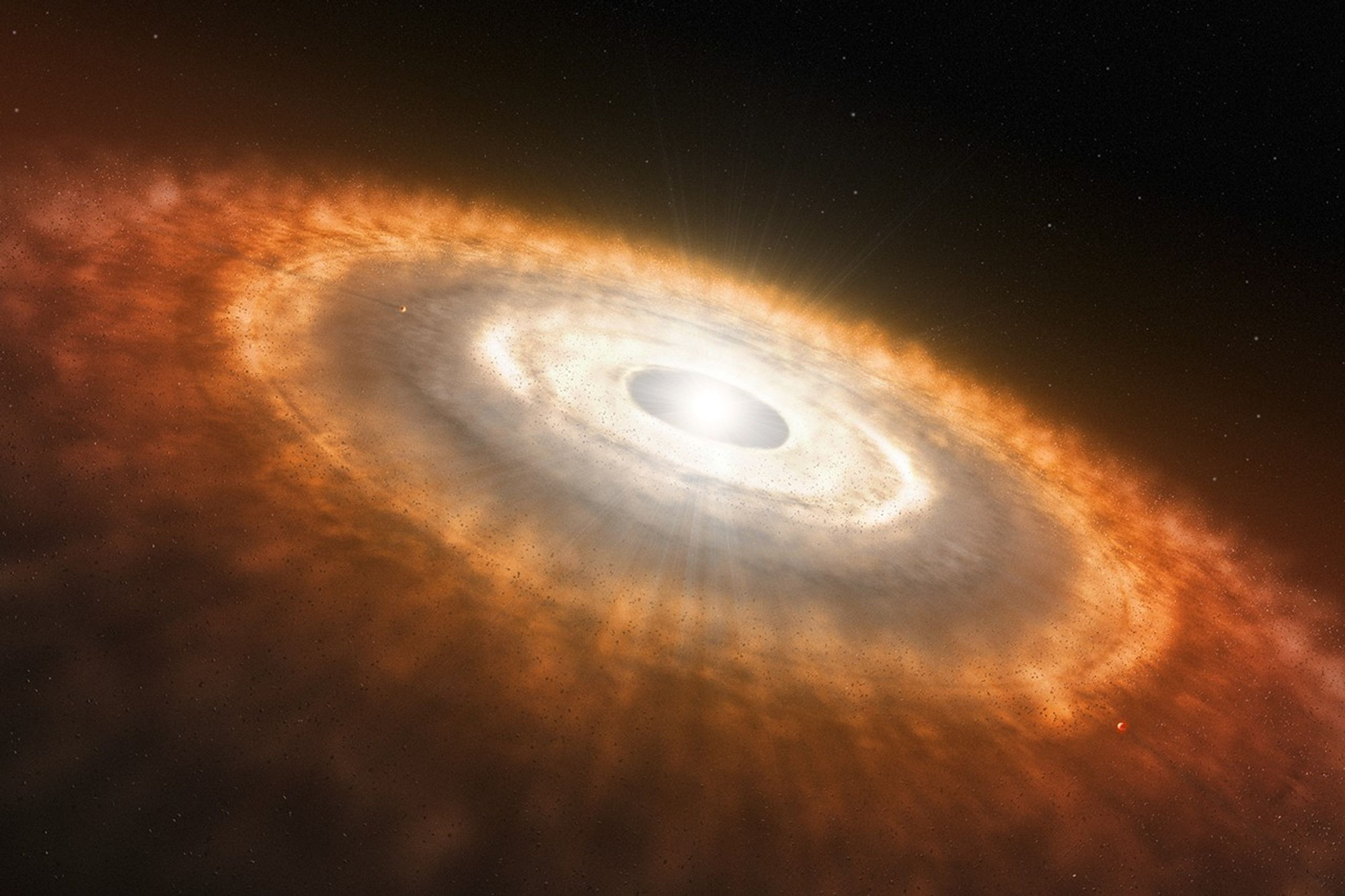
Ever wondered where the building blocks of life on Earth truly came from? NASA-supported scientists have just unveiled a fascinating new insight into how our early planet acquired phosphorus and nitrogen, two absolutely vital ingredients, and the unexpected, critical role Jupiter played in their distribution. This groundbreaking study was published on June 3, 2026, in Science Advances.
This research doesn't just reshape our understanding of the solar system's history; it's a game-changer for astrobiology, the field dedicated to exploring life's origins and potential beyond Earth. For life as we know it to emerge, our planet needed a specific inventory of elements like carbon, hydrogen, nitrogen, oxygen, phosphorus, and sulfur (CHNOPS), which are the fundamental components of living cells.
For years, the scientific community has debated the precise origin of these life-essential elements. One prevailing theory suggested that a significant portion arrived on Earth late in its formation process, delivered by chondrites originating from the outer solar system. However, this new study, led by Debjeet Pathak, a graduate student at Rice University, presents a compelling and different narrative.
The research team, leveraging a combination of sophisticated laboratory experiments and advanced geochemical models, successfully reconstructed a "map" of phosphorus-to-nitrogen (P/N) ratios across the early solar system. To achieve this, they meticulously analyzed two distinct classes of meteorites: iron meteorites, which represent the first generation of planetesimals, and chondrites, which originated from a second generation that formed 2-3 million years later.
Their findings revealed clear differences between these two generations. The first generation of planetesimals exhibited a higher P/N ratio in the outer solar system, with this ratio decreasing towards the inner regions. This pattern is attributed to an outward flow of material during their initial formation. Intriguingly, the second generation of planetesimals showed a reversed trend, with higher P/N ratios found in the inner solar system.
"The study suggests that Earth acquired its inventory of the life-essential elements phosphorous and nitrogen primarily from the inner solar system, without requiring a significant contribution from outer solar system chondrites," stated Debjeet Pathak of Rice University.
This is where Jupiter makes its dramatic entrance, and its influence proved to be far more profound than previously imagined. As the gas giant formed and grew to its tremendous size, its immense gravitational pull acted as a powerful barrier. It effectively restricted the movement of phosphorus and nitrogen between the inner and outer solar system. Consequently, when the second generation of planetesimals appeared, those in the inner solar system were left with a higher P/N ratio compared to their more distant cousins.
"For our own solar system, Jupiter's presence and growth history, indeed, seem to have played a critical role in determining the distribution of the basic chemical ingredients necessary for habitable worlds," remarked Rajdeep Dasgupta of Rice University, who served as the study's senior author. His statement leaves us with a compelling open question: can a life-essential element budget similar to Earth's be established without a Jupiter-like planet in the population?
Further geochemical accretion modeling strongly supports this hypothesis, demonstrating that Earth's present-day P/N signature is best reproduced by inner solar system planetesimals, whether they are related to iron meteorites or chondrites. This solidifies the notion that our planet's foundational elements were largely sourced locally, rather than relying heavily on "imported" material from the outer reaches.
This groundbreaking discovery carries significant implications for our ongoing quest to find life beyond Earth. If the presence of a gas giant like Jupiter is so pivotal for the distribution of vital elements, then the architectural layout of other stellar systems could be a crucial determinant in planetary habitability. Searching for exoplanets within systems featuring "Jupiters" in the right orbital positions might become an even higher priority for astrobiologists.
The research, detailed in Science Advances and published on June 3, 2026, compels us to re-evaluate not only the cosmic past of our own home but also the specific conditions that could foster life in other corners of the universe.
Article topics
Related articles
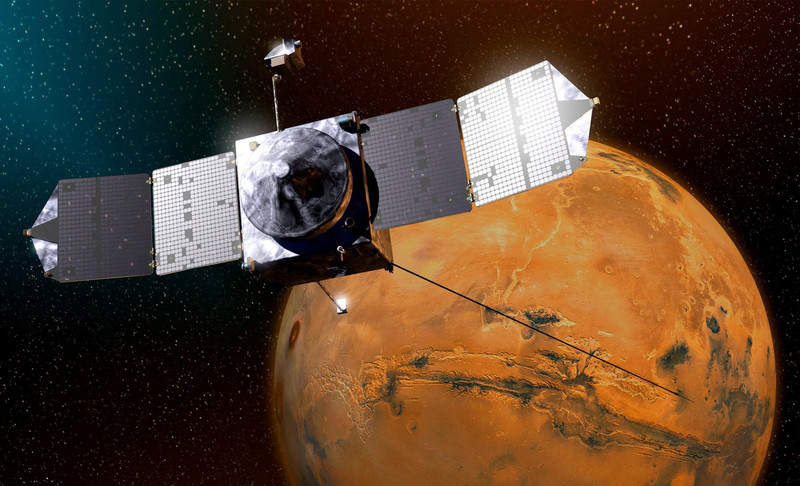
NASA's Maven Mars Orbiter Declared Out of Service After Six Months of Silence
Following an anomaly that disrupted its orbit and depleted its batteries, the Maven spacecraft, vital for understanding Mars' atmosphere, has ended its active mission. Its scientific data remains an invaluable legacy.
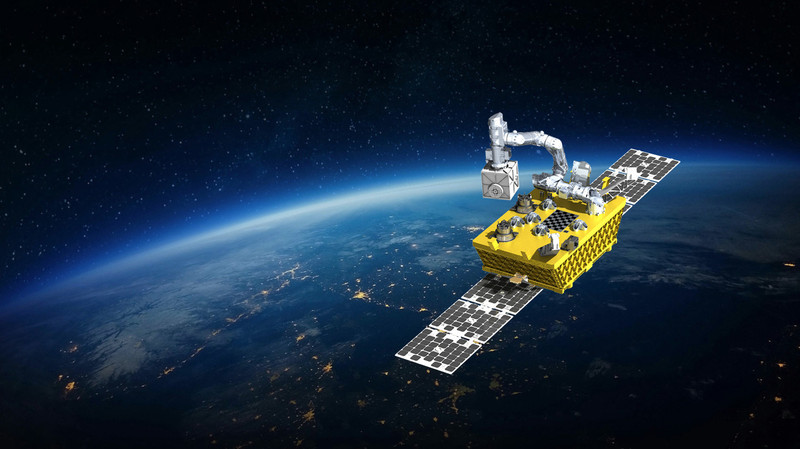
NASA Space Robotics Challenge
NASA invites U.S. researchers to submit proposals for experiments using a robotic arm that will be sent to low Earth orbit as part of the Fly Foundational Robots mission.

NASA Reveals Stunning Details of Meteor That Shook the United States
The space agency has shared new information about the fireball that released energy equivalent to 230 tons of TNT, shaking a vast region.
Latest news
View all
Stuntman Hollywood: Returns After 19 Years to PS5, Xbox Series, and PC
The iconic action and vehicular stunt franchise makes its comeback courtesy of Saber Interactive, promising a dose of nostalgia and adrenaline for the new generation.

Windows Drops NTLM: Microsoft Boosts Security with Kerberos
Microsoft is taking a crucial step to bolster security in Windows 11, announcing the deprecation of NTLM, its oldest authentication protocol, in favor of Kerberos.

Google Launches Gemma 4 12B: Local AI for Your Laptop with 16GB RAM
Google's new artificial intelligence model aims to democratize access to generative AI, allowing it to run on average consumer computers.
Comments (0)
No comments yet. Be the first!
Leave a comment