
Stanford's STEHM Model Optimizes Search for Habitable Exoplanets
Stanford University introduces STEHM, a new tool that filters exoplanets based on their ability to maintain stable atmospheres, a key condition for life.
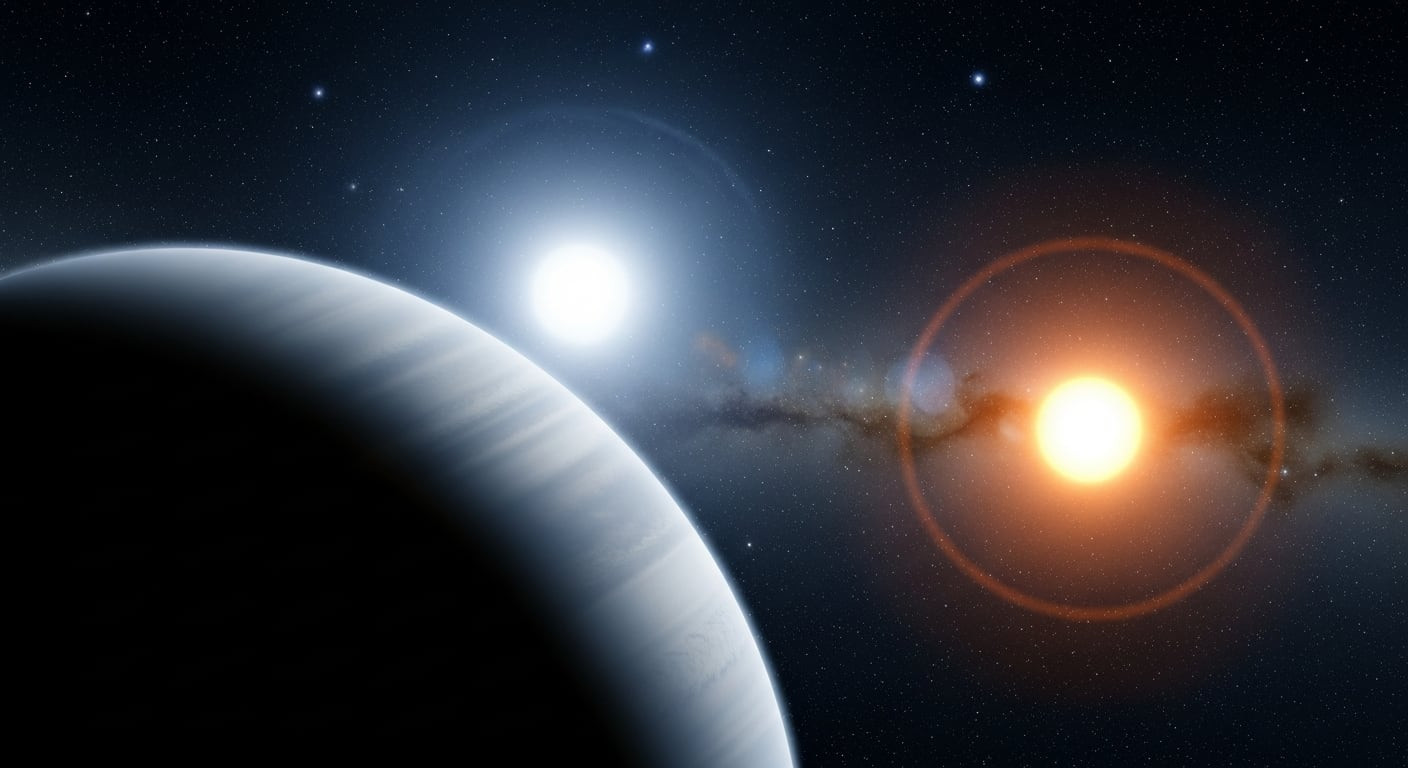
How many exoplanets do we need to study before we find one that truly harbors life? Stanford University has made a significant leap with the development of the STEHM scientific model, a tool designed to optimize the identification of exoplanets capable of maintaining a stable atmosphere for billions of years. This condition is, according to experts, essential for life as we know it.
This advancement aims to drastically reduce the margin of error and the resources needed for space exploration. The STEHM model's approach focuses on the size, composition, and atmospheric dynamics of each world, allowing astronomers to prioritize candidates with higher probabilities of sustaining habitable conditions.
The STEHM model filters exoplanets based on their size, initial carbon content, and volcanic activity. It evaluates whether they can retain a protective atmosphere for at least 10,000 million years. Key variables considered include the presence of CO₂, the thickness and density of the planetary mantle, the ability to replenish atmospheric gases, and protection from stellar radiation within the so-called “habitable zone” around stars.
The design of STEHM, led by postdoctoral researcher Michelle Hill and the Planetary Modeling Group directed by Laura Schaefer, addresses the challenge of selecting among the thousands of exoplanets identified by NASA in recent decades.
The design of STEHM, led by postdoctoral researcher Michelle Hill and the Planetary Modeling Group directed by Laura Schaefer, addresses the challenge of selecting among the thousands of exoplanets identified by NASA in recent decades. According to Stanford University, this methodology effectively discriminates between planets capable of retaining a life-compatible atmosphere and those that lose it rapidly. The analysis focuses on planets equal to or smaller than Earth, examining the interaction between their core, mantle, and crust to determine their habitability potential.
Through simulations, the Stanford University team established that planets need a minimum radius of 80% that of Earth to maintain their atmosphere for periods exceeding 10,000 million years. If the size is smaller, the atmosphere typically dissipates within a billion years, unless the planet possesses particularly favorable conditions, such as high initial carbon content or elevated volcanic activity to replenish CO₂.
CO₂ proves fundamental because it helps retain the heat necessary for life; without continuous replenishment through volcanism, the atmosphere tends to be lost. When heat-generating elements are depleted and the mantle cools, volcanic activity ceases, interrupting the atmospheric renewal cycle. Factors such as density, mantle, and the concentration of heat-producing elements (thorium, uranium, and potassium) are crucial for the duration of these volcanic processes.
The model also shows that excess heat in the early stages of planetary formation can shorten the atmosphere's duration. This occurs because premature melting of the mantle leaves the planet exposed to intense stellar radiation, which disintegrates heavy molecules—like CO₂—and facilitates the loss of gases into space. Location within the “habitable zone” is equally relevant, as thermal balance determines the atmosphere's ability to resist constant erosion from the space environment, according to Stanford University.
To verify STEHM's reliability, its developers applied the model to Venus and Mars, Earth's neighboring planets. The result was accurate: STEHM predicted that Venus, due to its size and composition, retains a thick CO₂ atmosphere, while smaller Mars, lacking active tectonics, only maintains a very thin atmosphere that has dissipated over time. The inspiration for STEHM, in fact, arose from the interest in explaining Mars's thin atmosphere and evaluating its potential for “terraforming.”
This progress allows the search for extraterrestrial life to be directed towards planets with characteristics closer to Earth, focusing attention on those with “mobile lid” tectonics, a property that could prolong atmospheric stability and favor sustainable vital processes. Stanford University plans to soon expand the model to planets with active internal dynamics, which will facilitate the identification of promising candidates in astrobiological exploration.
Article topics
Related articles
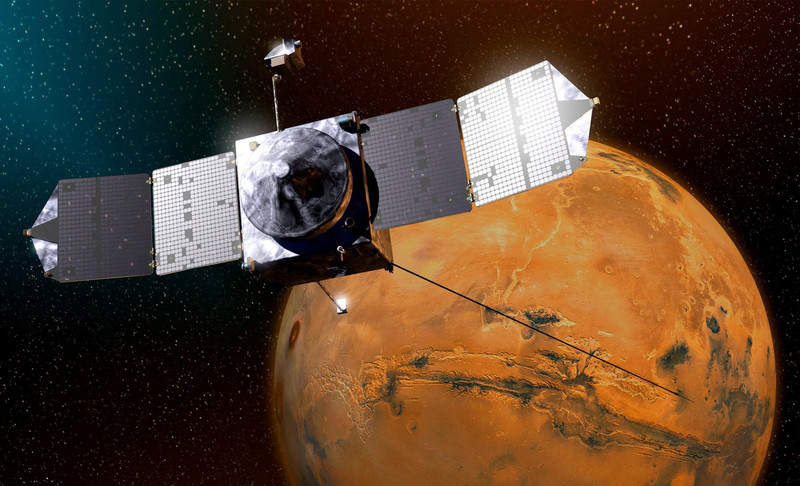
NASA's Maven Mars Orbiter Declared Out of Service After Six Months of Silence
Following an anomaly that disrupted its orbit and depleted its batteries, the Maven spacecraft, vital for understanding Mars' atmosphere, has ended its active mission. Its scientific data remains an invaluable legacy.
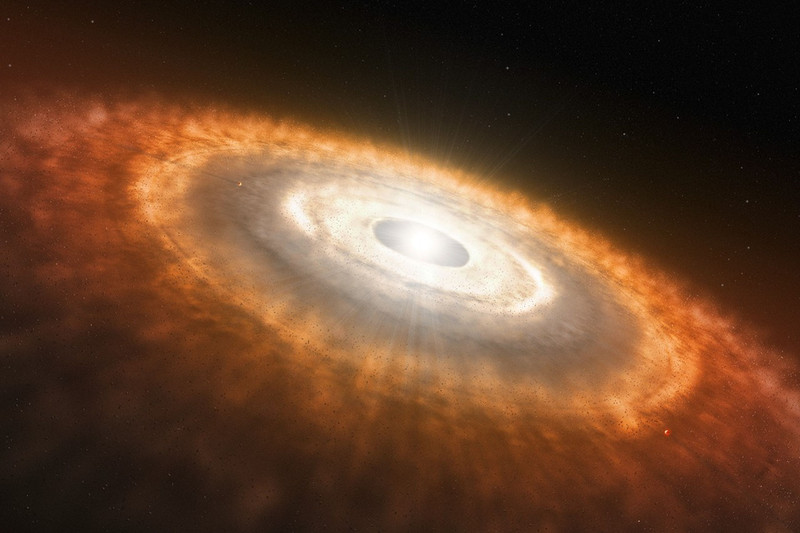
NASA Reveals New Path for Earth's Essential Life Elements
A recent study, published in Science Advances, uncovers how early Earth may have received phosphorus and nitrogen, highlighting Jupiter's critical role.

NASA Space Robotics Challenge
NASA invites U.S. researchers to submit proposals for experiments using a robotic arm that will be sent to low Earth orbit as part of the Fly Foundational Robots mission.
Latest news
View all
Ford Pro Transforms Fleet Management with eSIM and Real-Time Monitoring
Ford's commercial vehicle division integrates a factory-fitted eSIM into its units, providing businesses and vehicle owners with crucial data for proactive and efficient fleet management.

Google Launches Gemma 4 12B: Local AI for Your Laptop with 16GB RAM
Google's new artificial intelligence model aims to democratize access to generative AI, allowing it to run on average consumer computers.

Nvidia Challenges Intel and AMD with RTX Spark Superchip for PCs
Nvidia introduced RTX Spark, a processor promising to bring advanced artificial intelligence directly to your PC, without cloud dependence, and boost gaming to unprecedented levels on conventional machines.
Comments (0)
No comments yet. Be the first!
Leave a comment