
Google Launches Gemini 3.5 Live Translate for Instant Voice Translation
Google expands real-time translation availability with Gemini 3.5 Live Translate, offering lower latency and support for over 70 languages.

Google has released Gemini 3.5 Live Translate, a new artificial intelligence tool designed for instant voice-to-voice translation. This innovation promises broader accessibility and reduced latency across more than 70 languages, the company announced.
This development builds on Google's long-standing pursuit of real-time translation, which it describes as one of its "pioneering machine learning experiments." Historically, demonstrations of this technology at Google events often required specific hardware, such as Google phones or earbuds.
Last year, Google already made real-time translation available to more users through its Translate app. Now, with Gemini 3.5 Live Translate, this capability is expanding further, allowing individuals to access instant translation in a wider range of settings.
The core of this advancement is a new AI model, part of the Gemini 3.5 family unveiled at the I/O event. While only the Flash version of this series had been released until now, a more powerful Pro model is anticipated "in the coming weeks."
Gemini 3.5 Live Translate is a speech-to-speech model tuned to automatically detect and translate in more than 70 languages.
Gemini 3.5 Live Translate is a speech-to-speech model tuned to automatically detect and translate in more than 70 languages. This significant linguistic coverage aims to break down communication barriers more effectively.
Google states that the model operates quickly enough to keep pace with a normal conversation, following the speaker by just a few seconds. Crucially, it also focuses on matching the intonation, pacing, and pitch of the original voice.
This emphasis on natural voice replication means the translated output sounds more like the speaker and less like a generic robotic voice. While the showcased demos are recorded under controlled conditions, their performance appears impressive.
For users, this implies a substantial improvement in the fluidity of multilingual interactions. The reduced reliance on specific devices makes this advanced technology more accessible to a broader audience, fostering seamless communication.
We won't have to wait long to personally verify the model's capabilities. The promise of instant, natural translation across numerous languages opens up vast possibilities for global communication.


Article topics
Related articles
Microsoft Unveils Seven New AI Models with Human-Centric Superintelligence Vision
Microsoft introduces a powerful family of seven AI models spanning image, voice, and code, designed to empower developers and organizations with a strong ethical foundation.

Google I/O 2026: Chrome Transforms into an Intelligent Assistant with Gemini
Google unveiled an ambitious vision for the “Web of Agents” at I/O 2026, deeply integrating artificial intelligence into Chrome to empower developers and users alike.
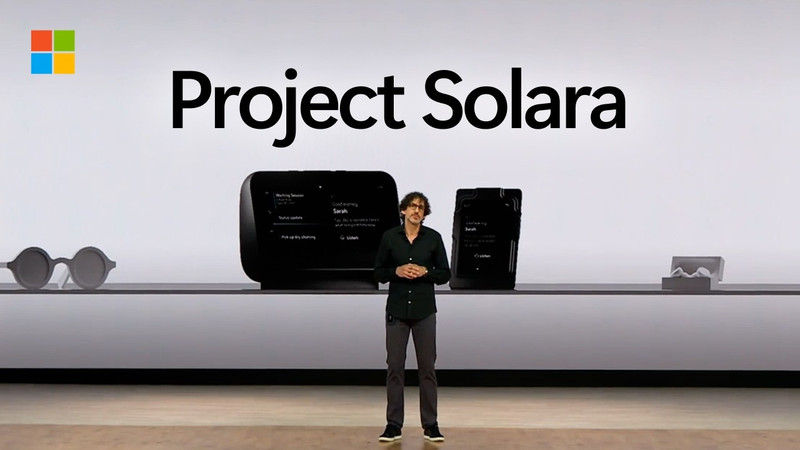
Microsoft Unveils Project Solara: AI Across a Constellation of Devices
This initiative redefines AI interaction, extending it beyond individual applications into an ecosystem of interconnected devices.
Latest news
View all
Windows 95 Runs on Texas Instruments Graphing Calculator
A modder successfully ported Windows 95 to a TI-Nspire CX II, showcasing modern calculator hardware capabilities.

Humanoid Robot Pemba Climbs Chimborazo, Sets Sights on Everest Summit
The humanoid robot Pemba, an adaptation of the Unitree G1, recently ascended over 6,000 meters on Chimborazo and now aims to conquer Mount Everest. This technological feat paves the way for new forms of exploration in extreme environments.

SpaceX IPO Values Company at $1.77 Trillion on Nasdaq
SpaceX's anticipated public offering on the Nasdaq positions it as the seventh most valuable U.S. listed company, marking a significant financial milestone.
Comments (0)
No comments yet. Be the first!
Leave a comment