
Microsoft Unveils Seven New AI Models with Human-Centric Superintelligence Vision
Microsoft introduces a powerful family of seven AI models spanning image, voice, and code, designed to empower developers and organizations with a strong ethical foundation.
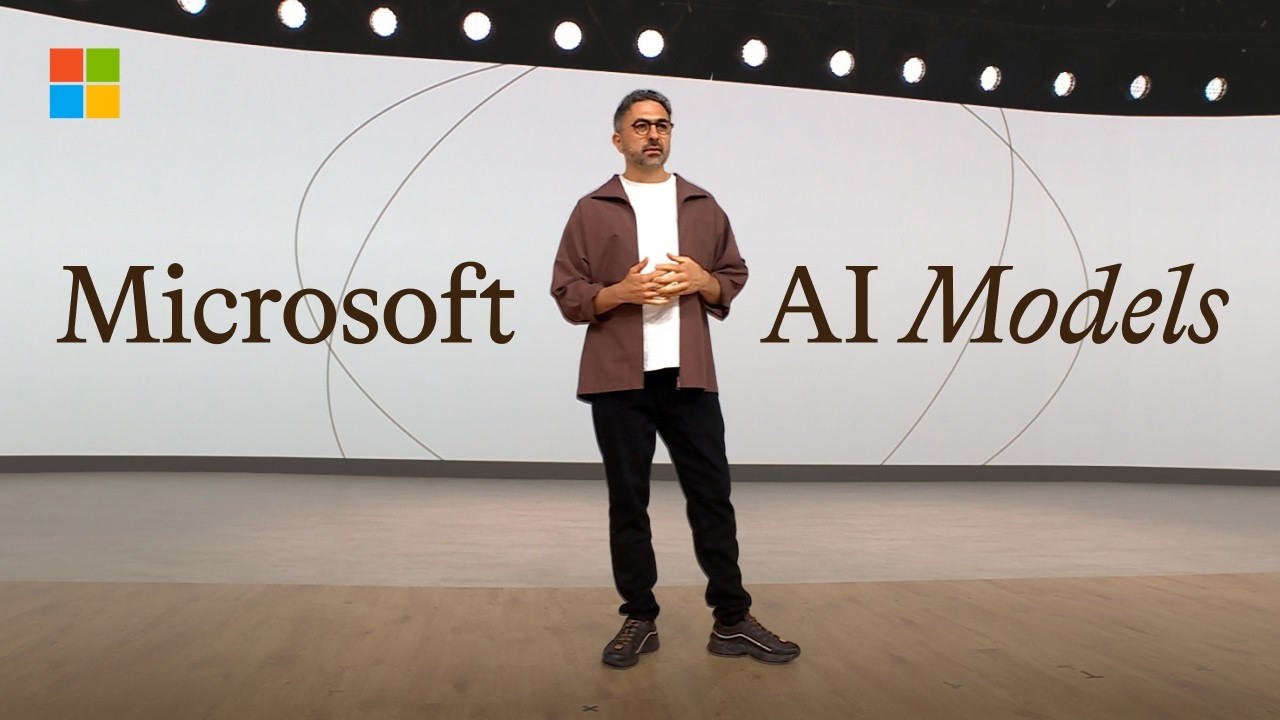
Microsoft is making significant strides in artificial intelligence, announcing a family of seven new models under its vision of "Humanist Superintelligence," explicitly designed to serve people and organizations rather than replace them. The company emphasizes that the type of AI created truly matters, prioritizing human well-being and progress in all its state-of-the-art capabilities.
This core philosophy and motivation behind Microsoft's superintelligence efforts shape everything they do. As a platform company, their commitment is to keep developers building at the absolute frontier of technology. These new models are crafted with meticulous attention to detail, aiming to be practical and efficient tools tuned to real-world workflows.
Among the releases are MAI Image 2.5 and its Flash variant, two robust models delivering a significant leap in quality. They now rank second on the image editing leaderboard, surpassing Nano Banana 2. MAI Image 2.5 provides maximum fidelity and professional-grade performance, while Flash is tailored for super-efficient production workloads. These models are live in PowerPoint today, rolling out to OneDrive, and accessible on Foundry, offering market-leading quality per dollar.
MAI Transcribe 1.5 stands as the world's best transcription model, delivering state-of-the-art accuracy across 43 languages and outperforming flagship models from Gemini and OpenAI.
MAI Transcribe 1.5 stands as the world's best transcription model, delivering state-of-the-art accuracy across 43 languages and outperforming flagship models from Gemini and OpenAI. Optimized for real-world uses, it produces highly accurate transcripts for any bespoke use case five times faster than rival models. It's being integrated into GitHub, Teams, Copilot, and Dynamics 365 Contact Center, and is also available in Foundry as the fastest, most efficient, and most cost-effective transcription model among hyperscalers.
Paired with transcription, MAI Voice 2 is Microsoft's latest speech generation model. It boasts beautiful prosody, natural-sounding delivery, and fine-grained emotional control, available in 15 languages with more coming soon. Voice 2 Flash was also announced, providing optimal value and speed for ultra-latency-sensitive voice agents, a key focus for 2026.
In the realm of reasoning, Microsoft introduces MAI Thinking 1, their first reasoning model. This model is exceptionally strong in reasoning and Software Engineering (SWE) tasks, featuring a 35 billion active parameter MOE with a 256k context window. It competes in the medium-size weight class, where independent human raters on Surge prefer its overall quality side-by-side against Sonnet 4.6. It achieved 97% on AME 2025 and 53% on SWE Bench Pro, placing it alongside Opus 46 on the toughest coding benchmark.
What makes MAI Thinking 1 particularly remarkable is its development from the ground up, without specifically targeting benchmarks or using distillation. This ensures an enterprise-grade, clean, and commercially licensed data lineage, allowing for trustworthy production deployment with complete confidence.
Finally, MAI Code 1 Flash is a new inference-efficient coding model, specifically tuned for VS Code and GitHub Copilot CLI. Despite having only 5 billion parameters, it achieves 51% on SWE Bench Pro, making it closer to Haiku in size but cheaper in cost. This model delivers strong coding performance with great inference efficiency and is rolling out today inside VS Code. It's also distributed on Foundry and optimized for Microsoft's 1P products, with availability on OpenRouter, Fireworks, and Baseten, allowing developers to directly tune weights within their chosen ecosystem.
Safety and security are built into this entire family of models from the start. Voice models come with protections against unauthorized cloning, and everything is watermarked from scratch. Microsoft has also focused on reducing "over-refusals" and improving representation, including for people with disabilities. A detailed technical report is being published to provide a full and transparent understanding of their development process.
A particularly exciting aspect is the careful co-design of these models with Microsoft's own silicon. MAI Thinking 1, for instance, is optimized on their Maia 200 chip, benchmarked against the GB-200, showing a further 1.4x performance per watt gain. This silicon and model co-design is a key advantage for maintaining efficiency and power at scale. Furthermore, these faster and more efficient MAI models are coming to the N1X in a few months, promising top performance on Windows.
This end-to-end full-stack approach forms the foundation of Microsoft Frontier Tuning, enabling customization of MAI models using their full-stack hillclimbing machine. This means the disciplined engineering behind these models is now available to developers, empowering them to create custom agents they control. Reinforcement Learning Environments (RLEs) create company and task-specific agents, adapted uniquely to the user. For example, an MAI tuned model for Excel tasks is on par with GPT 5.4 on public and private benchmarks, while being ten times more cost-efficient.
When tuned on McKinsey's tasks, MAI models delivered the highest win rate, even outperforming GPT 5.5, again with a tenfold greater cost efficiency. Unlike some other companies, MAI ensures users don't "rent" intelligence from a shared model that learns from everyone. Users retain the benefits of their workflows, know-how, knowledge, and institutional data, maintaining control over the resulting model. The RLEs and the models built within them become a user's unique "moat," marking a new era in AI.
Finally, Microsoft announced a significant partnership with Mayo Clinic to jointly develop a new frontier model for healthcare. This model will be deployed globally in hospitals and beyond, aiming to provide trusted, scalable solutions. Dr. Gianrico Farrugia, President and CEO of Mayo Clinic, highlighted that this collaboration will enable the creation of a model offering clinical and logistical answers to patients, and valuable insights to healthcare providers, acting as a real-time team member to prevent harm and increase patient safety.
This initiative seeks to combine the models' textbook knowledge with Mayo Clinic's decades of clinical practice and expertise, delivering safe, secure, trustworthy, and effective healthcare solutions for all. The primary objective is to prioritize the patient, providing the highest quality care reliably and sharing it globally, a concrete step towards the "Humanist Superintelligence" vision controlled by its users.
Article topics
Related articles
Google I/O 2026: Chrome Transforms into an Intelligent Assistant with Gemini
Google unveiled an ambitious vision for the “Web of Agents” at I/O 2026, deeply integrating artificial intelligence into Chrome to empower developers and users alike.
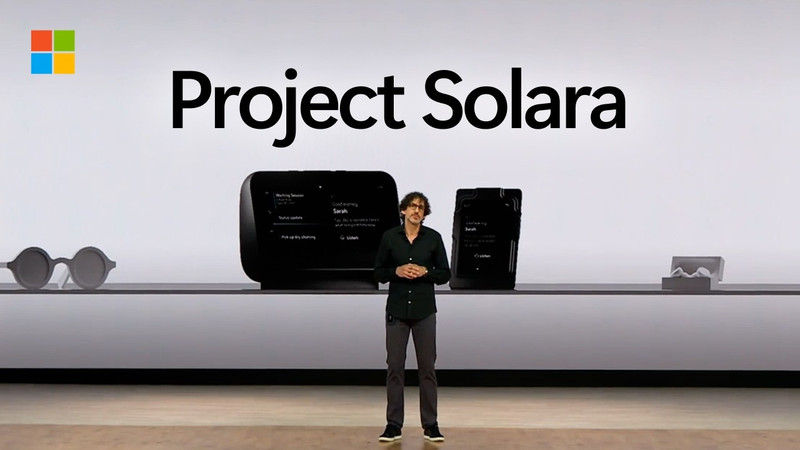
Microsoft Unveils Project Solara: AI Across a Constellation of Devices
This initiative redefines AI interaction, extending it beyond individual applications into an ecosystem of interconnected devices.
Google Launches Gemma 4 12B: Local AI for Your Laptop with 16GB RAM
Google's new artificial intelligence model aims to democratize access to generative AI, allowing it to run on average consumer computers.
Latest news
View all
Microsoft Unveils Majorana 2 Quantum Chip with 20-Second Qubit Lifespan
The new chip boasts 1,000 times more stable qubits, and with the Microsoft Discovery platform, accelerates R&D towards a commercial quantum computer by 2029.

Stanford's STEHM Model Optimizes Search for Habitable Exoplanets
Stanford University introduces STEHM, a new tool that filters exoplanets based on their ability to maintain stable atmospheres, a key condition for life.
Ford Pro Transforms Fleet Management with eSIM and Real-Time Monitoring
Ford's commercial vehicle division integrates a factory-fitted eSIM into its units, providing businesses and vehicle owners with crucial data for proactive and efficient fleet management.
Comments (0)
No comments yet. Be the first!
Leave a comment