
Google I/O 2026: Chrome Transforms into an Intelligent Assistant with Gemini
Google unveiled an ambitious vision for the “Web of Agents” at I/O 2026, deeply integrating artificial intelligence into Chrome to empower developers and users alike.
At Google I/O 2026, Google presented an ambitious vision for the “Web of Agents,” a new era where artificial intelligence redefines how we create and interact with digital content. This shift aims to bridge the gap between complex developer workflows, underlying platform capabilities, and everyday user experiences.
The core ideas of this transformation are grouped into three key areas: empowering AI agents to create and interact with websites, expanding the boundaries of web UI and performance, and transforming the browser into a powerful, proactive assistant for everyday users with Gemini in Chrome. Integrating efficient, built-in AI models directly into the browser and powerful automation tools like auto-navigation promises a smarter, faster, and more accessible web for everyone.
Integrating efficient, built-in AI models directly into the browser and powerful automation tools like auto-navigation promises a smarter, faster, and more accessible web for everyone.
For developers, Google introduced powerful new capabilities and tools that make it easier to create modern web experiences. These include WebMCP and Modern Web Guidance, designed to build with greater clarity and speed, in addition to offering AI-assisted tools for compiling, debugging, and optimizing code faster and more accurately than ever before.
WebMCP, a proposed open web standard, allows structured tools, such as JavaScript functions and HTML forms, to be exposed to browser-based agents. This means agents can call machine-compatible functions to complete complex tasks in seconds with greater reliability, accuracy, and personalization. The experimental origin trial for WebMCP begins in Chrome 149, and Gemini in Chrome will soon support its APIs.
Modern Web Guidance, now available in early preview, is a set of expert-verified, enduring skills that guide coding agents in many common use cases to create modern web experiences that are more accessible, efficient, and secure. It integrates directly with Baseline and supports over 100 use cases for dozens of the latest features, with continuous updates added regularly.
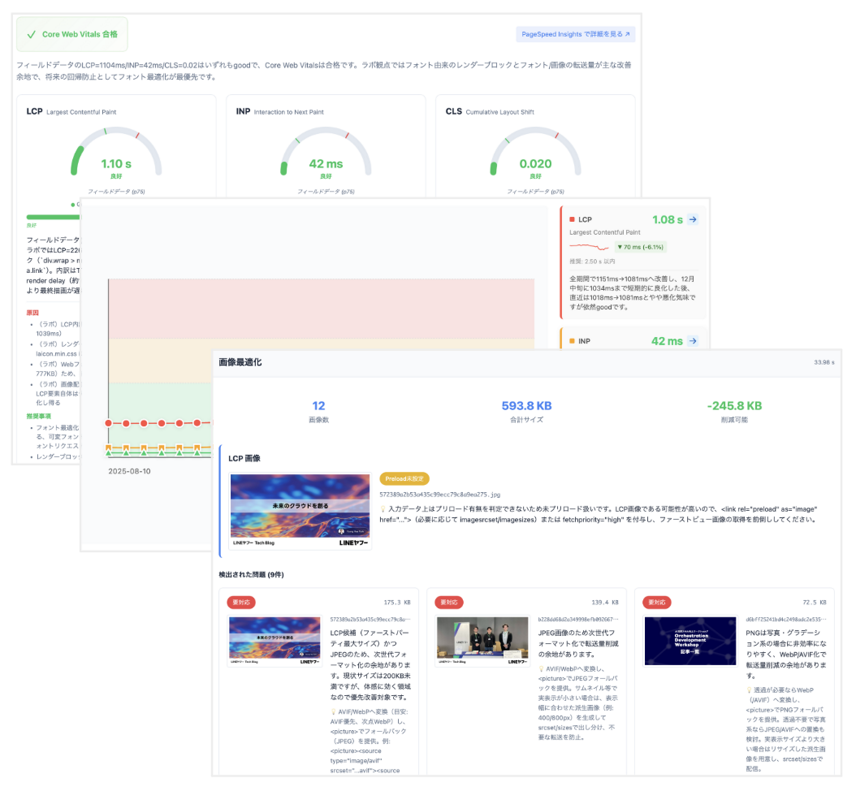
Debugging is also optimized with Chrome DevTools for Agents, which provide real-time visibility to verify, debug, and optimize code. By giving agents direct access to DevTools capabilities like console logs, network traffic, and accessibility trees, they can verify and automate fixes without manual oversight. LY Corporation, for example, used this system to reduce manual analysis by 96 to 98%.
Built-in AI, running entirely in the browser, allows for custom, proactive features without server overhead or token bills. Chrome 148, for instance, uses Gemini Nano with multimodal inputs and structured output for the Prompt API, which is now stable. Additionally, the ultra-efficient Gemma 197M model powers task-specific APIs like summarizer, automatically adjusting functions to a wider spectrum of devices. Trip.com is already using built-in AI for personalized travel summaries.
In the realm of UI and performance, new declarative APIs continue to blur the line between the web and native apps. The new HTML-in-Canvas API and element-scoped view transitions enable previously impossible high-fidelity UIs. HTML-in-Canvas integrates real DOM elements directly into a WebGL and WebGPU canvas for immersive 3D experiences, while view transitions, such as those available in Chrome 147, animate intermediate states without blocking interactivity.
For everyday users, Gemini in Chrome is expanding to Android in June, acting as a personal browsing assistant. It allows users to summarize long articles, ask specific questions, and get detailed explanations without switching apps. Furthermore, it connects with Google apps like Calendar, Keep, and Gmail, and with Personalized Intelligence, it can provide tailored responses based on user interests.
Auto-navigation, already available on desktop, will arrive on Android, allowing Gemini in Chrome to automate complex digital tasks, from booking appointments to planning parties and finding in-stock items. On desktops, auto-navigation will integrate with Gemini Spark in the coming months, enabling the personal AI agent to perform actions in the browser on the user's behalf.
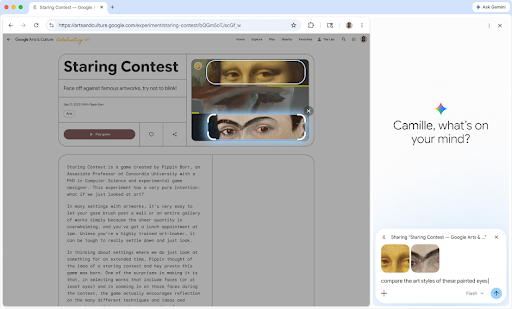
Other innovations include Nano Banana, for instantly creating or customizing images on Android while browsing, and Skills in Chrome, which allows users to save and reuse their most useful AI prompts for one-click workflows. Additionally, users can now use the mouse pointer to select specific screen elements to activate Gemini in Chrome, and soon, voice input will be available across the web on desktop Chrome, with Gemini models cleaning and adjusting transcriptions.
The transition to the Web of Agents is unfolding rapidly, removing the friction that historically slowed and restricted innovation. Google aims for a web that proactively works for you, and the tools presented at Google I/O 2026, available on developer.chrome.com and web.dev, pave the way for building this future.
Article topics
Related articles
Microsoft Unveils Seven New AI Models with Human-Centric Superintelligence Vision
Microsoft introduces a powerful family of seven AI models spanning image, voice, and code, designed to empower developers and organizations with a strong ethical foundation.
Microsoft Unveils Project Solara: AI Across a Constellation of Devices
This initiative redefines AI interaction, extending it beyond individual applications into an ecosystem of interconnected devices.
Google Launches Gemma 4 12B: Local AI for Your Laptop with 16GB RAM
Google's new artificial intelligence model aims to democratize access to generative AI, allowing it to run on average consumer computers.
Latest news
View all
Microsoft Unveils Majorana 2 Quantum Chip with 20-Second Qubit Lifespan
The new chip boasts 1,000 times more stable qubits, and with the Microsoft Discovery platform, accelerates R&D towards a commercial quantum computer by 2029.

Stanford's STEHM Model Optimizes Search for Habitable Exoplanets
Stanford University introduces STEHM, a new tool that filters exoplanets based on their ability to maintain stable atmospheres, a key condition for life.

Ford Pro Transforms Fleet Management with eSIM and Real-Time Monitoring
Ford's commercial vehicle division integrates a factory-fitted eSIM into its units, providing businesses and vehicle owners with crucial data for proactive and efficient fleet management.
Comments (0)
No comments yet. Be the first!
Leave a comment