
UK Law Firm Wins Case Using AI for Legal Documentation
A law firm in England achieved a landmark judicial victory by leveraging artificial intelligence to prepare all case documentation, setting a global precedent.
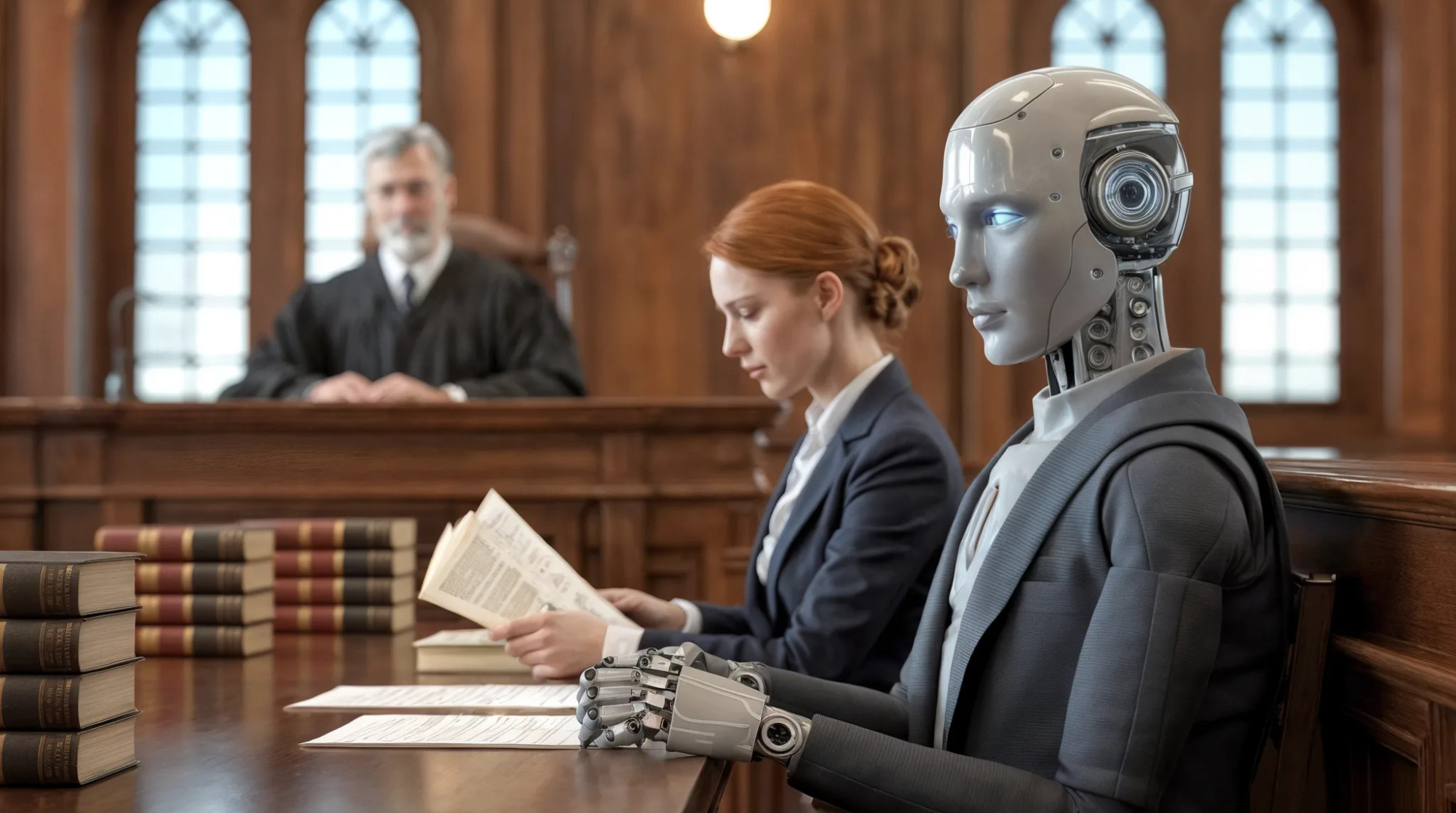
A significant 7000 pounds in compensation marks a new era in legal tech: a UK law firm, Garfield AI, has won a court case by utilizing artificial intelligence to prepare all required documentation, a process validated by the Solicitors Regulation Authority (SRA) in England and Wales.
In this groundbreaking approach, AI handled crucial tasks like drafting witness statements and other essential legal documents for the trial. However, a human lawyer presented the oral arguments in court, blending technological efficiency with traditional legal expertise to secure the favorable outcome.
This judicial success not only secured compensation for the claimant, Tamires Camal Taquidir, but also, according to firm founder Philip Young, represents the first time a trial has been won using AI as part of the process, both in the United Kingdom and worldwide.
"This is a historic moment, not just for Garfield AI, but also for access to justice. For too long, businesses have been forced to write off certain debts because the cost, time, and stress of litigation made it unprofitable to pursue them," Young told the _Financial Times_.
Young's firm specializes in debt recovery. Their impressive track record includes managing over 600 claims and recovering approximately 500,000 pounds for their clients, showcasing the scalability and effectiveness of their hybrid model.
Young emphasized that AI did not replace the judge, the litigating lawyer, or the judicial system. Instead, it made the legal process more accessible, efficient, and affordable. This is particularly vital for small and medium-sized businesses that previously couldn't afford litigation for minor debts, opening new avenues for justice.
The integration of AI into the legal industry has faced its share of challenges. We recall instances where two lawyers used invented legal precedents from ChatGPT in a lawsuit, presented them in court without verification, and the judge discovered these cases did not exist, leading to fines. There was also the Brazilian case where the National Council of Justice had to investigate a judge who published a sentence aided by ChatGPT, which contained invented jurisprudence. Similarly, a judge in Chubut used ChatGPT to draft a ruling that was later annulled.
To prevent such errors, the industry is actively developing AI tools specifically designed for the legal sector. These platforms are trained by lawyers and engineered to avoid "hallucinations" (invented responses), while also adapting to the unique geographical and legal characteristics of each jurisdiction.
The SRA's validation and Garfield AI's success point towards a promising future for democratizing access to justice. For individuals and businesses with low-value claims, AI could offer a cost-effective avenue to assert their rights, a possibility previously hindered by prohibitive legal expenses and the complexity of the system.
Article topics
Related articles

Anthropic Launches Claude Tag for Teams on Slack, Boosting AI Collaboration
The new tool integrates Claude as a team member in Slack, automating tasks and learning from channel context for unprecedented productivity.

US Government Suspends Access to Anthropic's Fable 5 and Mythos 5 AI Models
A national security directive forces Anthropic to disable its advanced AI models, Fable 5 and Mythos 5, for all customers starting June 12, 2026.

Google Launches Gemini 3.5 Live Translate for Instant Voice Translation
Google expands real-time translation availability with Gemini 3.5 Live Translate, offering lower latency and support for over 70 languages.
Latest news
View all
God of War: Laufey Reportedly Targets Early 2027 to Avoid GTA VI Collision
The gaming industry is recalibrating its release schedules. PlayStation and Santa Monica's anticipated God of War: Laufey is reportedly shifting to February or March 2027 to steer clear of Grand Theft Auto VI's launch.

James Webb Telescope Discovers Water Vapor on Exoplanet TOI-421 b
NASA's space telescope made an unprecedented finding on TOI-421 b, a sub-Neptune with a surprisingly clear atmosphere, potentially reshaping our understanding of planetary formation.

Instagram and Facebook Suffer Global Outage During 2026 World Cup
Millions of users were affected by a disruption that prevented viewing images and videos on Meta's platforms, just as the company offered special features for the World Cup.
Comments (0)
No comments yet. Be the first!
Leave a comment