
NASA Orders ISS Crew to SpaceX Craft Amid Russian Segment Leak
Five astronauts took refuge in a Dragon capsule as Roscosmos considered a risky repair plan for an air leak in the Russian segment of the International Space Station.
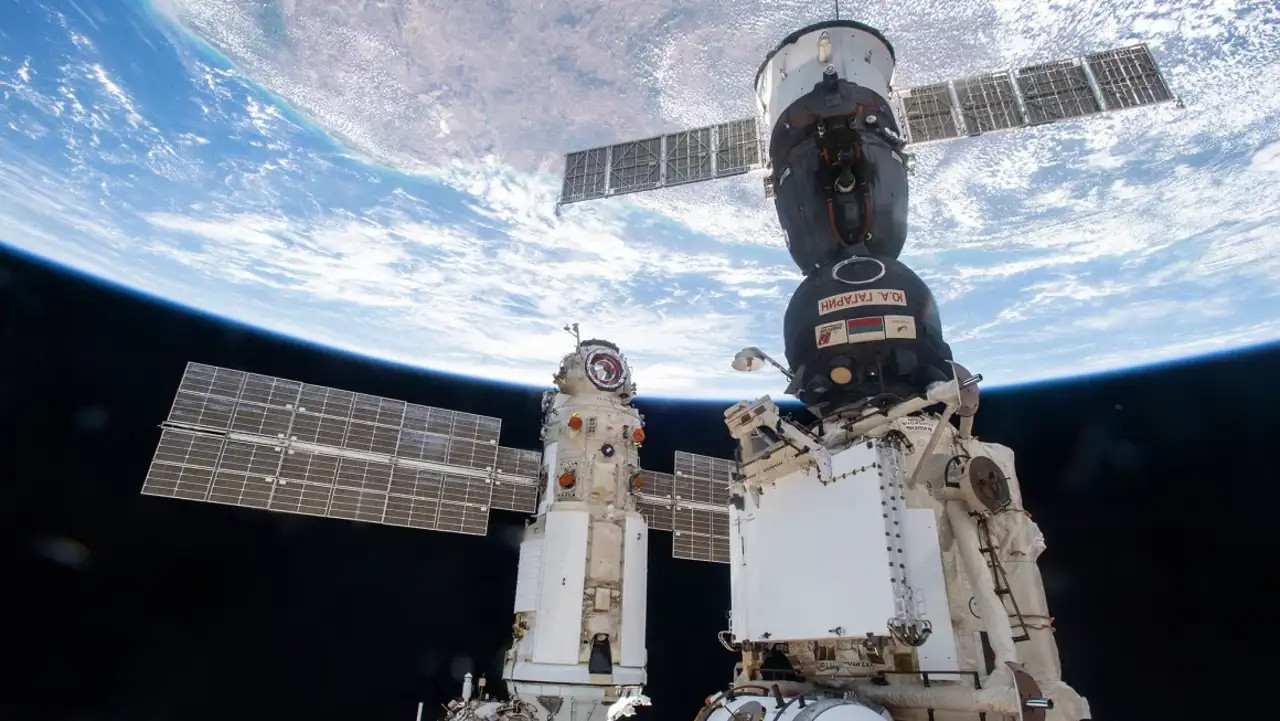
Five astronauts were forced to take refuge this Friday aboard a spacecraft docked to the International Space Station (ISS), as reported by NASA, while their Russian space agency counterparts, Roscosmos, worked to address an air leak in the station's Russian-controlled segment.
This emergency measure was enacted after Roscosmos devised a plan to cut a support structure, aiming to “better access an area identified as a possible source of the leak for a more detailed inspection.” NASA warned this procedure “could have elevated the risk to the structure in that area.”
The astronauts who sought refuge included the four members of the SpaceX Crew-12 mission—NASA astronauts Jessica Meir and Jack Hathaway, the European Space Agency's Sophie Adenot, and Roscosmos cosmonaut Andrey Fedyaev—who arrived at the orbital laboratory aboard the Dragon capsule. NASA's Chris Williams, who reached the ISS via a Russian Soyuz spacecraft, also joined the Crew-12 members.
NASA indicated that its Russian space agency counterparts, Roscosmos, designed a plan to cut a support structure to “better access an area identified as a possible source of the leak for a more detailed inspection.”
The refuge order, intended to prepare astronauts for a potential emergency evacuation, was lifted shortly after its issuance. This occurred because Roscosmos “suspended structural repair work this Friday while further measurements and data are evaluated,” a change of plans that the US agency “strongly supported.”
Air leaks in the Russian section of the ISS, specifically in a transfer tunnel between the Zvezda module and a docking hatch, have been a persistent concern since 2019. The issue resurfaced when Roscosmos conducted new air pressure measurements of the module following the arrival of a cargo spacecraft in April.
In 2024, the situation reached a critical point, with the leak rate fluctuating “between 0.9 and 1.1 liters (of air) per day above the station's baseline,” according to NASA. The US agency has identified these leaks as a potential source of a “catastrophic failure,” highlighting the severity of the problem.
Previous efforts to seal these microscopic cracks have been complex, as they are not visible to the naked eye, and their location near supports and pipes makes it difficult to introduce diagnostic tools. Recently, Roscosmos observed an increase in the previous leak rate to “two pounds per day” and identified new suspicious areas in the PrK tunnel.
The International Space Station, now over 25 years old and continuously occupied since 2000, faces an uncertain future. While NASA is committed to maintaining ISS operations until at least 2030, Russia, its primary partner, has only committed its segment until 2028, raising questions about the long-term sustainability of operations.
Maintaining a space station in low Earth orbit is a national security imperative for the United States, especially given China's operation of its own space station in the same region. The ISS serves as a crucial platform for testing technologies for the Artemis program, which aims to send humans further into space.
Earlier this year, NASA temporarily abandoned its strategy for a private replacement and instead ordered a new module for the station, seemingly to extend the orbital laboratory's lifespan. However, the agency reversed this decision just months later after receiving feedback from its commercial partners, leaving the long-term strategy for the iconic orbital laboratory in flux.
Article topics
Related articles
Human Thought May Begin Before Birth, Study Suggests
Recent research from the University of Durham and Lisbon suggests that consciousness and thought form during gestation, challenging previous ideas.
Humanoid Robot Pemba Climbs Chimborazo, Sets Sights on Everest Summit
The humanoid robot Pemba, an adaptation of the Unitree G1, recently ascended over 6,000 meters on Chimborazo and now aims to conquer Mount Everest. This technological feat paves the way for new forms of exploration in extreme environments.
Artemis III Progresses to Moon with Crucial Challenges and Mars Ambitions
NASA's Artemis III mission aims for a sustained human presence on the Moon, navigating delays in space suit development and technical hurdles with partners SpaceX and Blue Origin.
Latest news
View all
Apple and Intel to Produce Chips in US Amid Price Hikes
Donald Trump announced a key agreement between Apple and Intel to manufacture processors in the United States, aiming to diversify Apple's supply chain and mitigate rising costs.

Spider-Man: Brand New Day Trailer Reveals Peter's Mutation and Mysterious Villain
The new "Spider-Man: Brand New Day" trailer showcases Peter Parker's full Man-Spider transformation and The Punisher's unexpected key role, while the identity of the villain played by Sadie Sink sparks intense theories.
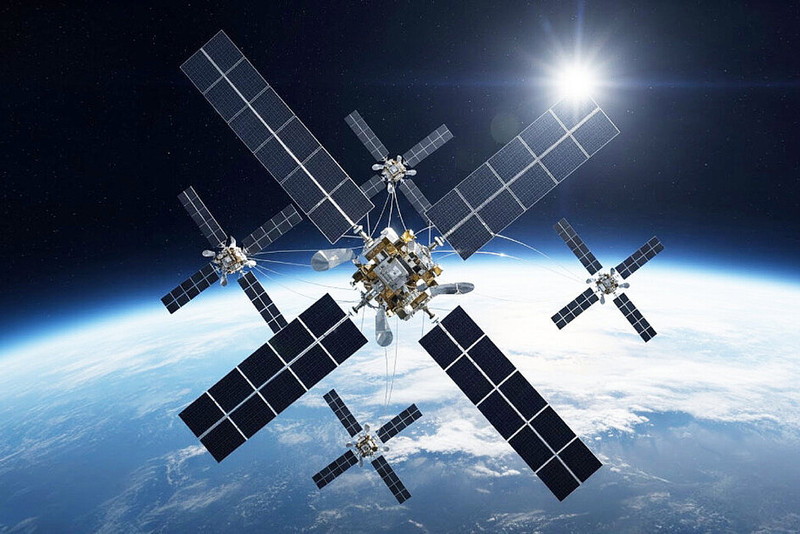
Elon Musk Plans Space Data Centers to Ease AI Energy Crisis
The escalating energy demand for artificial intelligence and terrestrial data centers is driving SpaceX to explore space-based solutions, with Starship being key to economic viability.
Comments (0)
No comments yet. Be the first!
Leave a comment