
Elon Musk Plans Space Data Centers to Ease AI Energy Crisis
The escalating energy demand for artificial intelligence and terrestrial data centers is driving SpaceX to explore space-based solutions, with Starship being key to economic viability.
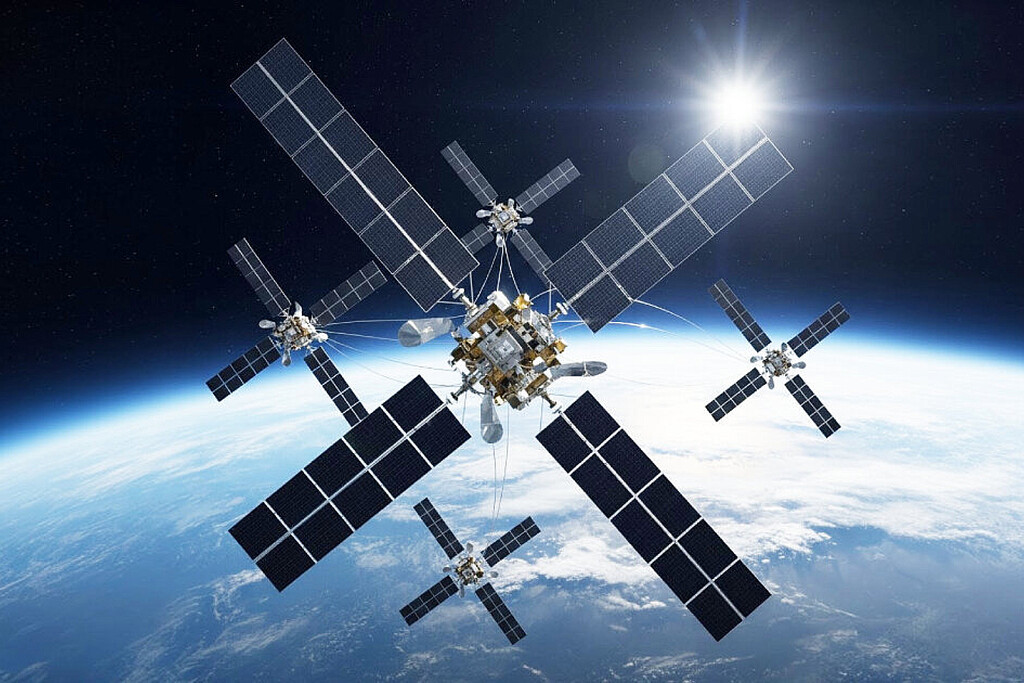
Artificial intelligence (AI) is consuming energy at an unprecedented rate, and terrestrial infrastructure is struggling to keep up. The scarcity of advanced semiconductor wafers, such as TSMC's N3, and the limited supply of HBM memories are already critical bottlenecks. However, the real challenge, according to a recent study, is the electrical power supply. Securing a grid connection in locations like Virginia (USA) can take up to seven years, forcing companies to invest in their own power generation plants. It is estimated that the cost of terrestrial energy will exceed 20 million dollars per MW by the end of this decade.
Faced with this scenario, the idea of space-based data centers, which might seem far-fetched, takes on surprising practical significance. Elon Musk, through his Terafab project in Austin, aims to manufacture one million semiconductor wafers per month, dedicating 80% of them to these future data centers beyond Earth. This massive chip manufacturing initiative will require a colossal electrical power of 10 GW.
The feasibility of this bold space-based proposal largely depends on the success of Starship, SpaceX's super heavy-lift rocket. The company anticipates a drastic reduction in launch costs, moving from the current $1,400-$1,800 per kilogram of the Falcon 9 to just $250 per kilogram with Starship. This cost reduction, combined with advancements in radiator and solar panel technology, could significantly narrow the economic gap with terrestrial infrastructure.
SpaceX expects to significantly reduce launch costs in the coming years, moving from the current $1,400-$1,800 per kilogram of the Falcon 9 to just $250 per kg with Starship.
While a space data center is currently approximately 260% more expensive than a terrestrial one, projections suggest that by the early next decade, this difference will shrink to just 30%. Economic parity, meaning equivalent costs, is theoretically expected to be achieved around 2040.
However, not everything is straightforward. There are other crucial factors to consider, such as the long-term cost of computation. On Earth, between 3% and 6% of GPUs in data centers fail annually and require manual replacement. In space, this option is unfeasible. Therefore, space data satellites will need to be oversized, including an additional 20% of chips to ensure redundancy and compensate for potential failures caused by space radiation.
The need for radiation-hardened chips and the complexity of in-orbit repairs are significant technical challenges. While Earth faces increasing energy demands and bottlenecks in semiconductor production, space emerges as a potential frontier, albeit one fraught with obstacles, for hosting the computational infrastructure of the future.
The investment in space data centers, driven by the insatiable energy appetite of AI and the promise of more economical launches with Starship, presents a futuristic vision. If SpaceX manages to materialize its ambitious cost reduction plans and the technical challenges of space computing are overcome, we could be looking at a paradigm shift in global technological infrastructure.
Article topics
Related articles

Windows 95 Runs on Texas Instruments Graphing Calculator
A modder successfully ported Windows 95 to a TI-Nspire CX II, showcasing modern calculator hardware capabilities.
SpaceX IPO Values Company at $1.77 Trillion on Nasdaq
SpaceX's anticipated public offering on the Nasdaq positions it as the seventh most valuable U.S. listed company, marking a significant financial milestone.

Philips Hue Smart Lights Now React to Live Sports Events in Real-Time
Signify, the company behind Philips Hue, introduces "Sports Live," a feature synchronizing smart lighting with real-time sports data for an immersive viewing experience, just in time for the 2026 FIFA World Cup.
Latest news
View all
US Government Suspends Access to Anthropic's Fable 5 and Mythos 5 AI Models
A national security directive forces Anthropic to disable its advanced AI models, Fable 5 and Mythos 5, for all customers starting June 12, 2026.

Google Launches Gemini 3.5 Live Translate for Instant Voice Translation
Google expands real-time translation availability with Gemini 3.5 Live Translate, offering lower latency and support for over 70 languages.

Humanoid Robot Pemba Climbs Chimborazo, Sets Sights on Everest Summit
The humanoid robot Pemba, an adaptation of the Unitree G1, recently ascended over 6,000 meters on Chimborazo and now aims to conquer Mount Everest. This technological feat paves the way for new forms of exploration in extreme environments.
Comments (0)
No comments yet. Be the first!
Leave a comment