
Unexpected Garnet Discovery in Martian Meteorite Reveals Mars' Geological History
Researchers have found garnet grains, a mineral never before observed on the Red Planet, inside a Martian meteorite, offering new insights into its 4.5-billion-year geological past.
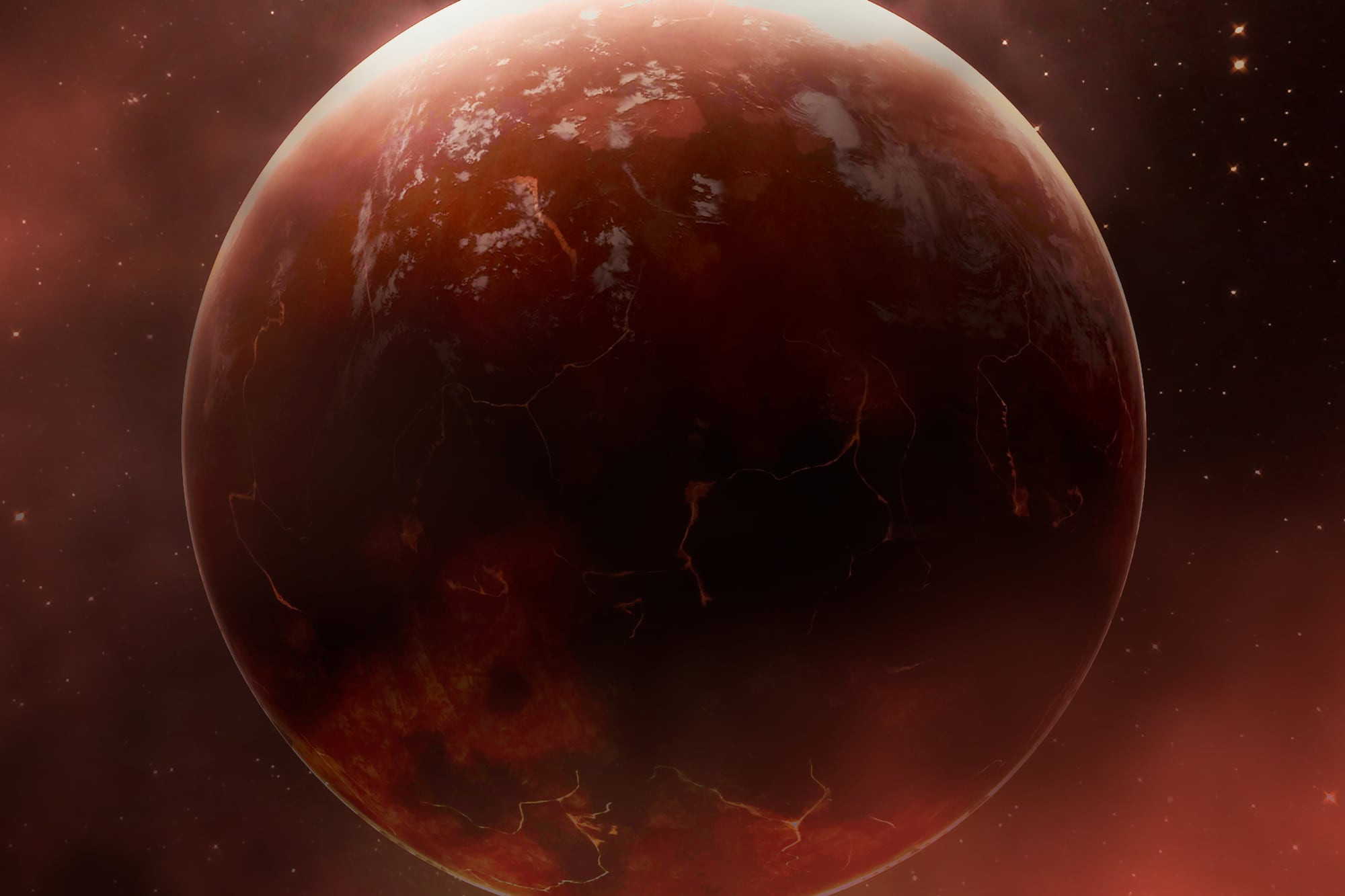
Mars' 4.5-billion-year geological history just gained a surprising new piece of the puzzle. A team of researchers made an unprecedented discovery, finding garnet grains—a mineral never before observed on the Red Planet—within a meteorite originating from Mars. This exciting find opens a fascinating window into the evolution of our planetary neighbor.
On Earth, garnet is a highly prized family of minerals, valued since antiquity and used as a gemstone by civilizations like the Egyptians, Romans, and the Victorian elite. Geologically, this mineral is crucial because it provides precise information about the tectonic forces and formation processes that shape a planet's crust and mantle. Its presence on Mars, therefore, is a powerful indicator of complex geological processes.
The specialists, who published their study in the journal "Geochemical Perspectives Letters", located these tiny grains in a Martian rock fragment measuring just 0.8 by 0.5 millimeters. Despite their minute size, these grains function as a geological time capsule, preserving crucial clues about the temperatures, pressures, and processes that affected Mars over billions of years.
"Garnet is a classic example of a mineral often found in metamorphic rocks on Earth. The process of metamorphism transforms igneous or sedimentary rocks into a new form through exposure to extreme heat, high pressure, or hot fluids," explained Tanya Kizovski, a professor of Earth Sciences at Brock University in Canada and the study's lead author.
The recovered fragments are part of the NWA 8171 meteorite, a specimen housed within the Royal Ontario Museum's collections. Interestingly, unlike traditional red garnet, the variety found on Mars is andradite, an iron-rich form that exhibits a yellowish-green color. This particular hue nearly caused scientists to overlook the discovery entirely.
Tanya Kizovski recalled that the mineral's chemistry "was a bit strange from the beginning." Initially, researchers assumed it was pyroxene, a much more common mineral in Martian rocks. However, their persistence led them to examine the sample in greater detail, ultimately revealing the true nature of the find.
Currently, the research team is focused on determining whether the garnet formed directly on the Martian surface or arrived there via the impact of another meteorite. According to Kizovski, the heat and pressure required to produce this mineral could have come from either the impact of a space object, magma rising into the crust, or a combination of both factors.
To confirm its origin, scientists aim to study the mineral's isotopic signatures. However, this analysis involves destroying part of the sample, a risk the team has avoided so far due to the material's extreme rarity and value. This dilemma highlights the delicate nature of extraterrestrial sample research.
This discovery not only expands our catalog of Martian minerals but also challenges and enriches our understanding of how the planet formed and evolved. James Darling, a professor at the University of Portsmouth and co-author of the study, stated: "The findings add a surprising new dimension to our understanding of Martian geology and open an an exciting window into the evolution of our planetary neighbor." The decision to sacrifice a portion of this valuable sample for deeper analysis will be crucial in the next steps of this fascinating investigation.
Article topics
Related articles
NASA Enhances Asteroid Detection and Deflection Capabilities
The US space agency advances planetary defense techniques following the successful DART mission and the upcoming NEO Surveyor observatory.
Jupiter's Great Red Spot: New Study Unravels Centuries-Old Mystery
A groundbreaking study led by NASA Goddard scientists reveals new insights into the composition and enduring nature of Jupiter's iconic storm, first observed in 1665.

Jeff Bezos Proposes Space Data Centers and Relocating Earth Industries
The founder of Amazon and Blue Origin aims to alleviate terrestrial environmental pressure by moving intensive operations to space, seeing the Moon as a key first step.
Latest news
View all
Instagram and Facebook Suffer Global Outage During 2026 World Cup
Millions of users were affected by a disruption that prevented viewing images and videos on Meta's platforms, just as the company offered special features for the World Cup.

X, formerly Twitter, suffered global outage for over an hour and a half
The X platform experienced a worldwide service interruption, affecting both its website and mobile app. The outage occurred while its French offices are under investigation.

Anthropic Launches Claude Tag for Teams on Slack, Boosting AI Collaboration
The new tool integrates Claude as a team member in Slack, automating tasks and learning from channel context for unprecedented productivity.
Comments (0)
No comments yet. Be the first!
Leave a comment