
AMD Zen 6 to Feature Low-Power Cores for Enhanced Efficiency
A discovery in the Linux kernel and an AMD engineer's confirmation reveal that upcoming Zen 6 processors will adopt a hybrid core strategy to optimize power consumption.
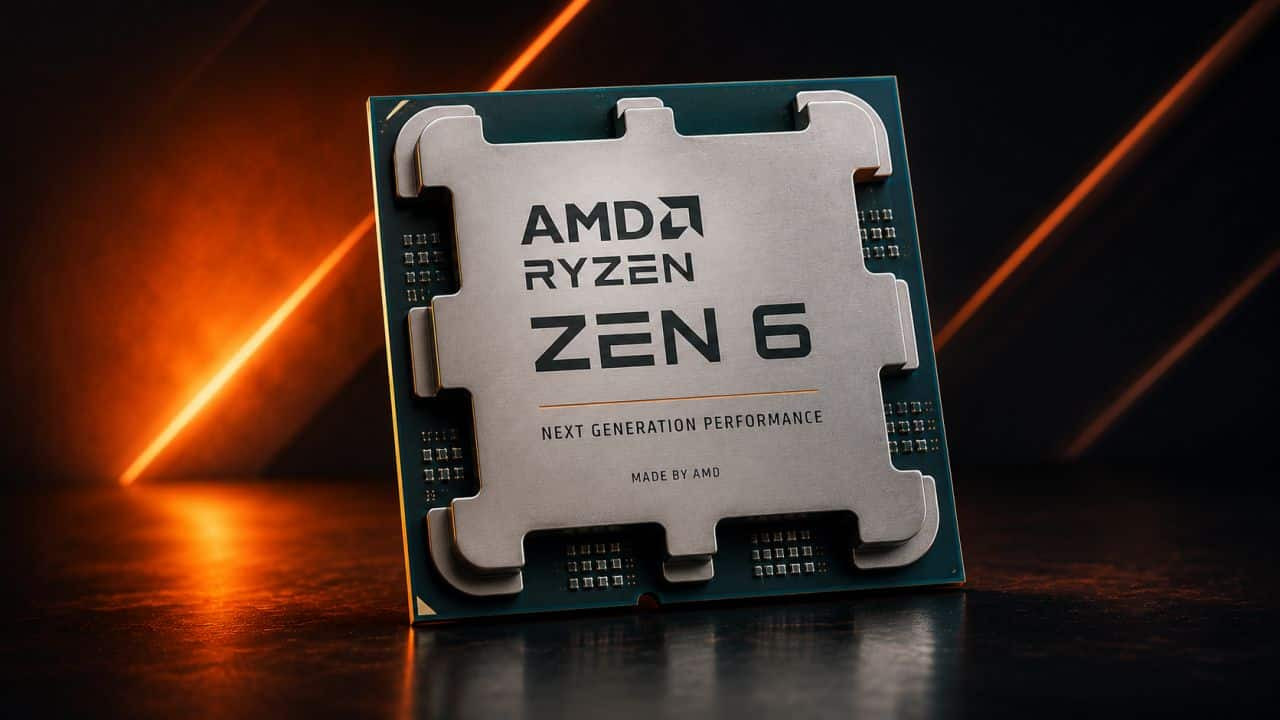
AMD is preparing a strategic shift for its Zen 6 processors, incorporating a new type of low-power core similar to Intel's LPE Cores. This development, based on a finding in the Linux kernel and confirmed by an AMD engineer, aims to enhance energy efficiency in low-load tasks, directly addressing market competition in the CPU space.
For years, AMD's Ryzen series successfully challenged Intel's dominance in the central processing unit market. This prompted Intel to increase core counts and frequencies to remain competitive against a revitalized AMD. The competition fueled innovation on both fronts, ultimately benefiting users with more powerful processors.
After several attempts, Intel adopted a hybrid architecture combining high-performance cores with efficiency cores. This strategy allowed Intel to reach up to 24 cores in its CPUs, significantly surpassing the 16 cores of AMD's top processors. However, Lisa Su's company was not surprised by these results but recognized the need to improve efficiency in low-load or idle situations.
Implementing LPE-type low-power cores in Zen 6 makes strategic sense for AMD. This approach ensures that high-performance, high-frequency cores are not activated when not strictly necessary. It is crucial for optimizing energy consumption and battery life, especially in portable devices like laptops.
AMD engineer Vishal Badole stated that this is a new low-power core designed to consume minimal energy when applications/games are in the background or idle.
Information about these new cores was leaked by Phoronix, which discovered x86 topology code in the Linux kernel. This code revealed the existence of Performance cores (related to Zen 6), Efficiency cores (potential future Zen 6C), and the aforementioned low-power cores (LPE-like).
Vishal Badole, an AMD engineer, confirmed that these new cores are designed to consume minimal power when applications or games are running in the background or the system is idle. This feature is fundamental for improving the user experience in laptops and other devices that demand intelligent power management.
Furthermore, Badole mentioned a new Boost system for these high-performance cores. Instead of using the "CPPC_HIGHEST_PERF_PERFORMANCE" command, they will scale using "amd_get_highest_perf()". This suggests a dynamic frequency scaling focused on efficiency rather than a fixed frequency, representing a significant improvement in performance and power management.
These low-power cores are expected to be integrated into the future AMD Medusa Point APU family, designed for laptops. In fact, several months ago, a Zen 6 Medusa Point APU appeared on Geekbench, albeit with performance significantly below expectations, operating at only 2 GHz. This was attributed to it being an early engineering sample, indicating that development is ongoing and substantial improvements are expected in the final version.
Article topics
Related articles

Godox C100 Redefines Compact Photography with its Innovative Transparent Display
Godox launches the C100, an ultra-light 65-gram camera with an "avant-garde" design and an active transparent screen that prioritizes immersion in the moment.

Memory Manufacturers Face New Price-Fixing Lawsuit
Samsung, SK Hynix, and Micron are once again accused of anti-competitive practices, marking the third such pattern in two decades.

WhatsApp Introduces Usernames to Keep Phone Numbers Private
The popular messaging platform is rolling out a new feature allowing users to start chats and join groups without sharing their phone numbers, prioritizing personal data protection.
Latest news
View all
Supergirl Faces Million-Dollar Losses After Challenging Box Office Debut
The DC film, starring Milly Alcock, grossed only $68 million on its opening weekend, with Warner Bros. projected to lose up to $120 million, according to reports.

OpenAI Launches GPT-5.6 Series: Sol, Terra, and Luna with Enhanced Safety
OpenAI introduces a limited preview of its new GPT-5.6 models, showcasing significant advancements in coding, biology, and cybersecurity, alongside a reinforced safety framework and more accessible pricing for certain models.

Agibot Humanoid Robots Complete Six-Day Factory Shift with 99.99% Success
Shanghai-based startup Agibot demonstrated its robots' capability for quality control and material handling tasks in a real industrial environment, marking a milestone in automation.
Comments (0)
No comments yet. Be the first!
Only registered readers can comment.