
Saturn's rings formed from a destroyed moon, study says
A new model suggests Saturn's rings came from the breakup of an ancient moon called Chrysalis between 100 and 200 million years ago.

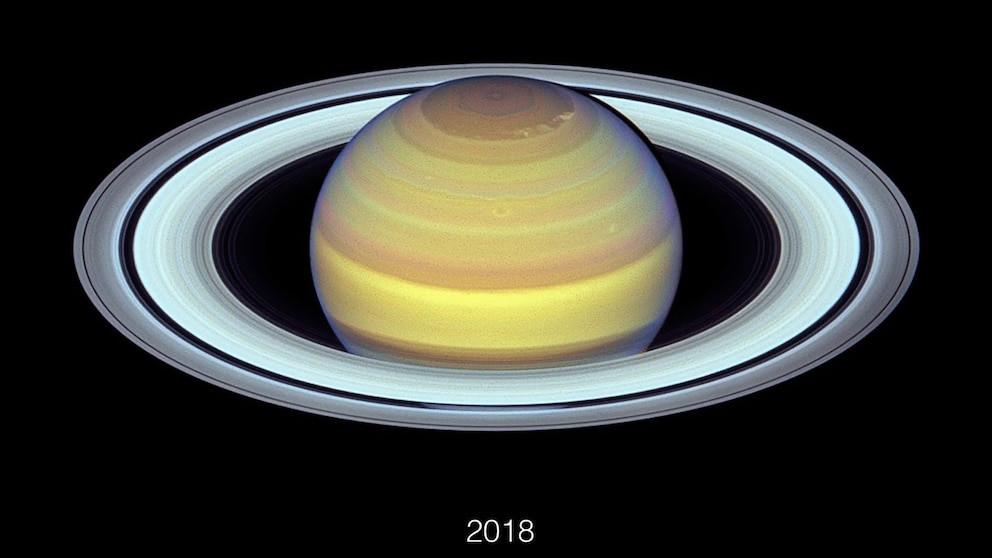
Saturn's rings likely formed between 100 and 200 million years ago when an ancient moon, named Chrysalis, was torn apart by the planet's gravity. This new hypothesis, backed by simulations from the University of California, explains both the rings' youthful age and their nearly pure water-ice composition. The planet itself is 4.5 billion years old, so the rings' recent origin has long puzzled scientists. Now, a single catastrophic event may solve that mystery.
Researchers presented the findings at the Lunar and Planetary Science Conference hosted by the American Geophysical Union. Their computer models simulate the orbital dynamics of Saturn's moons over time. Chrysalis once orbited between Titan and other large satellites, helping maintain gravitational stability. Unknown disturbances eventually pushed it into a closer path. When it crossed Saturn's Roche limit—the distance where tidal forces exceed a moon's self-gravity—it began to break apart.
During the breakup, Saturn's gravity pulled the moon apart selectively by density. The icy outer layer fragmented and spread into a disk around the planet's equator, forming the rings. The denser rocky core resisted longer and ultimately fell into Saturn's deep atmosphere or was absorbed into its interior. "The rocky material did not contribute significantly to the rings", said Yifei Jiao, lead author of the study.
This model aligns with data from the Cassini mission, which found that the rings are over 95% water ice. It also explains the lack of silicates or other rocky minerals. Scientists note the theory doesn't require a pre-existing ring system, though that can't yet be ruled out. What was once a major astronomical puzzle now has a physically plausible explanation grounded in orbital mechanics and indirect evidence.
The loss of Chrysalis didn't just create the rings—it also reshaped Saturn's moon system. The sudden mass loss and shift in gravity could have altered the orbits of moons like Titan and Iapetus. While no direct trace of Chrysalis remains, its legacy lives on in the system's current structure. Such rare, dramatic events highlight how planetary evolution can hinge on sudden cosmic disruptions.
The rocky material did not contribute significantly to the rings.
Article topics
Related articles

Humanoid Robot Pemba Climbs Chimborazo, Sets Sights on Everest Summit
The humanoid robot Pemba, an adaptation of the Unitree G1, recently ascended over 6,000 meters on Chimborazo and now aims to conquer Mount Everest. This technological feat paves the way for new forms of exploration in extreme environments.
Artemis III Progresses to Moon with Crucial Challenges and Mars Ambitions
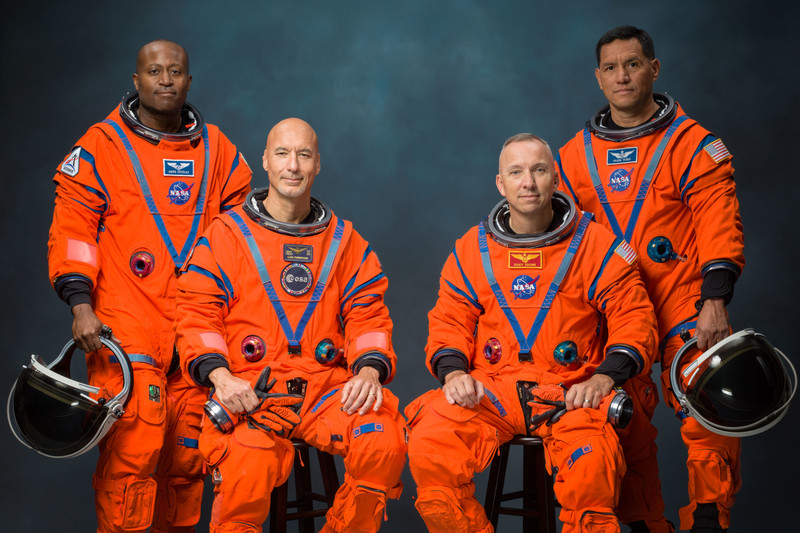
NASA's Artemis III mission aims for a sustained human presence on the Moon, navigating delays in space suit development and technical hurdles with partners SpaceX and Blue Origin.
Stanford's STEHM Model Optimizes Search for Habitable Exoplanets
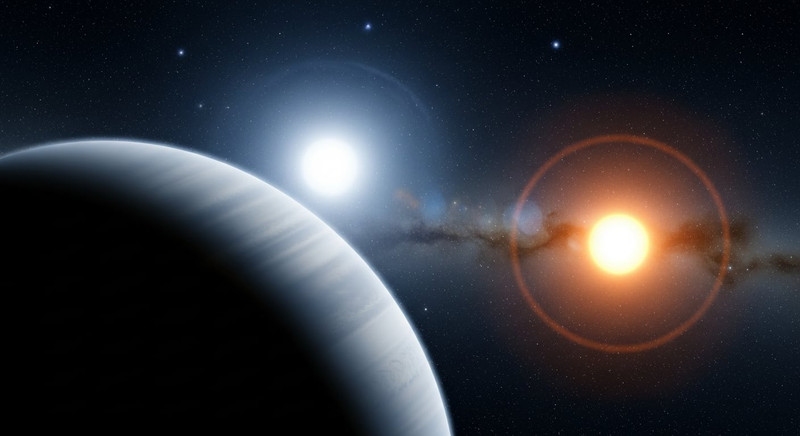
Stanford University introduces STEHM, a new tool that filters exoplanets based on their ability to maintain stable atmospheres, a key condition for life.
Latest news
View all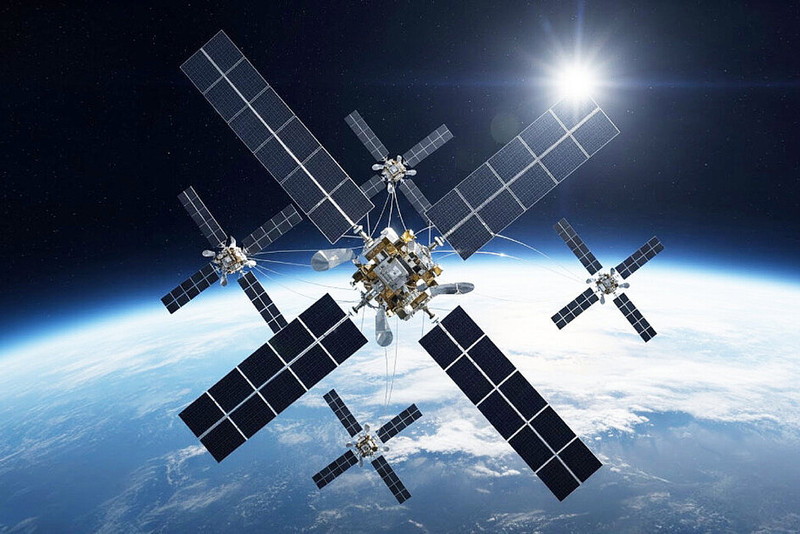
Elon Musk Plans Space Data Centers to Ease AI Energy Crisis
The escalating energy demand for artificial intelligence and terrestrial data centers is driving SpaceX to explore space-based solutions, with Starship being key to economic viability.
US Government Suspends Access to Anthropic's Fable 5 and Mythos 5 AI Models
A national security directive forces Anthropic to disable its advanced AI models, Fable 5 and Mythos 5, for all customers starting June 12, 2026.
Google Launches Gemini 3.5 Live Translate for Instant Voice Translation
Google expands real-time translation availability with Gemini 3.5 Live Translate, offering lower latency and support for over 70 languages.
Comments (0)
No comments yet. Be the first!
Leave a comment