
L 98-59 d: The Exoplanet with Magma Oceans and a 'Rotten Egg' Atmosphere Challenging Science
An international team of scientists, utilizing the James Webb Space Telescope, has discovered L 98-59 d, an exoplanet 35 light-years from Earth with temperatures exceeding 1,900 degrees Celsius and an atmosphere rich in hydrogen sulfide, giving it a 'rotten egg' smell. This unique world, featuring magma oceans, redefines our understanding of planetary diversity.

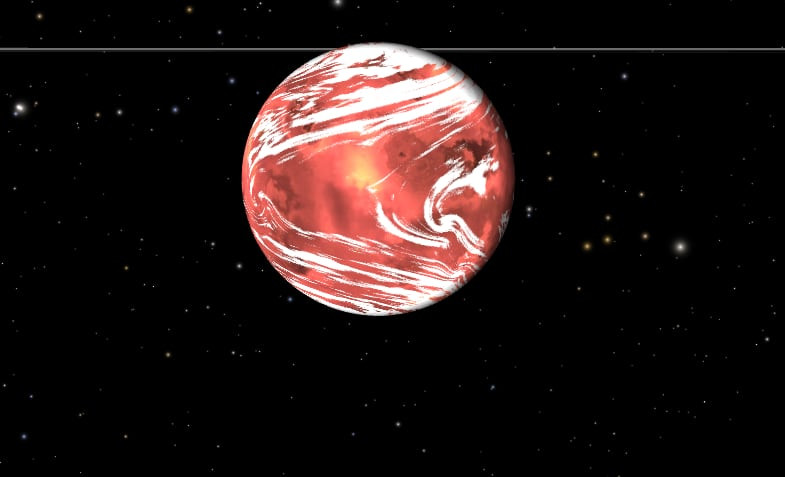
The cosmos continues to reveal wonders that challenge our imagination and understanding. Recently, the discovery of an extraordinary exoplanet, identified as L 98-59 d, has captured the attention of both the scientific community and the general public. This world, orbiting approximately 35 light-years from Earth, exhibits characteristics as extreme as they are fascinating: oceans of molten magma, scorching temperatures exceeding 1,900 degrees Celsius, and an atmosphere laden with sulfurous gases that give it a peculiar 'rotten egg' smell. This discovery, reported by NASA and detailed in the journal Nature Astronomy, not only expands our catalog of extrasolar worlds but also reshapes the scientific view on the diversity of planets existing in our galaxy.
A Toxic Atmosphere and Infernal Temperatures
Observations of L 98-59 d were conducted by an international team of experts, who utilized the advanced James Webb Space Telescope (JWST) in conjunction with ground-based observatories. Spectral analyses, led by researchers from the University of Oxford, confirmed the dominant presence of hydrogen sulfide in the exoplanet's atmosphere. This molecule, known for being responsible for the distinctive and unpleasant 'rotten egg' odor, is a clear indicator of the extreme chemical conditions prevailing on L 98-59 d. In addition to its sulfurous atmosphere, the planet's surface reaches temperatures of approximately 1,900 degrees Celsius, heat so intense it is capable of sustaining vast oceans of molten rock. These conditions make L 98-59 d an inhospitable place for life as we know it, but an invaluable natural laboratory for studying planetary geophysics in extreme environments.
A World That Defies Planetary Classifications
What makes L 98-59 d particularly intriguing is that it does not fit into any of the previously known planetary categories. The study published in Nature Astronomy describes for the first time a planet with an unusually low density for its size, which is 1.6 times larger than Earth's. This characteristic, combined with its internal structure dominated by a global ocean of molten magma, distinguishes it from typical rocky planets and gas giants. Harrison Nicholls, the lead researcher of the team, emphasized the significance of this finding: “This discovery suggests that the categories astronomers currently use to describe small planets might be too simplistic. While this molten planet is unlikely to harbor life, it reflects the great diversity of worlds that exist beyond the solar system. So, one might ask: what other types of planets are waiting to be discovered?” This reflection invites the scientific community to reconsider and expand their planetary classification models.
Unraveling the Evolution of a Sulfurous Hell
To understand the formation and evolution of L 98-59 d, researchers employed state-of-the-art computer simulations, modeling its development over nearly 5 billion years. These simulations, carefully cross-referenced with data obtained from the JWST and other telescopes, allowed for the inference of a molten silicate mantle and a vast magma ocean capable of storing large amounts of sulfur. The team determined that, over millennia, sulfur-rich gases, such as sulfur dioxide and hydrogen sulfide, were continuously released into the upper atmosphere. This constant volcanic process not only contributed to the preservation of a dense and toxic atmosphere but also left spectral signatures detectable by the James Webb Space Telescope, thus confirming the hypothesis of a volcanic and distinctively smelling planet.
Towards a New Exoplanet Category: The “Blue Hell”
The uniqueness of L 98-59 d is such that scientists have proposed the creation of a new category for sulfurous worlds with magma seas. Its atmosphere, described as a “blue hell” due to the presence of heavy gases and scorching temperatures, has no known equivalents among the terrestrial planets in our solar system. The authors of the article state that “it appears to belong to a completely different class of planet containing heavy sulfur molecules.” This composition deviates significantly from typical rocky worlds, like Earth or Mars, as well as from hydrogen-rich ocean planets, such as some sub-Neptunes. This discovery underscores the need for a more flexible and diverse planetary taxonomy that can accommodate the vast array of planetary configurations the universe presents to us.
Origins and Transformation of L 98-59 d
Detailed analysis of L 98-59 d suggests that the planet likely formed with large quantities of volatile materials. Researchers hypothesize that, in the distant past, it might have been a larger sub-Neptune, a type of planet larger than Earth but smaller than Neptune, with a hydrogen-rich atmosphere. However, contraction and cooling over billions of years, possibly due to the loss of its original atmosphere from intense stellar radiation or internal processes, shaped its current state. This transformative process, which led it to become the magma and sulfur world we observe today, offers a fascinating window into the evolutionary dynamics of exoplanets and invites us to continue exploring the mysteries that await in the far reaches of our galaxy.
Keep reading online — scan the code
https://go.tricuatro.com/nMYoL
© tricuatro.com
Article topics
Related articles
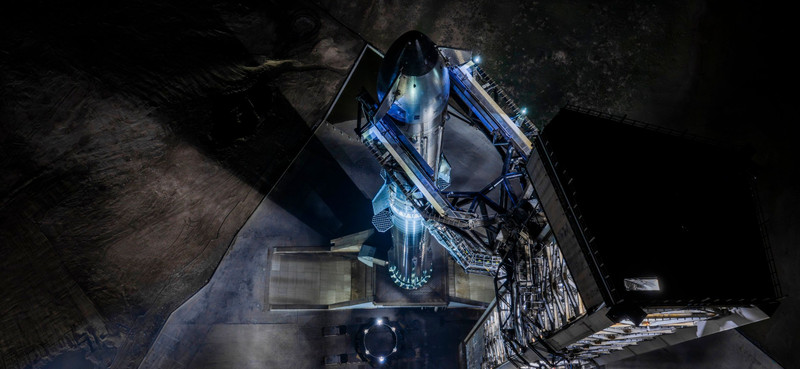
SpaceX Scrubs Starship Test Flight in South Texas
Computer systems detected an anomaly during the Super Heavy booster's engine startup sequence, forcing the mission's abort.
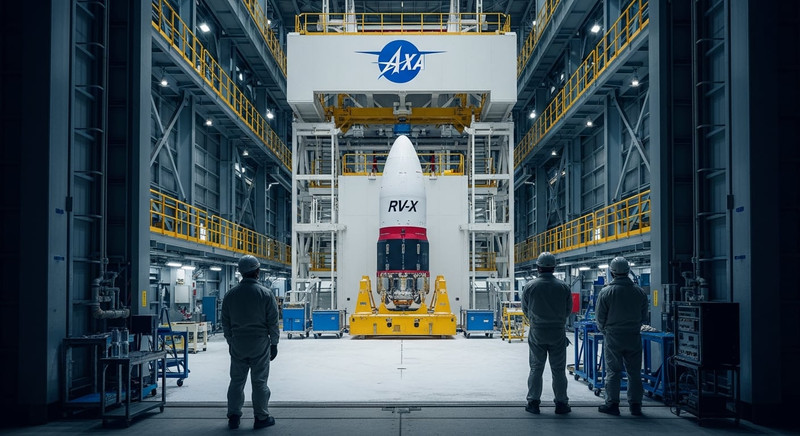
JAXA's RV-X Reusable Rocket Successfully Completes First Flight
Japan's space agency JAXA successfully tested its RV-X prototype, a critical step towards reducing costs and boosting competitiveness in the global space market.
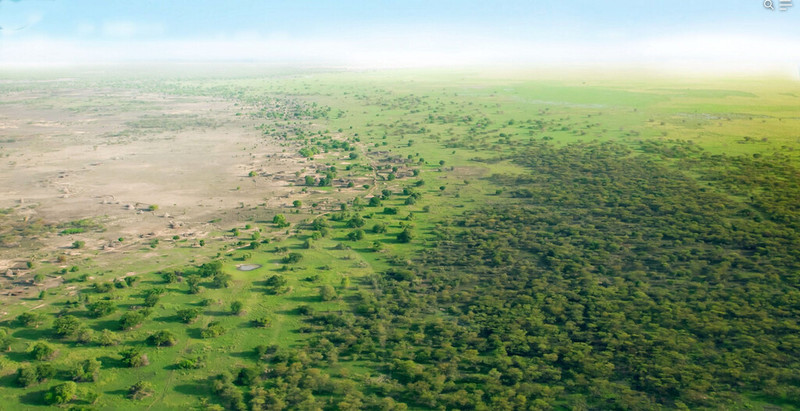
China's Great Green Wall: Artificial Forests Outpace Natural Growth
China planted 66 billion trees over nearly half a century to combat desertification, and a new study shows they grow faster than natural forests, albeit with important nuances.
Latest news
View all
MIT Chip Converts Invisible Infrared Light into Crucial Data
MIT researchers developed an innovative chip detecting methane and propane using mid-infrared light, with potential for millions of pixels and optical computing.

Assassin's Creed Black Flag Resynced Smashes 3 Million Sales, New Game Plus Announced
Ubisoft's successful re-release of the pirate classic continues to break records, confirming one of the most requested features from the gaming community.

TikTok tests AI tool to protect creators from deepfakes
The video platform is rolling out an opt-in feature allowing users to verify their identity and report unauthorized AI-generated likenesses.
Comments (0)
No comments yet. Be the first!
Only registered readers can comment.