
Interstellar Comet 3I/ATLAS Shows Record Levels of Heavy Water
The interstellar comet 3I/ATLAS passing through our Solar System exhibits a much higher amount of heavy water than local comets, revealing its cold, distinct origin.
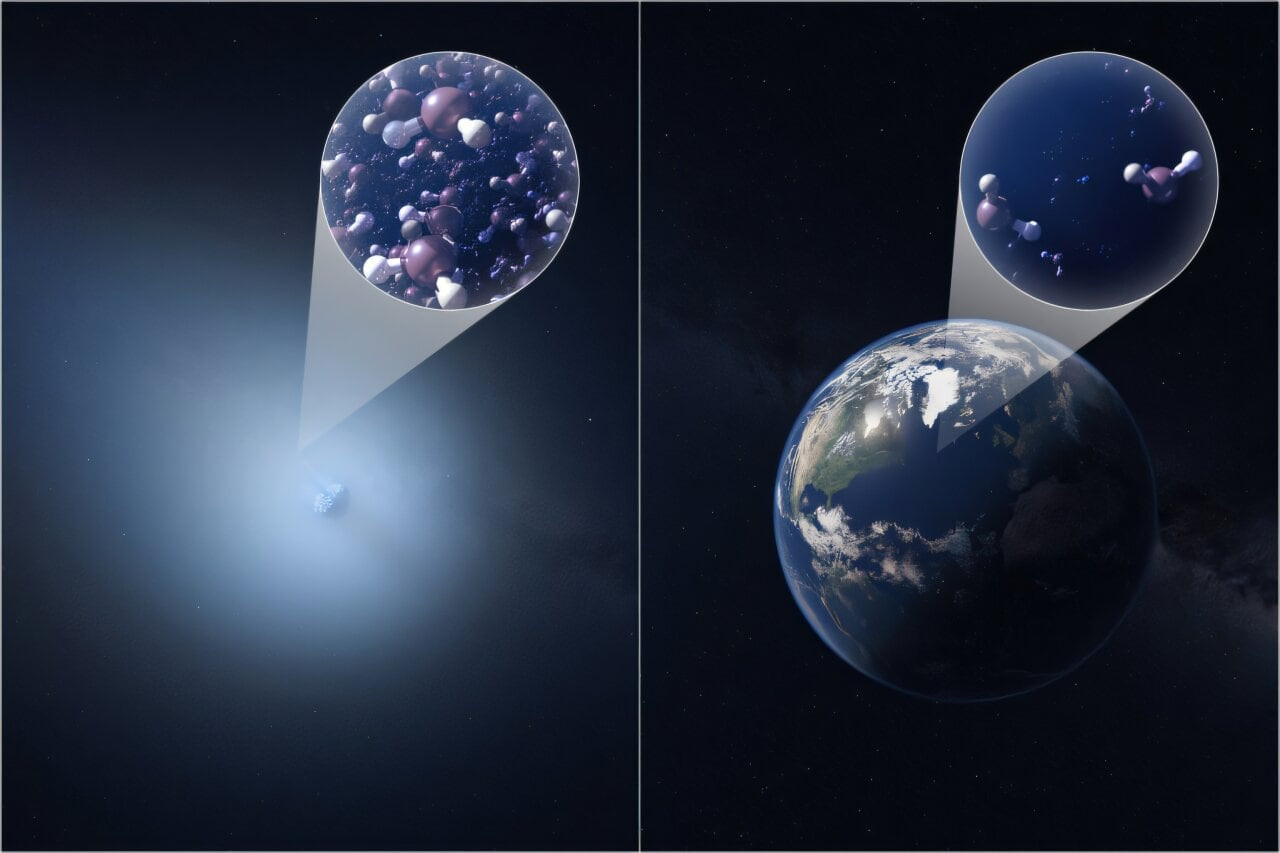
The interstellar comet 3I/ATLAS, which crossed our Solar System, surprised scientists with an unprecedented composition. Observations with the ALMA radio telescope detected a quantity of heavy water (HDO) more than 30 times higher than any solar system comet. Published in Nature Astronomy, this finding offers clues about the environment where this object formed, very different from our cosmic neighborhood.
Led by Luis E. Salazar Manzano and Professor Teresa Paneque-Carreño at the University of Michigan, the team analyzed the comet just six days after its closest approach to the Sun. “Our results show that the conditions that formed our solar system differ greatly from those that shaped other systems in the galaxy,” explained Salazar Manzano.
The key discovery was the ratio between regular water (H2O) and heavy water (HDO). Solar system comets typically have only one HDO molecule per 10,000 H2O molecules, making detection difficult. However, ALMA’s sensitivity allowed precise measurement of this ratio in 3I/ATLAS, revealing it exceeds the typical values near the Sun by over 30 times and surpasses Earth's ocean levels by more than 40 times.
The heavy water in this comet indicates its formation environment was much colder than that of the Solar System.
Heavy water differs from regular water because one hydrogen atom is replaced by deuterium, an isotope with an extra neutron. The amount of HDO in comets and planets is closely linked to the temperatures and radiation conditions during their formation. The processes that promote deuterated water require environments colder than 30 Kelvin (−243.15 °C).
This extremely low temperature suggests that the gas cloud that formed the star and planets of 3I/ATLAS's system was likely very cold and different from the environment that created our solar system. “We now know that the gas cloud that formed this interstellar system was much colder and distinct,” stated Salazar Manzano.
The breakthrough was possible thanks to ALMA’s ability to observe during critical moments, right after the comet’s passage behind the Sun, when other instruments cannot point accurately. This sensitivity enabled detection of this unique composition at a moment when most tools are unable to observe.
Article topics
Related articles

Humanoid Robot Pemba Climbs Chimborazo, Sets Sights on Everest Summit
The humanoid robot Pemba, an adaptation of the Unitree G1, recently ascended over 6,000 meters on Chimborazo and now aims to conquer Mount Everest. This technological feat paves the way for new forms of exploration in extreme environments.
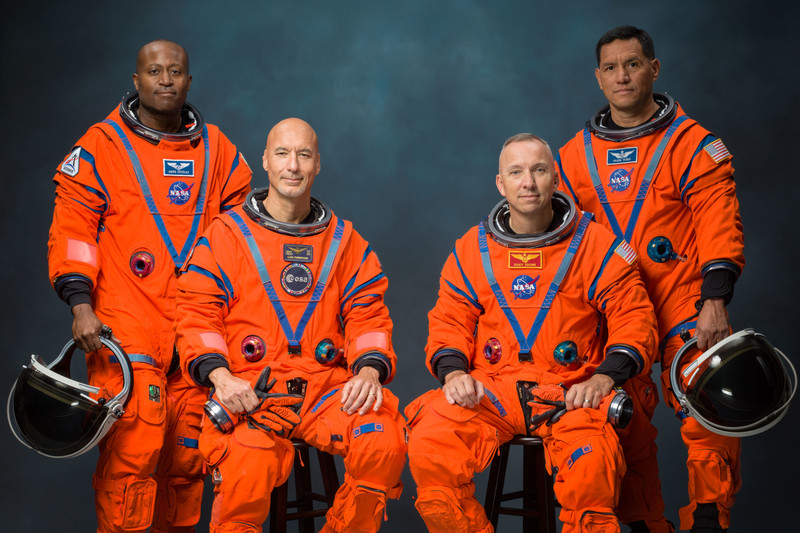
Artemis III Progresses to Moon with Crucial Challenges and Mars Ambitions
NASA's Artemis III mission aims for a sustained human presence on the Moon, navigating delays in space suit development and technical hurdles with partners SpaceX and Blue Origin.
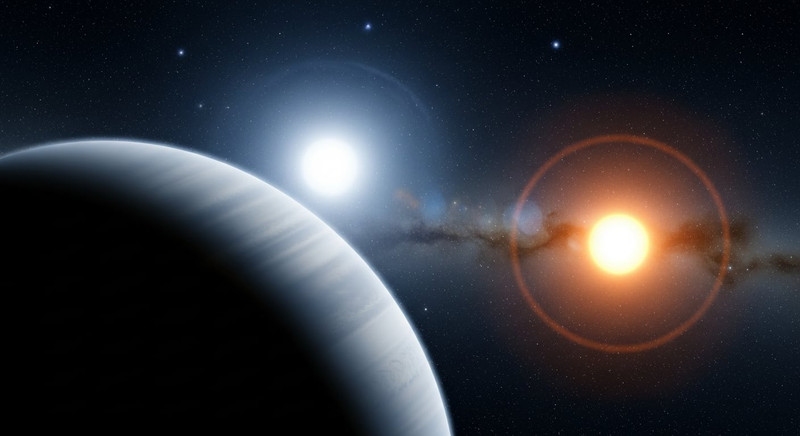
Stanford's STEHM Model Optimizes Search for Habitable Exoplanets
Stanford University introduces STEHM, a new tool that filters exoplanets based on their ability to maintain stable atmospheres, a key condition for life.
Latest news
View all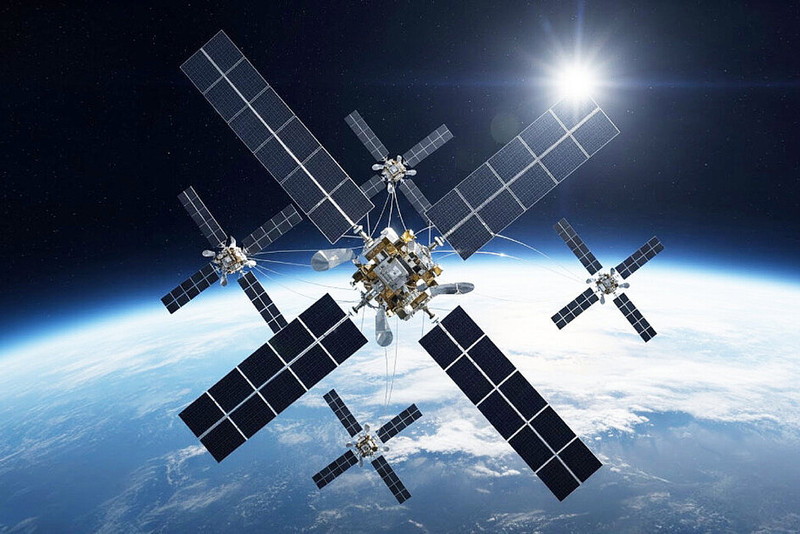
Elon Musk Plans Space Data Centers to Ease AI Energy Crisis
The escalating energy demand for artificial intelligence and terrestrial data centers is driving SpaceX to explore space-based solutions, with Starship being key to economic viability.

US Government Suspends Access to Anthropic's Fable 5 and Mythos 5 AI Models
A national security directive forces Anthropic to disable its advanced AI models, Fable 5 and Mythos 5, for all customers starting June 12, 2026.

Google Launches Gemini 3.5 Live Translate for Instant Voice Translation
Google expands real-time translation availability with Gemini 3.5 Live Translate, offering lower latency and support for over 70 languages.
Comments (0)
No comments yet. Be the first!
Leave a comment