
Intel Debuts Panther Lake and Arc B-Series with Advanced 18A Node
Intel unveils its new Core Ultra Series 3 mobile processor family and Arc B-Series graphics cards, marking the industrial debut of its advanced Intel 18A manufacturing node in the U.S.

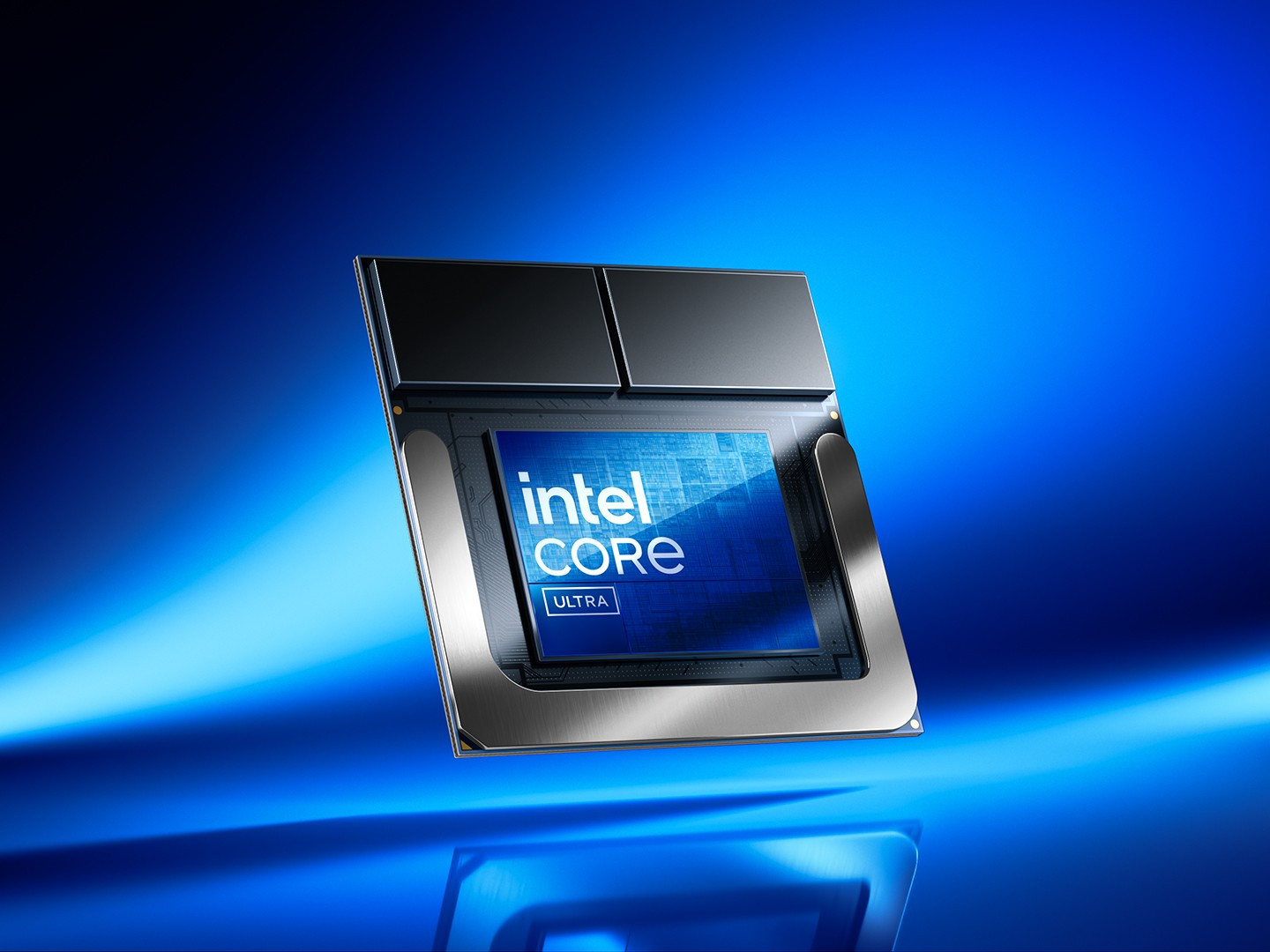
The arrival of Intel's new Core Ultra Series 3 mobile family, alongside the Arc B-Series graphics cards, signifies a pivotal moment for the company. These products not only promise a leap in performance and efficiency for notebooks but also serve as the first major industrial demonstration of the Intel 18A node, manufactured entirely on U.S. soil.
The Intel 18A node is more than just a number; it represents a technological class approaching 1.8 nanometers, although today its designation functions more as a commercial category than a precise physical measurement. Its significance lies in two key engineering innovations designed to redefine chip manufacturing.
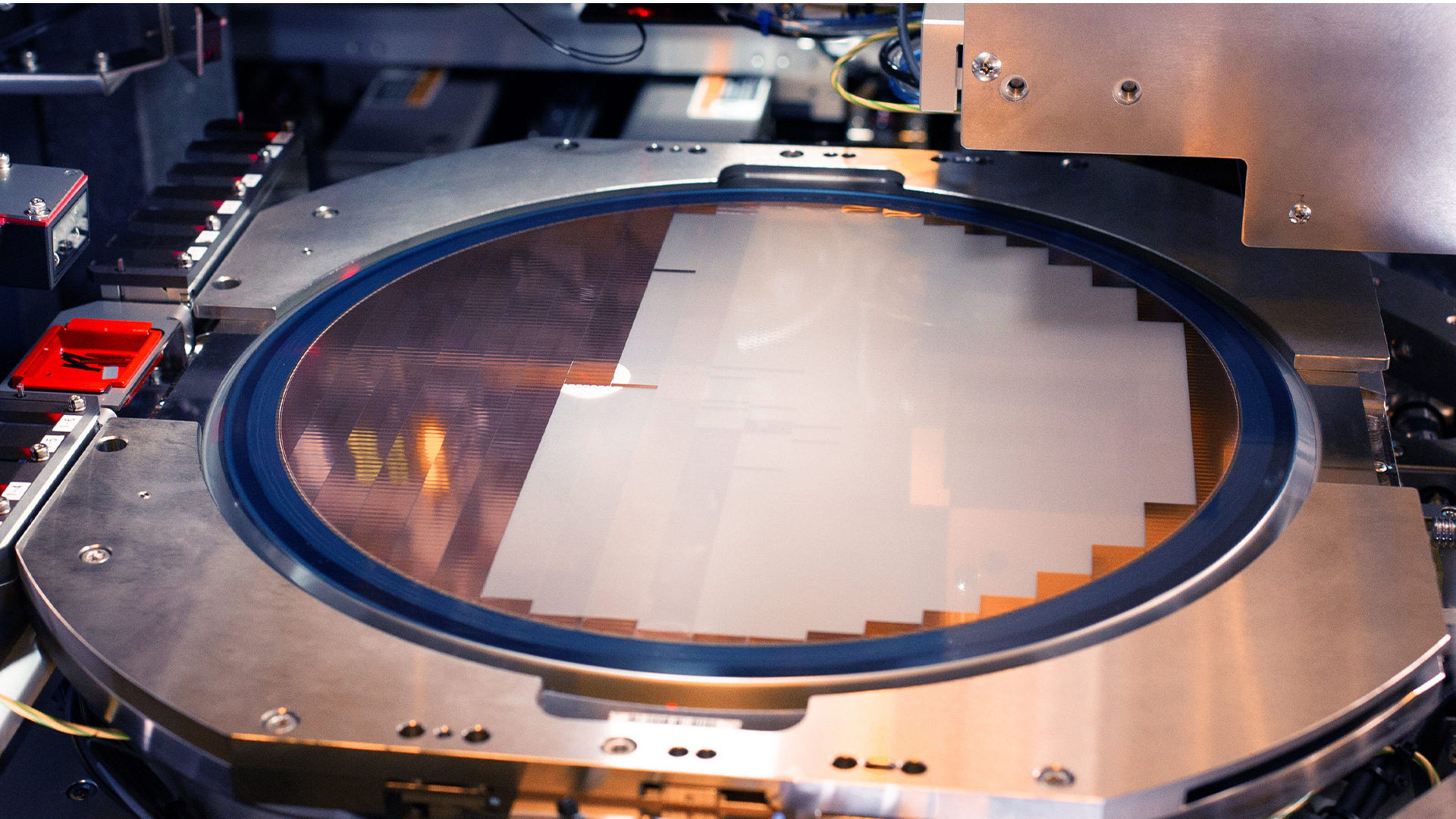
One such innovation is RibbonFET, a Gate-All-Around transistor architecture. This evolution of the traditional FinFET allows the gate to completely surround the conduction channel, significantly improving leakage control and enabling greater density of components with superior performance per watt of energy consumed.
The second major advancement is PowerVia, a system that moves power delivery to the backside of the wafer. Traditionally, data signals and power routes shared the upper layers of the chip. By separating them, PowerVia reduces internal congestion and frees up valuable space for data connections, optimizing the processor's design.
If Intel achieves stable and successful production with the 18A node, the company could reclaim significant industrial margin against competitors like TSMC. This would not only strengthen its market position but also provide compelling arguments to attract external clients to Intel Foundry, its manufacturing division.
The Intel 18A node is more than just a number; it represents a technological class approaching 1.8 nanometers, although today its designation functions more as a commercial category than a precise physical measurement.
Panther Lake, the core processor of this new generation, maintains and deepens the hybrid architecture Intel initiated with Alder Lake. It combines powerful P-Cores Cougar Cove for demanding tasks, efficient E-Cores Darkmont for multitasking, and ultra-low power LP E-Cores, designed to sustain the operating system with minimal energy consumption.
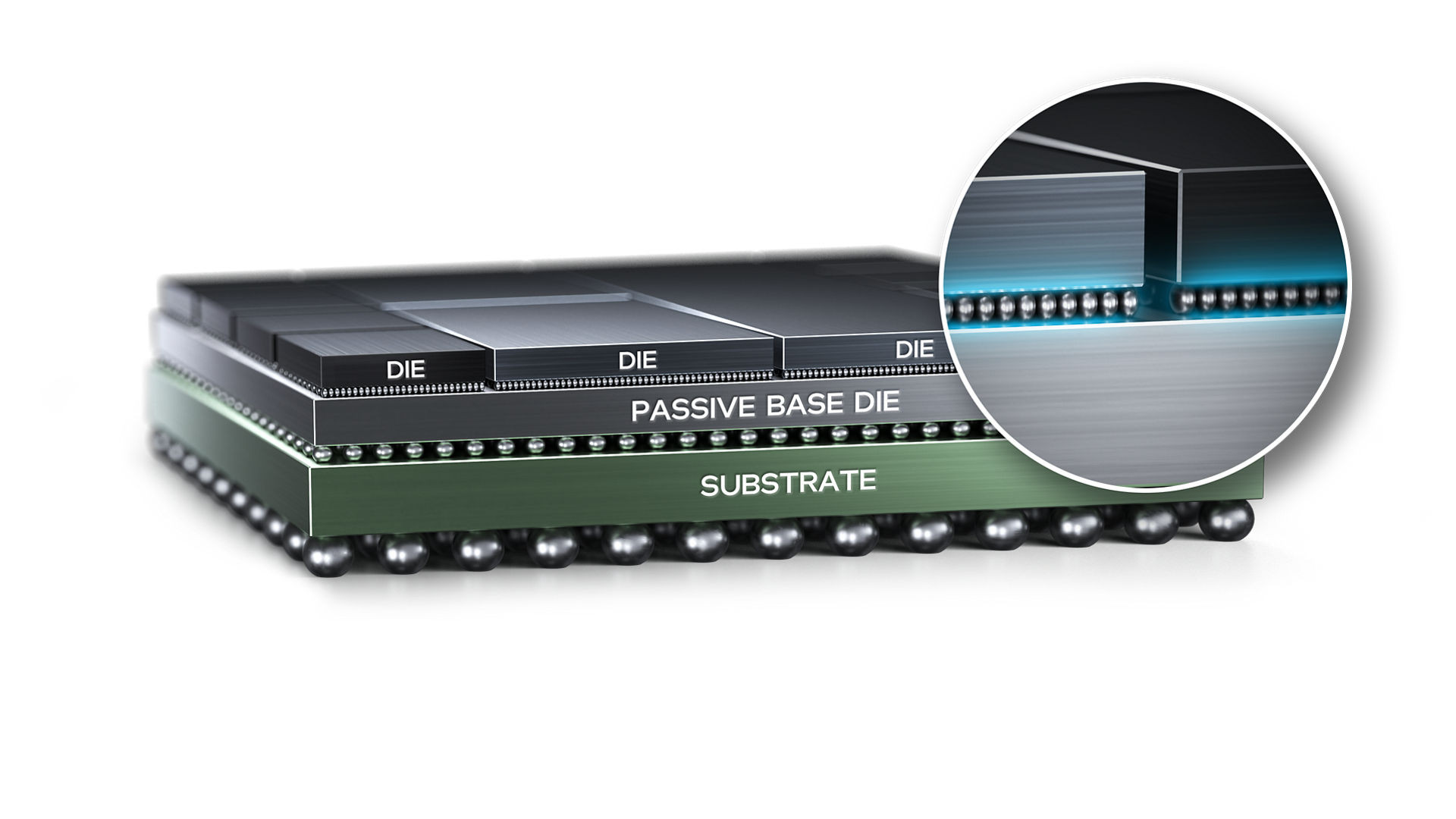
Panther Lake's design benefits from Foveros 2.5D packaging, which allows for the integration of independent chiplets. These separate functional blocks are assembled within the same processor, featuring high-density links between components and a greatly reduced distance between microcontacts. Each "tile" or chiplet fulfills a specific role, from computing with CPU and NPU, to scalable Xe3-LPG graphics, and a platform controller for connectivity and I/O.
The integrated GPU within Panther Lake is particularly noteworthy, supporting up to twelve graphics cores with Ray Tracing units and accompanied by XeSS, Intel's AI-powered upscaling system. This means that even in notebooks without a dedicated GPU, users can expect competitive gaming experiences and GPU-accelerated content editing.
Regarding artificial intelligence, Intel reports up to 180 TOPS (trillions of operations per second) combined across CPU, GPU, and NPU. The objective is clear: to empower "AI PCs" to run assistants and translation tasks locally, reducing cloud dependency and enhancing privacy and speed.
This focus on efficiency and local AI performance unfolds amidst intense competition. Apple Silicon has set an efficiency standard now fiercely contested by AMD Ryzen AI and Snapdragon X. Panther Lake aims to position itself by combining the performance of Arrow Lake with the extended battery life characteristic of Lunar Lake. An example of these configurations is the Intel Core Ultra X9 378H processor, capable of reaching up to 16 combined cores (4 P-Cores, 8 E-Cores, and 4 LP E-Cores), 18 MB of Smart Cache, a maximum frequency of 5.00 GHz, and an Intel Arc B390 GPU.
With the Arc B-Series, based on the Battlemage architecture, Intel takes its second serious step into the dedicated graphics market. The first generation, Arc Alchemist, showcased promising hardware but suffered from immature drivers and inconsistent performance, especially in older games.
Battlemage promises to address these shortcomings with more mature drivers and improved performance per watt, alongside reinforced Ray Tracing units. Intel's strategy is not to directly compete with NVIDIA's high-end offerings but to focus on the mid-range and upper-mid-range segments, where the majority of 1080p and 1440p gaming market is concentrated.
Arc B-Series cards find favorable ground in modern APIs like DirectX 12 and Vulkan, as well as in AV1 encoding, a widely used compression standard for streaming. However, the most delicate point for Intel remains the vast historical PC game catalog, as many users still rely on titles based on DirectX 9 and DirectX 11.
Despite being a late entrant to the dedicated GPU segment, Intel retains significant structural advantages. The company maintains considerable financial capacity to sustain multiple investment cycles and, crucially, controls both the processor and the graphics architecture. This integration allows it to potentially offer a more coherent and optimized Windows platform than if it had to manage these components separately.
Keep reading online — scan the code
https://go.tricuatro.com/intel-de
© tricuatro.com
Article topics
Related articles

Google Translate Adds Duolingo-Style Widget to Boost Language Learning
Google's translation app aims to transform into a daily learning platform, integrating a streak system and AI conversations on Android.
AMD Zen 6 to Feature Low-Power Cores for Enhanced Efficiency
A discovery in the Linux kernel and an AMD engineer's confirmation reveal that upcoming Zen 6 processors will adopt a hybrid core strategy to optimize power consumption.
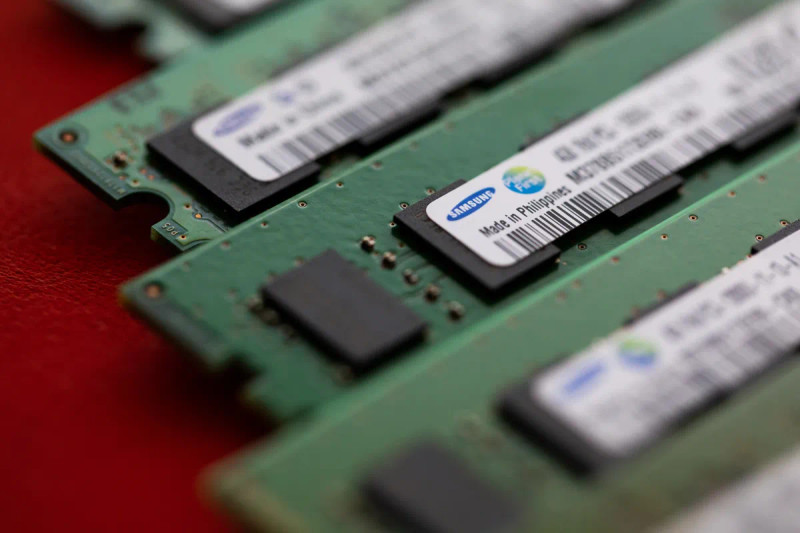
Memory Manufacturers Face New Price-Fixing Lawsuit
Samsung, SK Hynix, and Micron are once again accused of anti-competitive practices, marking the third such pattern in two decades.
Latest news
View all
Star Wars Visions: The Ninth Jedi Leads New Expansion Phase
Lucasfilm launches "Star Wars Visions Presenta" with its first miniseries, aiming to extend stories from the acclaimed anthology.

Sony to Stop Selling Games on Physical Discs from January 2028
The Japanese company adapts to user preference for digital formats and the evolution of video game development.

Japanese Scientists Create Crystal Converting Sunlight to UV for Air Purification
A team of Japanese scientists has developed a novel crystalline material, iBu-DHI, capable of transforming visible sunlight into ultraviolet radiation. This breakthrough could revolutionize air purification and solar hydrogen production without requiring electricity.
Comments (0)
No comments yet. Be the first!
Only registered readers can comment.