
Japanese Scientists Create Crystal Converting Sunlight to UV for Air Purification
A team of Japanese scientists has developed a novel crystalline material, iBu-DHI, capable of transforming visible sunlight into ultraviolet radiation. This breakthrough could revolutionize air purification and solar hydrogen production without requiring electricity.
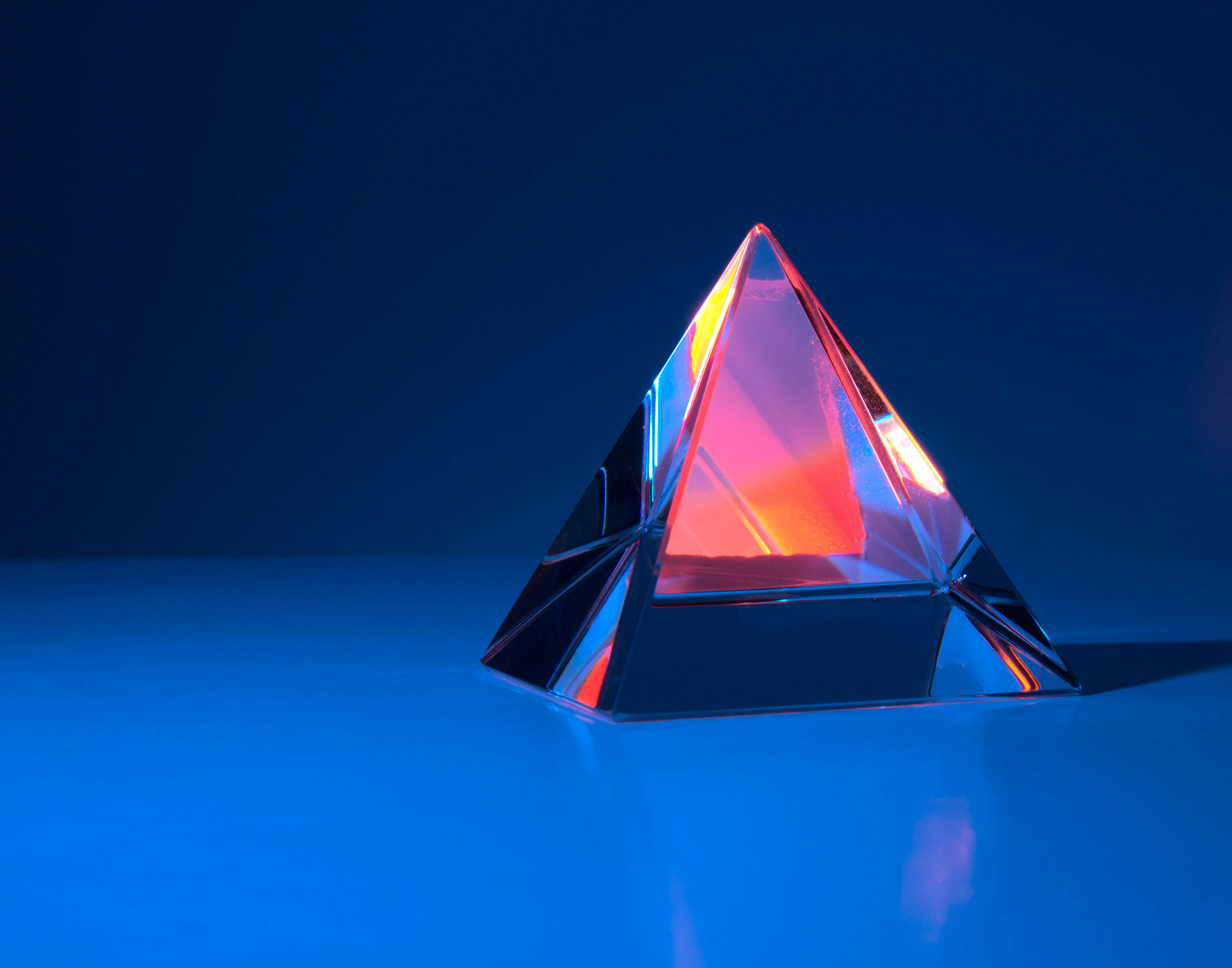
The ability to generate ultraviolet radiation from visible light holds immense implications across various industrial sectors that currently rely on electrical sources for this radiation. A team of Japanese scientists has achieved a significant milestone by creating a crystal that efficiently converts sunlight into ultraviolet radiation, paving the way for more sustainable and energy-efficient solutions.
At the heart of this advancement lies an ingenious molecular design. The researchers incorporated alkyl chains above and below the molecular core of the crystal. This structure creates crucial three-dimensional separation, preventing molecules from being packed too tightly, which would lead to energy losses due to excessive contact. Simultaneously, it ensures they are not so far apart that energy cannot circulate between them, thereby optimizing energy flow.
The most efficient formulation developed by the team, named iBu-DHI, has achieved the highest documented efficiency to date for this class of solid materials. Most impressively, it operates at light intensities very close to those available under natural sunlight. This point is critical, as most materials capable of this conversion previously required highly intense laser beams to function, making them practically useless for real-world applications with solar light.
The most efficient formulation developed by the team, named iBu-DHI, has achieved the highest documented efficiency to date for this class of solid materials operating with light intensities similar to those available under solar illumination.
The authors also found that precise control over the manufacturing process is as vital as the material's chemical composition. Slower deposition of the material resulted in better organized crystalline films, further reducing the light intensity needed to activate the conversion. Furthermore, the crystal demonstrated remarkable resistance to atmospheric oxygen, a factor that often degrades such processes, allowing it to function in contact with air without needing protected atmospheres.
The potential applications of this technology are vast and promising. In photocatalysis, where many catalysts are only activated by high-energy photons, an efficient converter like iBu-DHI would allow for a much larger fraction of the solar spectrum to be harnessed. This includes key processes such as solar hydrogen production, a major contender for future clean energy.
For air purification, this crystal could be a true game-changer. Photocatalytic materials that decompose organic pollutants and volatile compounds by absorbing ultraviolet light could be directly powered by converted sunlight, eliminating the reliance on costly electrical lamps. This means cleaner air in urban and industrial environments, passively and without additional energy consumption.
Even 3D printing of photopolymerizable resins, which harden upon receiving ultraviolet radiation, could benefit. The same principle would allow for reduced electricity consumption in certain manufacturing processes, making production more efficient and sustainable. As documented in the original publication in Nature Communications, the material is compatible with metal-free organic sensitizers, paving the way for more eco-friendly devices less dependent on scarce or toxic elements.
However, the authors themselves are clear about the current state of development: the material is far from commercial applications. There is a need to increase conversion efficiency, demonstrate stability over thousands of hours of operation under variable environmental conditions, and achieve reproducible large-scale manufacturing. The fact that small variations in crystal growth appreciably alter performance indicates that manufacturing process control will be a significant technical challenge in itself.
The most lasting contribution of this work, beyond the specific crystal, may be the design principle it establishes. Molecular geometry can be as decisive as chemical composition in controlling how energy flows and transforms within a solid material. This lesson opens the door to exploring other families of materials using the same strategy, broadening the range of candidates for future solar photochemical platforms.
Related articles

Google's Electricity Use Jumped 37% in 2025 Due to AI
Google reported a historic surge in its annual electricity consumption, primarily driven by the expansion of AI data centers. Despite this, the company claims to keep operational carbon emissions in check.
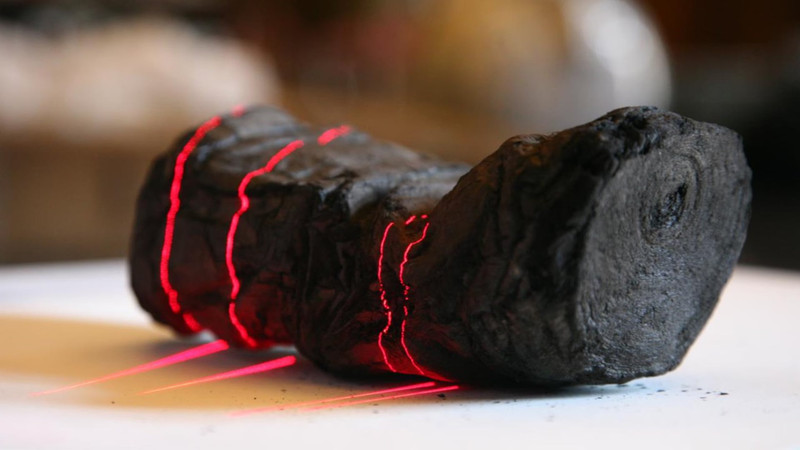
AI Deciphers Vesuvius Papyrus, Reveals New Philodemus Book
Researchers successfully read "Philodemus, On the Gods, Book 8" from a charred scroll, a Vesuvius Challenge milestone expanding knowledge of the Greek philosopher.

Science Protects Metabolism in Microgravity, but Muscles Remain a Challenge
A recent study reveals that metabolism and muscle deterioration do not always progress in tandem under weightless conditions, a key finding for astronauts and patients with reduced mobility.
Latest news
View all
Google Translate Adds Duolingo-Style Widget to Boost Language Learning
Google's translation app aims to transform into a daily learning platform, integrating a streak system and AI conversations on Android.

Mark Zuckerberg: AI Should Empower, Not Fully Automate Work
Meta's CEO warns against the risks of fully automating knowledge work with artificial intelligence, advocating for an approach that empowers employees and creates more jobs. His vision contrasts with other industry leaders amidst widespread AI-driven layoffs.

Anthropic restores global access to Claude Fable 5 after export controls lifted
The US government lifted export restrictions on Anthropic's Claude Fable 5 and Mythos 5 models, making Fable 5 globally available starting July 1, 2026.
Comments (0)
No comments yet. Be the first!
Only registered readers can comment.