
How Do Electric Cars Age After Thousands of Miles? The Reality vs. Combustion Engines
The longevity of electric vehicles fundamentally differs from internal combustion engines. We analyze how time and mileage affect EVs, highlighting their reduced mechanical wear, the predictable nature of battery degradation, and sustained performance.

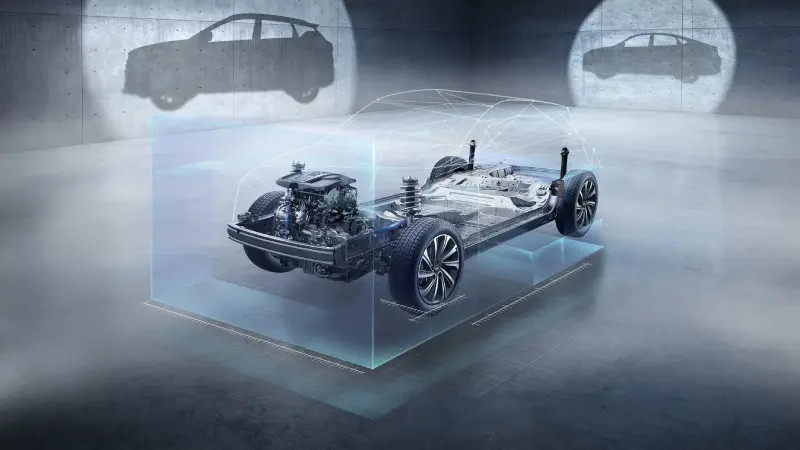
As electric mobility gains traction in Colombia and globally, a crucial question arises among consumers and enthusiasts: what truly happens to an electric vehicle (EV) after years and thousands of miles on the road? This concern is particularly relevant for those planning long journeys or considering a long-term investment, contrasting with the well-known experience of internal combustion engine (ICE) vehicles.
Contrary to common perception, the 'aging' process of an electric car follows an inherently technological logic rather than a purely mechanical one. This distinction is key to understanding its durability and total cost of ownership. Based on recent analyses and insights from experts like Geely, we explore the factors that define an EV's aging, demystifying some beliefs and highlighting its inherent advantages.
The End of Cumulative Mechanical Wear
In an internal combustion engine vehicle, the passage of time and miles is synonymous with constant friction and wear. The ICE is a complex machine with hundreds of moving parts that interact under high temperature and pressure conditions. Components such as pistons, connecting rods, valves, timing belts, clutches, oil pumps, and exhaust systems are subject to cumulative wear that requires frequent maintenance and, eventually, costly replacements. Internal combustion generates heat, vibrations, and byproducts that accelerate this deterioration.
In contrast, the electric motor redefines automotive durability thanks to its intrinsic simplicity. A typical electric motor has only a few moving parts, primarily the rotor. This drastic reduction in components eliminates the need for oil, fuel filters, spark plugs, timing belts, complex exhaust systems, and multi-gear transmissions. With no combustion, extreme heat and vibrations are minimized, resulting in significantly less friction and, therefore, almost negligible mechanical wear compared to an ICE. This simplified architecture is the foundation for a longer, more reliable powertrain lifespan for an EV.
Simplified Maintenance and Intelligent Management
The reduction of moving parts in electric vehicles not only decreases wear but also drastically simplifies maintenance. Workshop visits are less frequent and, generally, less complex and costly. Oil changes, air and fuel filters, spark plugs, and the inspection or replacement of timing belts are eliminated. Routine maintenance focuses on items such as tires, brakes (whose wear is reduced thanks to regenerative braking), and the climate control system.
Furthermore, while miles in a traditional engine represent inevitable physical wear, in an electric vehicle, they represent cycles managed by intelligent systems. Electric vehicles are advanced technological platforms equipped with electronic control units (ECUs) and battery management systems (BMS) that constantly monitor and optimize vehicle performance and health. These systems not only prevent overheating or overcharging but also learn from usage patterns to maximize the efficiency and longevity of key components, especially the battery. This proactive, software-driven management is a fundamental pillar of how EVs age in a more controlled and predictable manner.
The Battery: At the Core of the Conversation
It's inevitable to discuss battery degradation when talking about EV longevity, but it's vital to understand its nature. As Diego Zárate, General Manager of Geely Colombia, points out, "the debate is not whether degradation exists, because all technology has it. The difference lies in how it evolves." Lithium-ion batteries, like any rechargeable battery, experience a gradual loss of capacity over time and use. However, this degradation is neither sudden nor catastrophic.
Current batteries are designed with state-of-the-art technologies that offer significantly longer and safer lifecycles than their predecessors. Battery management systems (BMS) are crucial, as they monitor the temperature, voltage, and current of each cell, optimizing charging and discharging to minimize stress and extend lifespan. Under normal use conditions, capacity loss is gradual and predictable, meaning the vehicle will not suddenly lose its operational capability. Many manufacturers offer extensive warranties for batteries (often 8 years or 100,000 miles), reflecting confidence in their long-term durability and performance. Degradation manifests as a slight reduction in range but does not affect the vehicle's power or acceleration capability.
Undiminished Performance: A Lasting Advantage
One of the greatest advantages of electric mobility is the permanence of its driving sensations. Unlike a gasoline engine that can lose efficiency, power, and smoothness with years and wear, an electric vehicle retains its essential performance characteristics throughout its lifespan. Instant torque, a hallmark of EVs, remains constant from day one. Electric motors deliver maximum torque from 0 RPM, ensuring instant acceleration and agile response that does not diminish with mileage.
Likewise, quiet and smooth driving, a key factor in acoustic comfort, remains unchanged. The absence of combustion and multiple noisy moving parts ensures that the cabin remains a sanctuary of tranquility, free from the mechanical noises or vibrations that often appear in aging ICE vehicles. Furthermore, electric vehicles have a unique ability to evolve through software. Thanks to Over-The-Air (OTA) updates, the vehicle can optimize its performance, receive new functionalities, or improve its efficiency without the need for physical interventions at the workshop. This means an EV can, in some respects, perform better or be smarter over time, acting more like a constantly improving technological platform than a static machine.
Total Cost of Ownership: The Key Metric
When evaluating a vehicle purchase for the long term, Geely emphasizes that the conversation must go beyond the initial price. The total cost of ownership (TCO) is the most relevant metric, and this is where electric vehicles demonstrate a significant advantage as they age. Although the initial purchase price of an EV may be higher than an equivalent ICE, the operational savings over its lifespan are considerable.
'Fuel' costs (electricity) are generally much lower than gasoline, especially if charged at home during off-peak hours. Maintenance costs are drastically lower due to mechanical simplicity and reduced wear. Fewer parts mean fewer repairs and fewer replacements. Additionally, the longer lifespan of the electric powertrain and the ability of modern batteries to maintain useful capacity for many years contribute to a potentially higher residual value and a longer operational life. By considering all these factors, investing in an electric vehicle proves to be a more economically attractive and sustainable option in the long run, redefining what it means to own and maintain a car as it ages.
Keep reading online — scan the code
https://go.tricuatro.com/bj0mf
© tricuatro.com
Article topics
Related articles

MIT Chip Converts Invisible Infrared Light into Crucial Data
MIT researchers developed an innovative chip detecting methane and propane using mid-infrared light, with potential for millions of pixels and optical computing.

Tesla Launches Electric Cybertruck Replica for Kids in the US
Tesla introduces its scaled-down Cybertruck for children aged 6 to 12, an electric vehicle priced at USD 1,500, currently exclusive to the US market.

Samsung Galaxy Z Fold 8: "Passport" Design and Specs Leaked
Samsung's upcoming foldable, the Galaxy Z Fold 8, has been fully leaked, revealing a more square design and details on its displays, processor, and battery ahead of its official July launch.
Latest news
View all
Assassin's Creed Black Flag Resynced Smashes 3 Million Sales, New Game Plus Announced
Ubisoft's successful re-release of the pirate classic continues to break records, confirming one of the most requested features from the gaming community.

TikTok tests AI tool to protect creators from deepfakes
The video platform is rolling out an opt-in feature allowing users to verify their identity and report unauthorized AI-generated likenesses.

The Batman II Delayed to 2028, New Teaser Freezes Us with Excitement
Warner Bros. Pictures confirmed another delay for 'The Batman' sequel, pushing its release to early 2028, but offset the wait with an intriguing, icy first look.
Comments (0)
No comments yet. Be the first!
Only registered readers can comment.