
Ghost particles may hide their mass in an inaccessible hidden dimension
A new hypothesis suggests neutrinos, known as ghost particles, store their mass in a hidden, inaccessible dimension, potentially changing our understanding of the universe.
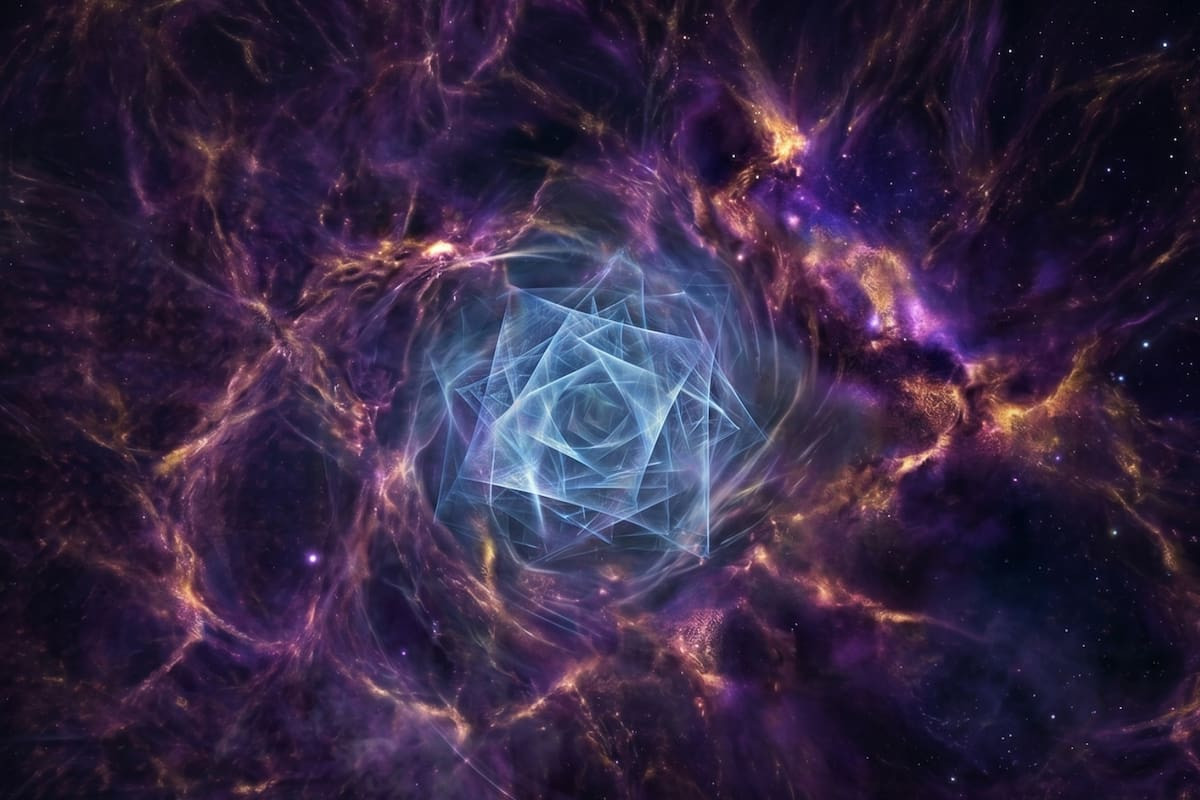
Neutrinos, often called ghost particles due to their extreme detection difficulty, might have their mass stored in a hidden, inaccessible dimension. This idea comes from a team of scientists at Chulalongkorn University in Bangkok, proposing that these matter components reside in a micrometric dimension where they store their mass.
Neutrinos are extraordinarily light, at least a million times lighter than electrons, making them one of the biggest experimental challenges in modern physics. Although they are constantly produced in nuclear processes, detecting them requires highly sophisticated tools.
All observed neutrinos exhibit a property called “left-handed chirality,” but theoretical models predict the existence of right-handed neutrinos, which have not yet been detected. The new hypothesis suggests these right-handed neutrinos could exist in an extra dimension, where they would store their mass.
This concept is part of the so-called “Dark Dimension Proposal,” an attempt to connect particle physics with the universe’s dark energy. In this scenario, dimensions are not uniform or singular but layered according to particle mass, and neutrinos could behave very differently within them.
To test this theory, scientists use the KATRIN experiment in Germany, a massive spectrometer analyzing the energy of electrons emitted during tritium decay. The presence of right-handed neutrinos in a hidden dimension could manifest as an irregularity, called a “kink,” in the energy spectrum.
The upcoming phase of KATRIN promises more precise measurements, capable of detecting these signals if they exist. Confirming right-handed neutrinos and an extra dimension would mark a revolutionary breakthrough in modern physics, opening new paths to understand matter and energy in the universe.
Related articles

Humanoid Robot Pemba Climbs Chimborazo, Sets Sights on Everest Summit
The humanoid robot Pemba, an adaptation of the Unitree G1, recently ascended over 6,000 meters on Chimborazo and now aims to conquer Mount Everest. This technological feat paves the way for new forms of exploration in extreme environments.

Artemis III Progresses to Moon with Crucial Challenges and Mars Ambitions
NASA's Artemis III mission aims for a sustained human presence on the Moon, navigating delays in space suit development and technical hurdles with partners SpaceX and Blue Origin.
Stanford's STEHM Model Optimizes Search for Habitable Exoplanets
Stanford University introduces STEHM, a new tool that filters exoplanets based on their ability to maintain stable atmospheres, a key condition for life.
Latest news
View all
Elon Musk Plans Space Data Centers to Ease AI Energy Crisis
The escalating energy demand for artificial intelligence and terrestrial data centers is driving SpaceX to explore space-based solutions, with Starship being key to economic viability.

US Government Suspends Access to Anthropic's Fable 5 and Mythos 5 AI Models
A national security directive forces Anthropic to disable its advanced AI models, Fable 5 and Mythos 5, for all customers starting June 12, 2026.
Google Launches Gemini 3.5 Live Translate for Instant Voice Translation
Google expands real-time translation availability with Gemini 3.5 Live Translate, offering lower latency and support for over 70 languages.
Comments (0)
No comments yet. Be the first!
Leave a comment