
Fish Sleep Reveals Four Distinct States, Including Eye Movements
A study on zebrafish uncovers that these animals experience four sleep states, some with eye movements, challenging previous beliefs about animal sleep.

A team of scientists at the Max Planck Institute for Biological Cybernetics in Germany recorded the brain and eye activity of zebrafish larvae over 24 hours in their natural environment. Using advanced microscopy, they identified four different sleep stages.
This surprising discovery shows that fish, once thought to have simple sleep patterns, actually experience states with eye movements similar to mammals and birds. Previously, such phases were believed exclusive to these groups.
The study found that each sleep state follows its own circadian rhythm, with a nocturnal phase of sleep without eye movements and three diurnal phases called QEM. The most common, QEM-1, occurs during the day and features reduced brain activity and difficulty waking up.
Fish experience four sleep states, including phases with eye movements, challenging previous ideas about animal rest.
This raises new questions about the role of eye movements in fish sleep and whether they serve functions like memory reactivation or waste clearance. It also indicates that vertebrate sleep architecture has deep evolutionary roots, as similar patterns were observed in multiple Danio species.
The researchers confirmed that sleep regulation in fish depends on both internal biological clocks and light exposure. The flexibility of these phases suggests complex internal mechanisms controlling their rest.
Thanks to the transparency of larval brains, future studies can explore these sleep states in greater detail. These findings open new pathways to understanding the evolution and functions of sleep across vertebrates.
Overall, this discovery shows that sleep is more diverse and ancient than previously thought, with origins dating back to early vertebrate evolution.
Article topics
Related articles

Humanoid Robot Pemba Climbs Chimborazo, Sets Sights on Everest Summit
The humanoid robot Pemba, an adaptation of the Unitree G1, recently ascended over 6,000 meters on Chimborazo and now aims to conquer Mount Everest. This technological feat paves the way for new forms of exploration in extreme environments.
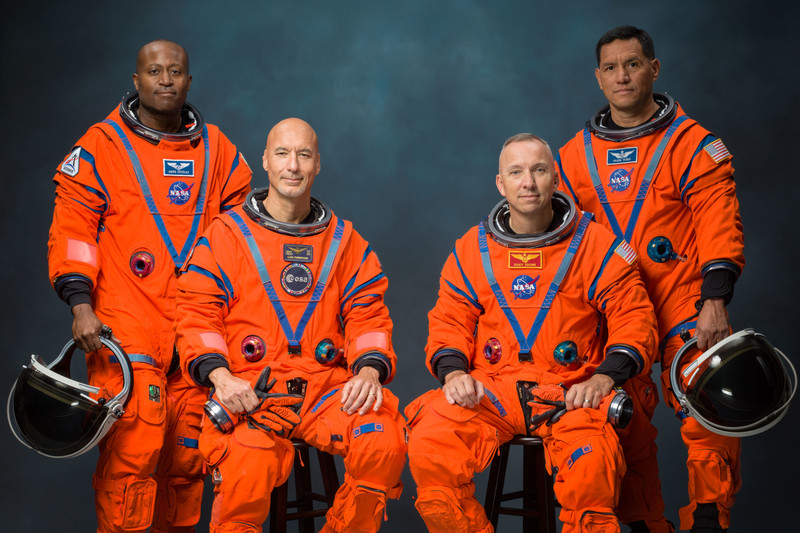
Artemis III Progresses to Moon with Crucial Challenges and Mars Ambitions
NASA's Artemis III mission aims for a sustained human presence on the Moon, navigating delays in space suit development and technical hurdles with partners SpaceX and Blue Origin.

Stanford's STEHM Model Optimizes Search for Habitable Exoplanets
Stanford University introduces STEHM, a new tool that filters exoplanets based on their ability to maintain stable atmospheres, a key condition for life.
Latest news
View all
Elon Musk Plans Space Data Centers to Ease AI Energy Crisis
The escalating energy demand for artificial intelligence and terrestrial data centers is driving SpaceX to explore space-based solutions, with Starship being key to economic viability.

US Government Suspends Access to Anthropic's Fable 5 and Mythos 5 AI Models
A national security directive forces Anthropic to disable its advanced AI models, Fable 5 and Mythos 5, for all customers starting June 12, 2026.

Google Launches Gemini 3.5 Live Translate for Instant Voice Translation
Google expands real-time translation availability with Gemini 3.5 Live Translate, offering lower latency and support for over 70 languages.
Comments (0)
No comments yet. Be the first!
Leave a comment