
Discovery in orbital mechanics could cut Mars mission times
Researchers found that asteroid orbital data can be used to design ultra-fast routes to Mars, reducing travel time to just a few months.
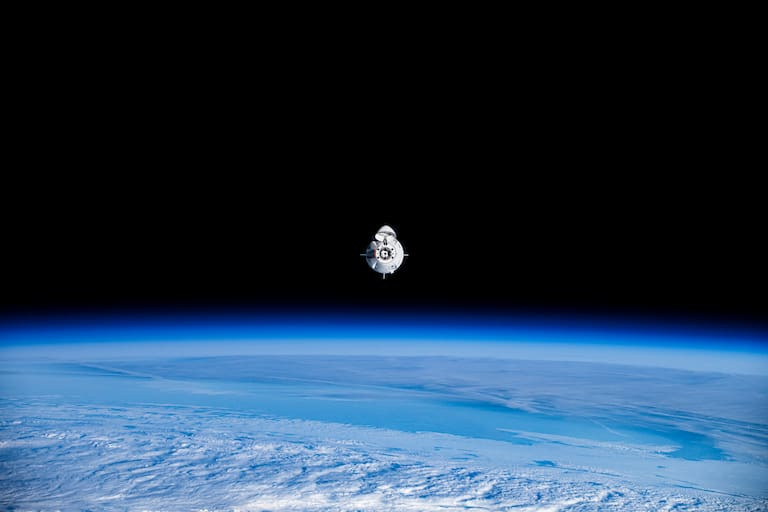
A team led by cosmologist Marcelo de Oliveira Souza discovered a method that uses preliminary orbital data of near-Earth asteroids to plan high-speed interplanetary trajectories. Published in _Acta Astronautica_, this breakthrough could transform how we approach space missions. The key lies in analyzing early trajectories of bodies like asteroid 2001 CA21, which reveal a sort of secret gateway between Earth's and Mars's spheres of influence during certain periods.
This finding doesn't mean ultrafast missions are imminent, but it fundamentally changes how astronomers interpret orbital data previously considered noise. The technique helps identify rapid transfer corridors, optimizing mission routes. Analyses of Mars opposition windows for 2027, 2029, and 2031 show that 2031 is the most promising year to execute these missions in just 153 days, a significant reduction from the usual three-year profile.
The study shows that early asteroid trajectories can serve as structural maps for fast transfer routes in space exploration.
To validate these routes, scientists used a Lambert solver, a classical orbital mechanics tool, to determine trajectories. However, the ultra-fast routes demanding exit velocities of 32.5 km/s are beyond current capabilities, requiring advanced nuclear propulsion. The research concludes that leveraging existing solar system geometry could speed up exploration plans, provided propulsion technology reaches these energy levels.
This method doesn't alter the asteroid's physical trajectory or impact risk but exploits the solar system's geometry to facilitate transfers. It suggests that Mars might be closer than we think if we learn to read the tools we already possess. Reusing minor body data as interplanetary guides could accelerate long-term exploration, as long as propulsion advances to ensure crew safety.
Article topics
Related articles

Humanoid Robot Pemba Climbs Chimborazo, Sets Sights on Everest Summit
The humanoid robot Pemba, an adaptation of the Unitree G1, recently ascended over 6,000 meters on Chimborazo and now aims to conquer Mount Everest. This technological feat paves the way for new forms of exploration in extreme environments.

Artemis III Progresses to Moon with Crucial Challenges and Mars Ambitions
NASA's Artemis III mission aims for a sustained human presence on the Moon, navigating delays in space suit development and technical hurdles with partners SpaceX and Blue Origin.
Stanford's STEHM Model Optimizes Search for Habitable Exoplanets
Stanford University introduces STEHM, a new tool that filters exoplanets based on their ability to maintain stable atmospheres, a key condition for life.
Latest news
View all
Elon Musk Plans Space Data Centers to Ease AI Energy Crisis
The escalating energy demand for artificial intelligence and terrestrial data centers is driving SpaceX to explore space-based solutions, with Starship being key to economic viability.

US Government Suspends Access to Anthropic's Fable 5 and Mythos 5 AI Models
A national security directive forces Anthropic to disable its advanced AI models, Fable 5 and Mythos 5, for all customers starting June 12, 2026.

Google Launches Gemini 3.5 Live Translate for Instant Voice Translation
Google expands real-time translation availability with Gemini 3.5 Live Translate, offering lower latency and support for over 70 languages.
Comments (0)
No comments yet. Be the first!
Leave a comment