
Cold Plasma: Innovative Method Transforms Natural Gas into Methanol
Northwestern University researchers developed a cleaner, more efficient technique to produce methanol. This advance could revolutionize the global chemical and energy industries.
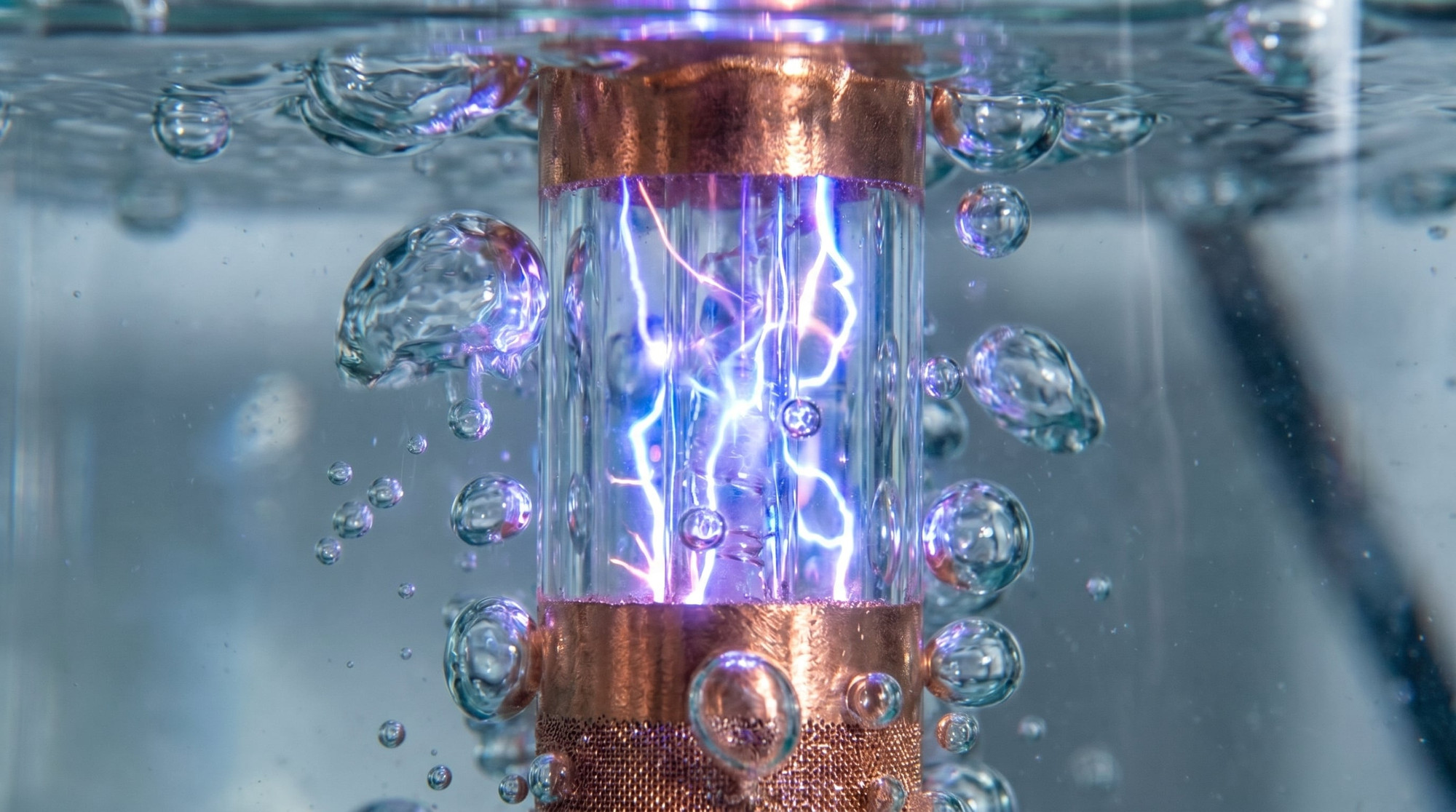
A team of chemists at Northwestern University achieved a significant breakthrough. They developed an innovative method to convert natural gas into methanol. This technique uses small bursts of cold plasma, described as “bottled lightning”. The process is cleaner and more efficient than current methods. It holds the potential to transform the global energy and chemical industries.
The process is cleaner and more efficient than current methods.
The research was published in the prestigious “Journal of the American Chemical Society”. The results are truly promising for the scientific community. Under optimized conditions with argon, methanol selectivity reached an impressive 96.8% in the liquid product. Furthermore, approximately 57% of all gaseous and liquid products turned out to be methanol, demonstrating high efficiency.
This new procedure not only generates methanol but also other valuable compounds. It produces ethylene, a fundamental component for plastic manufacturing. Hydrogen gas is also obtained, considered a carbon-emission-free fuel. Even a small amount of propane is generated, adding further value to the developed method.
Global methanol production is currently a complex and demanding process. The conventional industrial method involves multiple stages and requires temperatures exceeding 800°C. Additionally, it needs pressures between 200 and 300 times standard atmospheric pressure. This traditional approach consumes vast amounts of energy and releases millions of tons of carbon dioxide annually.
The new procedure represents a sustainable alternative. It employs electricity, water, and a copper oxide catalyst. Cold plasma is an energetic state of matter with hot electrons and ambient temperature molecules. It can be generated at low temperatures and normal atmospheric pressures, avoiding extreme heating of the entire system.
Dayne Swearer, assistant professor of chemistry and lead author of the study, explained the mechanics. “We use high-voltage electrical pulses,” he detailed. “If the electrical potential is sufficient, lightning forms inside our reactor. We benefit from that chemistry to break methane bonds, without heating the entire system to extreme temperatures.”
James Ho, a doctoral student and first author of the research, highlighted the relevance of plasma. “More than 99% of the observable universe is composed of plasma,” he noted. “Despite its ubiquity, it is an underexplored resource in chemistry. We use cold plasma because it can be generated at low temperatures and normal atmospheric pressures.” This breakthrough signals a more sustainable future for the production of essential fuels and chemicals.
Article topics
Related articles

Humanoid Robot Pemba Climbs Chimborazo, Sets Sights on Everest Summit
The humanoid robot Pemba, an adaptation of the Unitree G1, recently ascended over 6,000 meters on Chimborazo and now aims to conquer Mount Everest. This technological feat paves the way for new forms of exploration in extreme environments.

Artemis III Progresses to Moon with Crucial Challenges and Mars Ambitions
NASA's Artemis III mission aims for a sustained human presence on the Moon, navigating delays in space suit development and technical hurdles with partners SpaceX and Blue Origin.

Stanford's STEHM Model Optimizes Search for Habitable Exoplanets
Stanford University introduces STEHM, a new tool that filters exoplanets based on their ability to maintain stable atmospheres, a key condition for life.
Latest news
View all
Elon Musk Plans Space Data Centers to Ease AI Energy Crisis
The escalating energy demand for artificial intelligence and terrestrial data centers is driving SpaceX to explore space-based solutions, with Starship being key to economic viability.

US Government Suspends Access to Anthropic's Fable 5 and Mythos 5 AI Models
A national security directive forces Anthropic to disable its advanced AI models, Fable 5 and Mythos 5, for all customers starting June 12, 2026.

Google Launches Gemini 3.5 Live Translate for Instant Voice Translation
Google expands real-time translation availability with Gemini 3.5 Live Translate, offering lower latency and support for over 70 languages.
Comments (0)
No comments yet. Be the first!
Leave a comment