
Canadian POET mission aims to find Earth-like exoplanets
A small, advanced satellite, POET, is set to detect rocky planets around ultracool stars, expanding the search for potentially habitable worlds beyond our solar system.
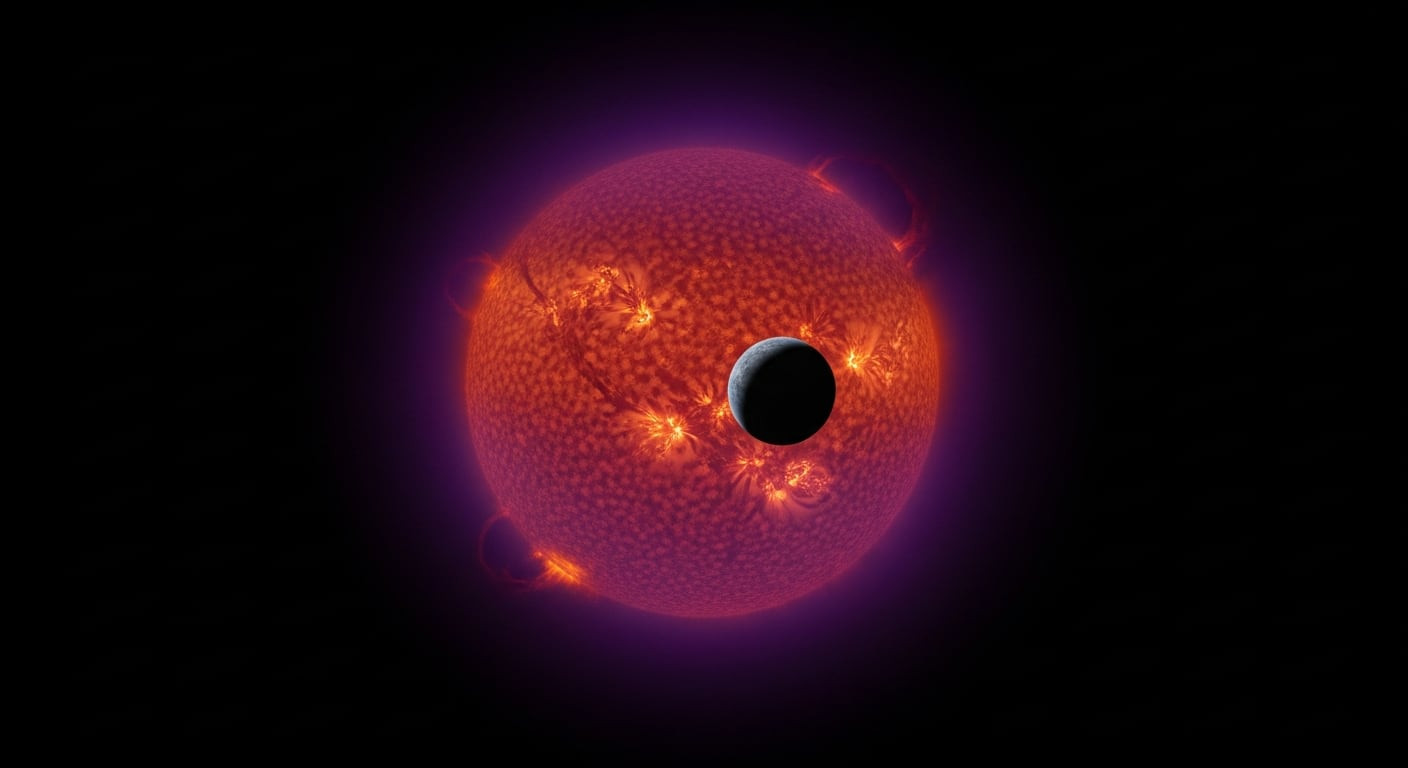
The search for planets outside our solar system continues to progress thanks to new technologies that enable the detection of small, rocky worlds similar to Earth orbiting other stars. One of the main challenges is spotting these exoplanets when they orbit very faint stars, where traditional methods struggle to detect their signals.
To overcome this, a team of scientists led by researchers from Western University published details about the Canadian POET mission (Photometric Observations of Exoplanet Transits). This satellite aims to find Earth-sized exoplanets around ultracool stars, pushing the boundaries of habitable planet detection.
The transit method involves observing how a star's brightness dips when a planet passes directly in front of it from our viewpoint. This causes a slight, temporary decrease in the star's light received by telescopes. By precisely measuring these dips repeatedly, astronomers can detect the presence of an exoplanet, estimate its size, and determine its orbital period.
POET will be a compact satellite equipped with a 20-centimeter aperture telescope, allowing it to collect more light than previous Canadian missions like MOST and NEOSSat. While those only observed visible light, POET can capture in near-ultraviolet, visible-infrared, and short-wave infrared, covering a broader wavelength range.
This diversity enhances its ability to distinguish signals from exoplanet atmospheres and stellar surface features, improving detection accuracy for rocky planets and super-Earths. Its main goals are to analyze atmospheres of known exoplanets and to discover new small planets orbiting ultracool stars, which emit most of their energy in infrared where POET is highly sensitive.
The launch of POET is scheduled for late 2029, and the mission is a key part of Canada's strategic astronomy plan for the next decade. Its detection strategy relies on the transit technique and the satellite's ability to identify signals around faint stars, where the planet-to-star size ratio makes small planets easier to detect.
POET aims to expand the frontier in detecting habitable worlds around ultracool stars, combining sensitivity and precision in a small satellite.
Article topics
Related articles

Humanoid Robot Pemba Climbs Chimborazo, Sets Sights on Everest Summit
The humanoid robot Pemba, an adaptation of the Unitree G1, recently ascended over 6,000 meters on Chimborazo and now aims to conquer Mount Everest. This technological feat paves the way for new forms of exploration in extreme environments.

Artemis III Progresses to Moon with Crucial Challenges and Mars Ambitions
NASA's Artemis III mission aims for a sustained human presence on the Moon, navigating delays in space suit development and technical hurdles with partners SpaceX and Blue Origin.

Stanford's STEHM Model Optimizes Search for Habitable Exoplanets
Stanford University introduces STEHM, a new tool that filters exoplanets based on their ability to maintain stable atmospheres, a key condition for life.
Latest news
View all
Elon Musk Plans Space Data Centers to Ease AI Energy Crisis
The escalating energy demand for artificial intelligence and terrestrial data centers is driving SpaceX to explore space-based solutions, with Starship being key to economic viability.

US Government Suspends Access to Anthropic's Fable 5 and Mythos 5 AI Models
A national security directive forces Anthropic to disable its advanced AI models, Fable 5 and Mythos 5, for all customers starting June 12, 2026.

Google Launches Gemini 3.5 Live Translate for Instant Voice Translation
Google expands real-time translation availability with Gemini 3.5 Live Translate, offering lower latency and support for over 70 languages.
Comments (0)
No comments yet. Be the first!
Leave a comment