
Anxiety: A Life-Saving Protective Shield, According to Science
Recent research reveals that the hypervigilance associated with anxiety can significantly reduce mortality risk, acting as an evolutionary survival mechanism.

That feeling of constant unease, that worry about health, the future, or security – it might not be a weakness, but a powerful protective shield. A new scientific approach offers emotional validation for what many experience: anxiety, when channeled correctly, translates into tangible benefits for survival.
This "inner voice" that urges us to check a suspicious mole, buckle our seatbelt without thinking, or pause before a rash decision is the evolutionary legacy of our ancestors. It's an age-old survival mechanism that keeps us alive, demonstrating that hypervigilance can be an invaluable ally.
Clinical data supports this perspective. Large-scale studies, such as a macro-study published in the _Journal of Personality and Social Psychology_ analyzing over half a million people, have shown that personality traits directly impact mortality risk. However, not all anxiety is the same; a subsequent meta-analysis in the _Journal of Psychosomatic Research_ dissected the facets of neuroticism, revealing that not all are detrimental.
The study identified two key personality dimensions that act as "life vests." On one hand, the "Worried-Vulnerable" facet is associated with a reduced risk of death from various causes, including cancer, cardiovascular, and respiratory diseases. Individuals with this trait tend to be extremely vigilant about their health, seeking medical help at the slightest symptom, which facilitates early diagnoses and effective treatments.
On the other hand, the "Inadequacy" facet, characterized by shyness and a feeling of incompetence, also reduces mortality. Here, the key lies in danger avoidance: these individuals are more cautious and less likely to expose themselves to cumulative risks over time, contributing to greater longevity.
The "Worried-Vulnerable" facet is associated with a reduced risk of death from all causes, with significant reductions in mortality from cancer, cardiovascular, and respiratory diseases.
Conversely, the study confirms that destructive facets like cynicism and pessimism do increase mortality risk. These individuals tend towards self-neglect, smoke more, and crucially, underutilize healthcare services, limiting opportunities for early intervention.
The reward for this "threat radar" manifests with age. Contrary to the popular belief that old age brings rigidity, psychology has shown that aging is a process of refinement. From age 60 onwards, an astonishing positive evolution occurs: conscientiousness increases, agreeableness grows, and most importantly in this context, neuroticism drastically decreases. The emotional storms of youth and constant hypervigilance give way to deep emotional regulation and calm. The human brain seems programmed to prioritize stability and social cohesion as we age.
Furthermore, current research indicates a clear "boomer advantage." Those born between 1946 and 1964 are aging better than their predecessors, maintaining high levels of extraversion, curiosity, and personal agency. Reports like Sapien Labs' _Mental State of the World_ reflect a generational gap where those over 65 and 70 are veritable "rocks" of mental health, possessing a solid self-image and relational resilience far superior to Generation Z. They have internalized autonomy, depend less on external validation, and reach a peak of "personal wisdom," managing complex conflicts with an efficiency that younger individuals cannot replicate.
In essence, science is compelling us to rewrite the narrative on anxiety and aging. That state of constant alert, that worry which sometimes feels like an overwhelming burden, is not a flaw in the modern life system. It is the oldest, most sophisticated, and effective protective shield humans possess. Our brains inject us with doses of protective neuroticism during our highest-risk years to ensure we seek medical attention promptly, avoid absurd dangers, and arrive safely at the final stretch. A final stretch where, paradoxically, the brain turns off the alarms, reduces anxiety, and gifts us the peak of emotional stability and wisdom in our existence. So, the next time someone tells you you worry too much about everything, you now have the perfect, evolution-and-science-backed answer: "I don't worry out of habit; my radar is simply working overtime to ensure a long, wise, and extremely peaceful old age."
Article topics
Related articles
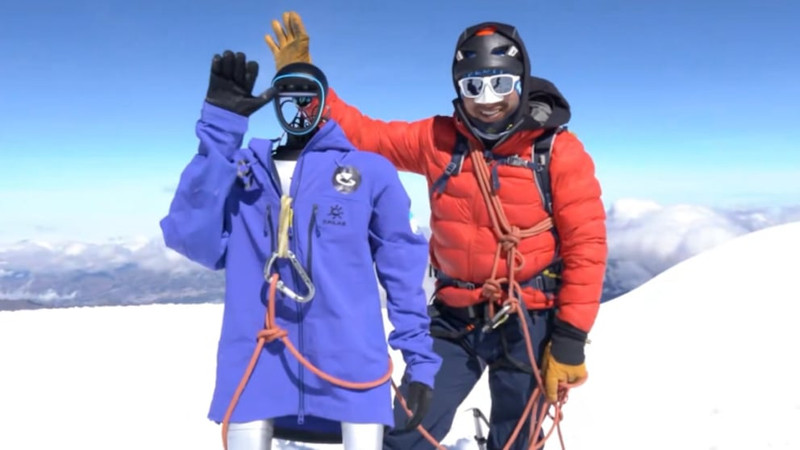
Humanoid Robot Pemba Climbs Chimborazo, Sets Sights on Everest Summit
The humanoid robot Pemba, an adaptation of the Unitree G1, recently ascended over 6,000 meters on Chimborazo and now aims to conquer Mount Everest. This technological feat paves the way for new forms of exploration in extreme environments.
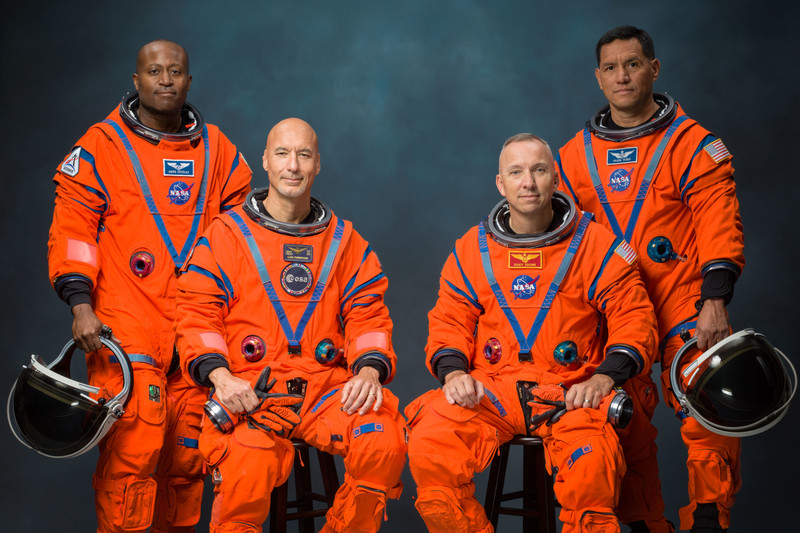
Artemis III Progresses to Moon with Crucial Challenges and Mars Ambitions
NASA's Artemis III mission aims for a sustained human presence on the Moon, navigating delays in space suit development and technical hurdles with partners SpaceX and Blue Origin.

Stanford's STEHM Model Optimizes Search for Habitable Exoplanets
Stanford University introduces STEHM, a new tool that filters exoplanets based on their ability to maintain stable atmospheres, a key condition for life.
Latest news
View all
Elon Musk Plans Space Data Centers to Ease AI Energy Crisis
The escalating energy demand for artificial intelligence and terrestrial data centers is driving SpaceX to explore space-based solutions, with Starship being key to economic viability.

US Government Suspends Access to Anthropic's Fable 5 and Mythos 5 AI Models
A national security directive forces Anthropic to disable its advanced AI models, Fable 5 and Mythos 5, for all customers starting June 12, 2026.
Google Launches Gemini 3.5 Live Translate for Instant Voice Translation
Google expands real-time translation availability with Gemini 3.5 Live Translate, offering lower latency and support for over 70 languages.
Comments (0)
No comments yet. Be the first!
Leave a comment