
AI uncovers new insights into human DNA structure and function
Researchers in the US found that DNA structures are more dynamic than previously thought, opening new avenues for disease treatment.
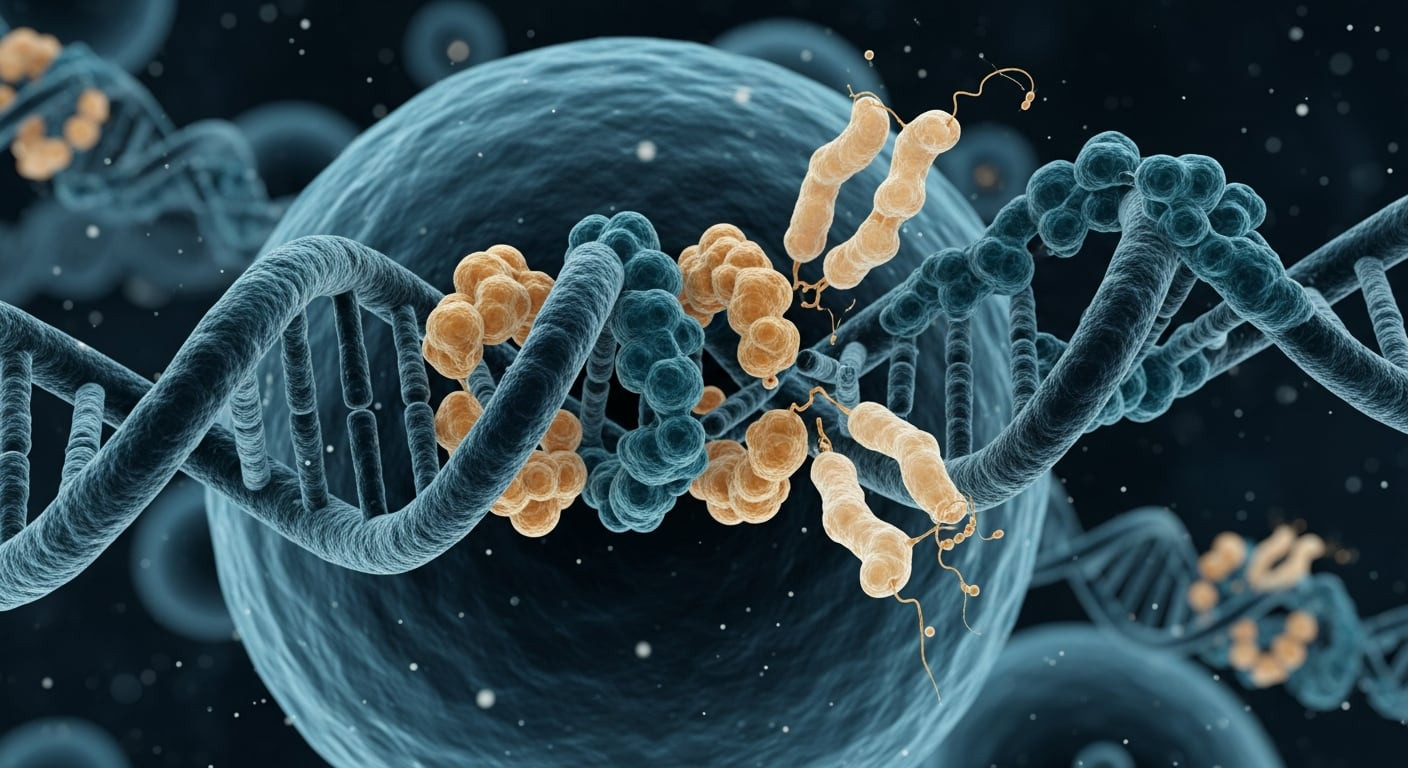
Each human cell compresses over 1.8 meters of DNA into an incredibly tiny space, similar to fitting a house into a sugar cube. To organize this, DNA wraps around proteins called nucleosomes. Researchers at the Gladstone and Arc Institutes in the US discovered that these structures are far more dynamic, which could impact how we approach complex diseases and aging.
For decades, the dominant view was that DNA was tightly coiled around nucleosomes, making it inaccessible. Only the unwrapped DNA was considered usable. But these new findings challenge that idea, showing that the genome's organization is more flexible and nuanced.
Vijay Ramani from Gladstone explained that we once thought genes were simply on or off. Now, it’s clearer that gene activity resembles a volume dial, revealing a new organizational code within the genome.
The team employed an AI tool called IDLI, built on a previous technology named SAMOSA. While SAMOSA maps nucleosome positions on individual DNA molecules, IDLI analyzes internal structures in two dimensions, providing deeper insights into their internal organization.
Each nucleosome consists of eight distinct blocks. IDLI detects whether these blocks are intact and properly connected. When blocks are missing or loose, the nucleosome becomes distorted, exposing parts of the DNA. In embryonic mouse cells, over 85% of nucleosomes showed some distortion, indicating that the genome is more accessible than previously believed.
Hani Goodarzi from the Arc Institute compared this to reading a text with only sounds and silences. Now, with these tools, we can see letters, words, and grammar rules that control gene regulation, opening new doors in genetics.
The researchers identified 14 structural states of nucleosomes, each linked to different levels of gene activity. These patterns were consistent in human cells transforming into liver cells and in mouse liver samples. Transcription factors, proteins that turn genes on or off, also influence nucleosome shape. Removing some of these factors changed the distortion patterns, demonstrating how internal structure regulates gene activity.
Article topics
Related articles

Humanoid Robot Pemba Climbs Chimborazo, Sets Sights on Everest Summit
The humanoid robot Pemba, an adaptation of the Unitree G1, recently ascended over 6,000 meters on Chimborazo and now aims to conquer Mount Everest. This technological feat paves the way for new forms of exploration in extreme environments.

Artemis III Progresses to Moon with Crucial Challenges and Mars Ambitions
NASA's Artemis III mission aims for a sustained human presence on the Moon, navigating delays in space suit development and technical hurdles with partners SpaceX and Blue Origin.

Stanford's STEHM Model Optimizes Search for Habitable Exoplanets
Stanford University introduces STEHM, a new tool that filters exoplanets based on their ability to maintain stable atmospheres, a key condition for life.
Latest news
View all
Elon Musk Plans Space Data Centers to Ease AI Energy Crisis
The escalating energy demand for artificial intelligence and terrestrial data centers is driving SpaceX to explore space-based solutions, with Starship being key to economic viability.

US Government Suspends Access to Anthropic's Fable 5 and Mythos 5 AI Models
A national security directive forces Anthropic to disable its advanced AI models, Fable 5 and Mythos 5, for all customers starting June 12, 2026.

Google Launches Gemini 3.5 Live Translate for Instant Voice Translation
Google expands real-time translation availability with Gemini 3.5 Live Translate, offering lower latency and support for over 70 languages.
Comments (0)
No comments yet. Be the first!
Leave a comment