
"Zombie" Cells: The Revolutionary Technique That Could Revive Bacteria and Transform Synthetic Biology
A research team has successfully reanimated inert bacteria by completely replacing their genomes between species, a breakthrough using "zombie cells" to open new frontiers in microbial engineering and synthetic biology.

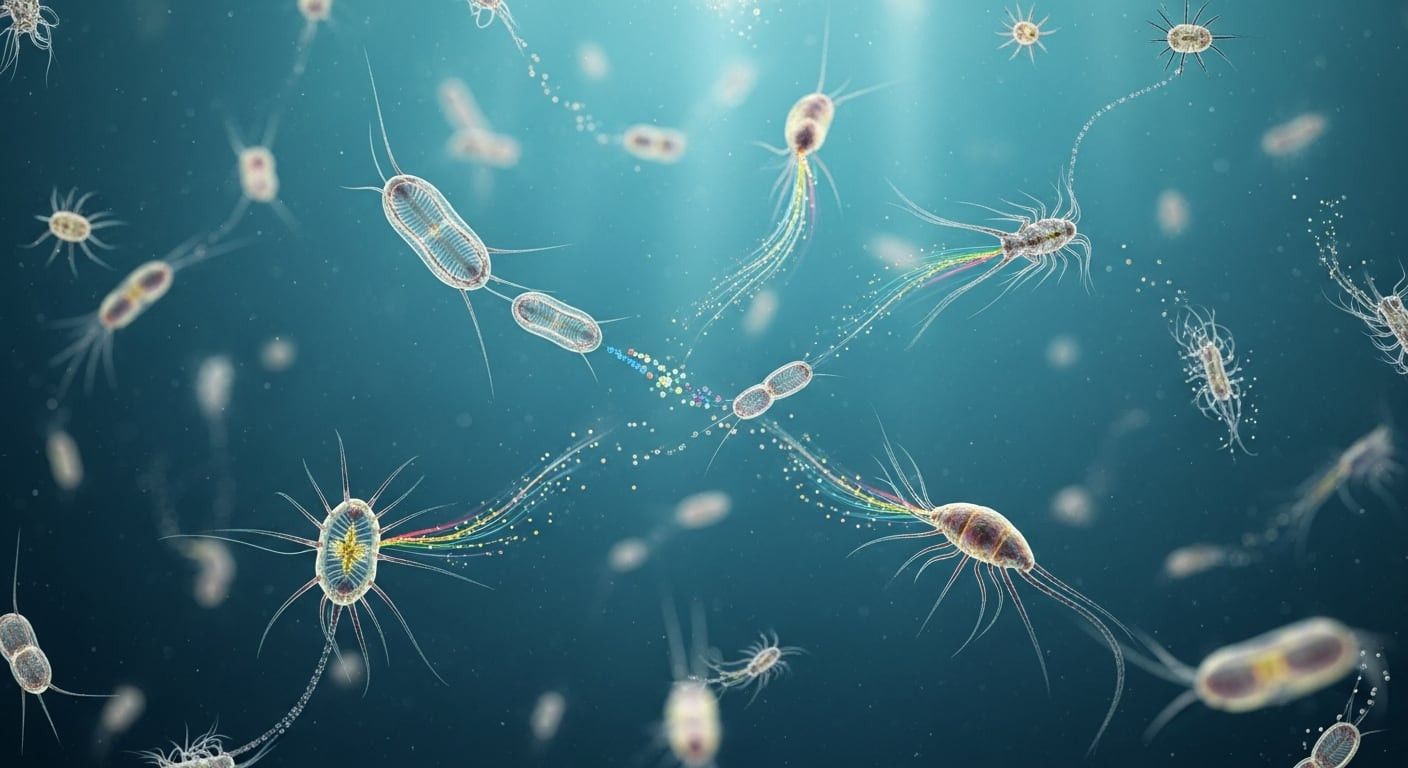
Synthetic biology has taken a monumental leap forward with a recent publication in the scientific journal Nature, where a team of researchers unveiled an innovative technique capable of "reviving" bacteria previously considered inert. This achievement is based on a pioneering method that allows for the complete replacement of a bacterium's defective DNA with the entire genome of another species. This breakthrough not only redefines our understanding of microbial viability but also dramatically expands the possibilities of microbial engineering, opening doors to applications ranging from advanced medicine and biofuel production to the development of artificial intelligence-designed microorganisms. The key to this technique lies in the use of what scientists have termed "zombie cells": bacterial organisms that, while incapable of self-replication, can be reactivated and function fully thanks to the insertion of a new, functional genome.
Overcoming Inter-species Genetic Transfer Barriers
Until now, the transfer of complete bacterial genomes had been largely limited to closely related species, typically within the same class or genus, such as those of the Mycoplasma genus. However, the current research, whose methodology was initially disseminated on the scientific preprint server bioRxiv, has managed to overcome this fundamental limitation. Synthetic biologist John Glass, from the J. Craig Venter Institute and co-author of the study, explained that one of the biggest hurdles in previous attempts was the problem of "false positives." In earlier experiments with other bacteria, it was observed that recipient genomes would integrate only fragments of external DNA—such as antibiotic resistance genes—through a process known as homologous recombination. This allowed the cell to survive without the total absorption of the donor genome, thus invalidating the goal of a complete genomic transplant. The new technique addresses and eliminates this challenge, ensuring that reactivation is exclusively due to the integration of the entire genome.
The "Zombie Cell" Mechanism and Proof of Concept
To circumvent the issue of homologous recombination and ensure a complete and functional genomic transplant, Glass and his team developed the ingenious "zombie cells." This process begins by inactivating the bacterial genomes of the recipient cells using the chemotherapeutic agent mitomycin C. This compound is crucial because it prevents the cell from replicating its own DNA or incorporating external genes through recombination, leaving it in an "inert" but structurally intact state. Subsequently, the research group proceeded to transplant the genome of Mycoplasma mycoides—which had been engineered to carry a tetracycline resistance marker—into the Mycoplasma capricolum cells previously treated with mitomycin C. The success was resounding: although only a small fraction of the recipient cells survived, their viability was direct and irrefutable evidence that the complete genome transplant had worked, reactivating the cell. As co-author Zumra Peksaglam Seidel, also a synthetic biologist at the J. Craig Venter Institute, eloquently commented: "The cell is condemned to die, but we give it life."
A Legacy of Innovation and Future Adaptations
This breakthrough does not emerge in isolation but builds upon a decade and a half of pioneering research. Approximately 15 years ago, in 2010, the same team led by John Glass had already achieved a significant milestone by chemically synthesizing a bacterial genome of 1.1 million base pairs and successfully transplanting it into a related species. That experience was fundamental, as the recipient species lacked homologous recombination, which minimized the risks of false positives and laid the conceptual groundwork for the current experiments. The "zombie cell" technique represents an evolution of those early works, now allowing for transfer between more diverse species. Looking ahead, Olivier Borkowski, a researcher at INRAE and Paris-Saclay University, suggests that the technique has enormous potential for diversification if adapted to more widely studied and versatile model organisms, such as the ubiquitous Escherichia coli, which would exponentially multiply its applications.
Transformative Applications in Synthetic Biology and Beyond
The implications of this ability to reanimate bacteria with entirely new genomes are vast and promising for synthetic biology and biotechnology. The possibility of designing and "switching on" microorganisms with specific functions opens unprecedented pathways. In medicine, this could mean more efficient production of complex drugs, vaccines, or gene therapies. For energy, the engineering of bacteria capable of producing biofuels sustainably and on a large scale becomes a closer reality. Furthermore, the research opens the door to the experimental development of entirely new microorganisms, designed from scratch or with the aid of artificial intelligence to perform specific tasks, such as the bioremediation of pollutants or the synthesis of novel materials. This capacity to "reprogram" life at the genomic level offers a powerful tool to address some of humanity's most pressing challenges.
The Future of Genomic Engineering and Remaining Challenges
The work by Glass and Seidel's team represents a fundamental milestone in genomic engineering, demonstrating that it is possible to transcend the natural barriers of bacterial genetic transfer. While the "zombie cell" technique has resolved the problem of false positives and enabled inter-species transfer, the path toward fully exploiting this potential still presents challenges. Optimizing transplant efficiency, adapting to a broader range of bacterial species, and deeply understanding the interactions between the transplanted genome and the recipient cell's cytoplasm are key areas for future research. Nevertheless, this advance lays the groundwork for an era where the creation of microbial life for specific purposes, from human health to environmental sustainability, could become a standard tool in the synthetic biology arsenal, promising a transformative impact across multiple industries and in our relationship with the microbial world.
Keep reading online — scan the code
https://go.tricuatro.com/VaFla
© tricuatro.com
Related articles
SpaceX Scrubs Starship Test Flight in South Texas
Computer systems detected an anomaly during the Super Heavy booster's engine startup sequence, forcing the mission's abort.

JAXA's RV-X Reusable Rocket Successfully Completes First Flight
Japan's space agency JAXA successfully tested its RV-X prototype, a critical step towards reducing costs and boosting competitiveness in the global space market.

China's Great Green Wall: Artificial Forests Outpace Natural Growth
China planted 66 billion trees over nearly half a century to combat desertification, and a new study shows they grow faster than natural forests, albeit with important nuances.
Latest news
View all
MIT Chip Converts Invisible Infrared Light into Crucial Data
MIT researchers developed an innovative chip detecting methane and propane using mid-infrared light, with potential for millions of pixels and optical computing.

Assassin's Creed Black Flag Resynced Smashes 3 Million Sales, New Game Plus Announced
Ubisoft's successful re-release of the pirate classic continues to break records, confirming one of the most requested features from the gaming community.

TikTok tests AI tool to protect creators from deepfakes
The video platform is rolling out an opt-in feature allowing users to verify their identity and report unauthorized AI-generated likenesses.
Comments (0)
No comments yet. Be the first!
Only registered readers can comment.