
Jack Dorsey: AI Will Eliminate Middle Management and Reshape Business Structures
Jack Dorsey, co-founder of Twitter and CEO of Block, predicts that artificial intelligence is poised to eradicate middle management positions in companies, driving a radical transformation in organizational models.
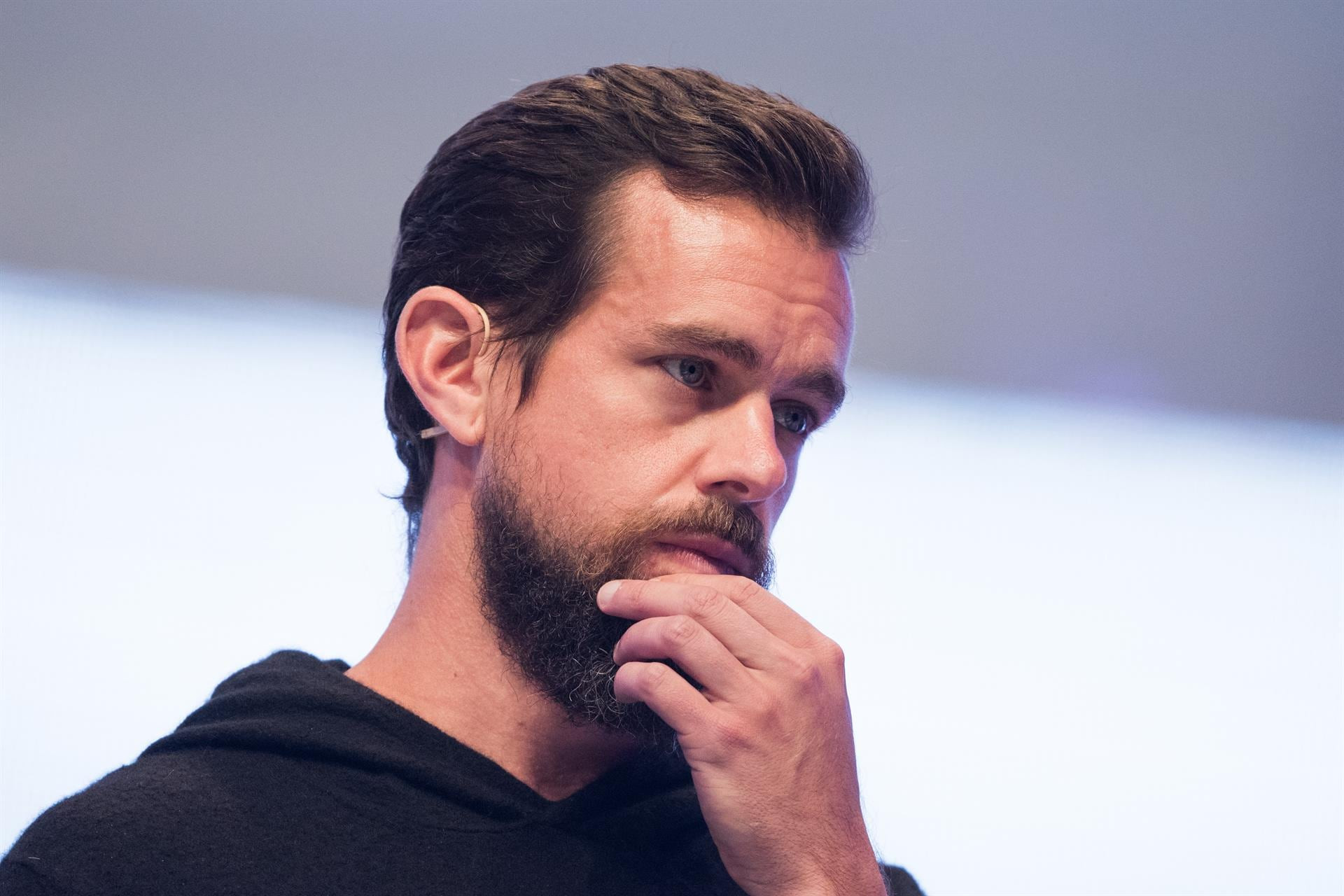
Artificial intelligence (AI) is not merely automating repetitive tasks; it is poised to fundamentally restructure corporate hierarchies. This is the warning from Jack Dorsey, co-founder of Twitter and current CEO of Block, who asserts that AI is capable of eliminating a significant portion of middle management roles within companies. This bold prediction, shared in a post on the Sequoia Capital blog, underscores a paradigm shift already unfolding in the business world, with profound implications for the workforce and organizational efficiency.
Dorsey, in collaboration with Roelof Botha, former managing partner at Sequoia, argues that the speed with which AI integrates into business processes has exceeded initial expectations. Unlike previous waves of automation, current AI possesses the ability to perform much of the work traditionally handled by middle managers. This includes crucial tasks such as gathering updates, transmitting instructions, coordinating projects, and keeping teams aligned. AI's capacity to process and synthesize information at an unparalleled scale and speed positions it as a tool capable of assuming these supervisory and coordination functions with unprecedented efficiency.
Block: A Laboratory for Organizational Transformation
Dorsey's vision is not merely theoretical; it is reflected in recent changes implemented at Block, his financial technology company. In February, Block announced the layoff of over 40% of its workforce, impacting more than 4,000 employees. This drastic decision was framed as part of a strategy to streamline operations through the adoption of artificial intelligence. The market's response was decisive: investors celebrated the move, causing the company's shares to surge by up to 24%. Furthermore, Block projects estimated revenues of $24 billion for 2025, an ambitious goal largely supported by the efficiency and optimization that AI can bring to its operations.
The Impact on Traditional Structures and the Workforce
Dorsey's warning takes on considerable magnitude when considering the volume of positions that could be affected. According to data from the U.S. Bureau of Labor Statistics, approximately 21 million Americans hold managerial positions, representing about 12% of the workforce. The joint analysis by Dorsey and Botha highlights that most companies operate under a pyramidal logic, where information flows from employees to managers and from executives to employees. In this model, middle managers act as essential nodes for communication and coordination, functions that AI can now replicate and optimize.
AI as a New Management Model
Dorsey and Botha compare modern companies to the Roman army, where hierarchy was fundamental for ordering and supervising large volumes of dispersed personnel. However, they point out a crucial difference: modern software is now capable of tracking projects, detecting problems, distributing tasks, and sharing information more quickly and accurately than humans. In business environments that prioritize remote work and the digitalization of processes, such as Block, AI can build a “global model” of the organization. This means maintaining an updated, real-time map of everything happening internally, from project progress to resource allocation and bottleneck identification.
This AI-driven efficiency logic also extends to customer interaction. Block, through its Square and Cash App platforms, processes millions of payments every day, granting it real-time insight into user needs and behaviors. Automation and data analysis via AI enable the company to make more informed and agile decisions, not only in internal management but also in adapting its services to market demands. Ultimately, Dorsey's vision suggests that AI is not just a tool for task automation, but a catalyst for a profound re-engineering of management and business structure, moving towards flatter, more agile, and data-driven models.
Related articles

US Government Suspends Access to Anthropic's Fable 5 and Mythos 5 AI Models
A national security directive forces Anthropic to disable its advanced AI models, Fable 5 and Mythos 5, for all customers starting June 12, 2026.

Google Launches Gemini 3.5 Live Translate for Instant Voice Translation
Google expands real-time translation availability with Gemini 3.5 Live Translate, offering lower latency and support for over 70 languages.
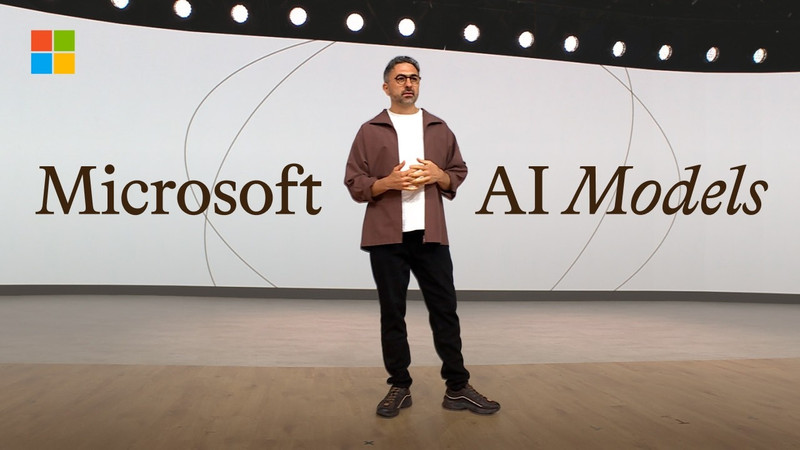
Microsoft Unveils Seven New AI Models with Human-Centric Superintelligence Vision
Microsoft introduces a powerful family of seven AI models spanning image, voice, and code, designed to empower developers and organizations with a strong ethical foundation.
Latest news
View all
Elon Musk Plans Space Data Centers to Ease AI Energy Crisis
The escalating energy demand for artificial intelligence and terrestrial data centers is driving SpaceX to explore space-based solutions, with Starship being key to economic viability.

Windows 95 Runs on Texas Instruments Graphing Calculator
A modder successfully ported Windows 95 to a TI-Nspire CX II, showcasing modern calculator hardware capabilities.

Humanoid Robot Pemba Climbs Chimborazo, Sets Sights on Everest Summit
The humanoid robot Pemba, an adaptation of the Unitree G1, recently ascended over 6,000 meters on Chimborazo and now aims to conquer Mount Everest. This technological feat paves the way for new forms of exploration in extreme environments.
Comments (0)
No comments yet. Be the first!
Leave a comment