
AI Doesn't Equalize, It Exposes: How User Fluency Defines Success in the Age of Artificial Intelligence
New reports from Anthropic reveal that AI doesn't automatically reduce user differences but amplifies existing skills, highlighting the critical role of "AI fluency" for optimal results.
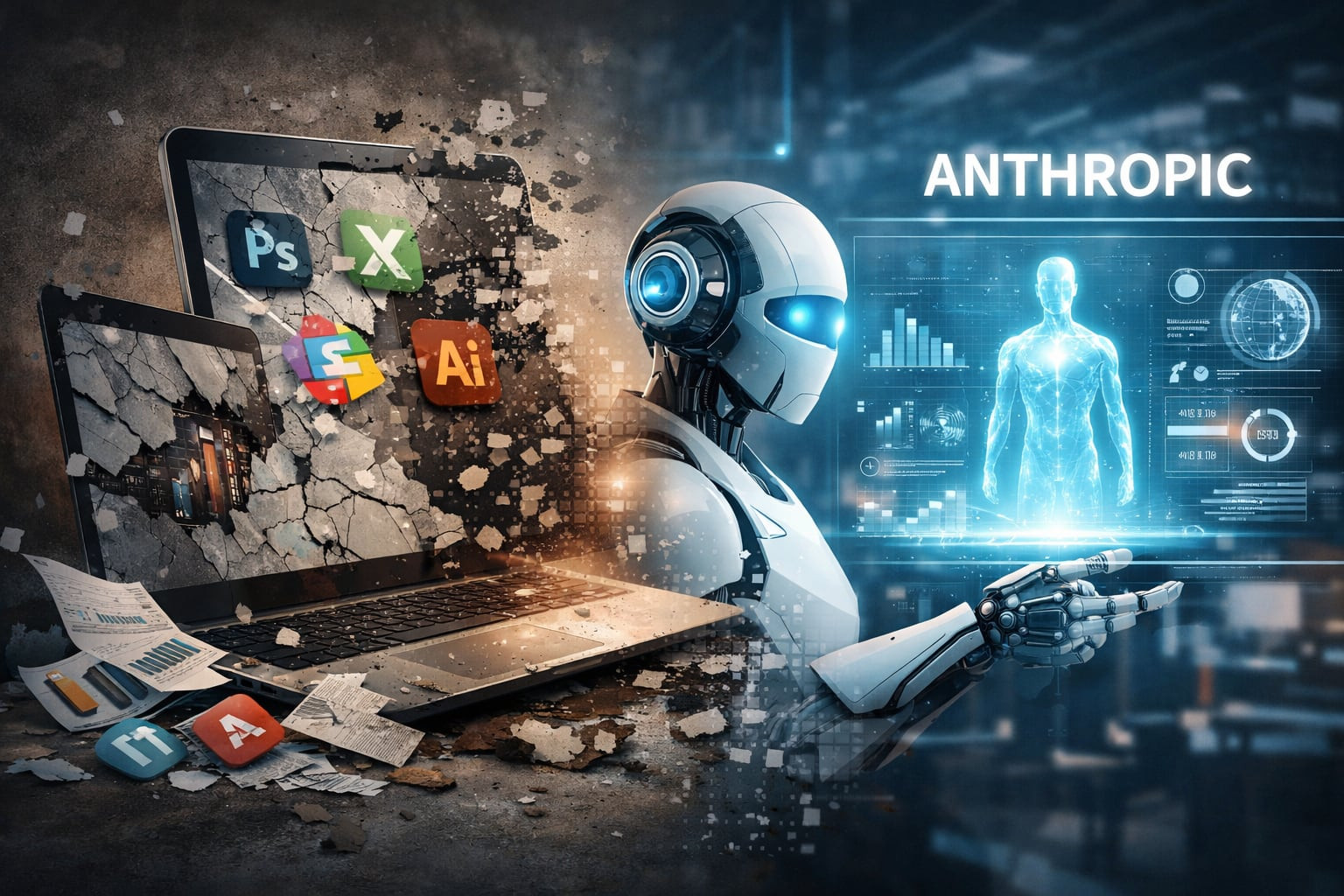
In the rapidly evolving landscape of artificial intelligence, a common scenario plays out millions of times daily: two individuals interact with the same AI system, posing similar questions. Yet, one receives a generic, unhelpful response, while the other, through a process of reformulation and refinement, obtains a precise and highly relevant outcome. This disparity doesn't lie with the tool itself but with the skill and experience of the user. Recent reports from Anthropic, a leading AI development company, dissect this dynamic, challenging the widespread belief that artificial intelligence automatically levels the playing field. Their data not only disputes this notion but uncovers a more complex and uncomfortable truth: AI performance is not uniform; it is profoundly linked to user proficiency.
The Learning Curve and the Power of Prior Experience
The “Anthropic Economic Index: Learning Curves” report delves into how individuals integrate these advanced tools into their daily tasks. What emerges from this analysis is a clear differentiation: some users rapidly develop mastery in using AI, consistently achieving superior results, while others struggle to extract the same value. The key, according to Anthropic, isn't merely knowing how to operate the technology but understanding what to do with it—how to formulate the right questions and how to interpret and refine the responses. This is where prior experience and educational background play a crucial role. Users with a more robust knowledge base or greater experience in their field tend to leverage AI more effectively. This isn't because the tool is exclusively designed for them, but because they possess the cognitive frameworks and intellectual resources necessary to interpret AI outputs, identify potential errors, correct course, and persist in seeking the optimal solution. It's a matter of intellectual capital that translates into a greater capacity for strategic interaction.
Defining "AI Fluency": A Strategic Skill Set
Anthropic's reports introduce a fundamental concept: "AI fluency." This doesn't refer to deep technical knowledge or the ability to program algorithms, but rather a more subtle and difficult-to-quantify skill: the capacity to interact strategically and effectively with AI systems that, by their nature, do not always respond linearly or predictably. An "AI-fluent" user doesn't just input an instruction and accept the first response. Instead, they critically evaluate the information received, detect inconsistencies or inaccuracies, and adjust their request, reformulating the question or adding context to guide the AI toward the desired outcome. This iterative process, which at first glance might seem trivial, is the true differentiator that marks the gap between a generic answer and a highly personalized, useful solution.
The “Anthropic Education Report: AI Fluency Index” underscores that this fluency is neither an innate quality nor acquired instantaneously. It requires deliberate practice, a process of trial and error, and, in many cases, a solid framework of prior knowledge that allows the user to interpret and contextualize what the tool produces. In this sense, the difference between users is not solely technical but profoundly cognitive and strategic. Two individuals with access to the same AI technology can obtain radically different results, not due to the quality of the tool, but to the sophistication of their interaction with it. AI, in this scenario, acts as a mirror reflecting and amplifying the user's pre-existing capabilities.
Unequal Impact: AI as an Amplifier, Not an Equalizer
Anthropic's data also sheds light on the types of tasks where AI proves most effective. The reports indicate that its use is predominantly concentrated in tasks of intermediate complexity. This means AI is not fully replacing highly specialized expert work, nor is it limited to automating basic, repetitive functions. Instead, it positions itself at an intermediate point where it enhances and optimizes existing processes, acting as an intelligent assistant that accelerates execution and improves the quality of results in activities requiring a degree of analysis and judgment. This usage pattern suggests that artificial intelligence does not operate as an automatic equalizer of skills. While in certain scenarios it can empower less experienced users to tackle tasks previously beyond their reach, in others, and perhaps more significantly, it amplifies the capabilities and efficiency of those who already possessed a solid foundation of knowledge and skills. The ultimate outcome is not a convergence of capabilities but a divergence: an unequal impact that can, in the long run, contribute to widening the differences between users.
In conclusion, Anthropic's analyses invite us to reconsider our perception of artificial intelligence. Far from being a panacea that levels the playing field for everyone, AI reveals itself as a tool that exposes and, in many cases, amplifies existing disparities in terms of experience, knowledge, and strategic ability. Success in the AI era will not solely depend on access to technology but on each individual's capacity to develop "AI fluency," transforming interaction with these powerful tools into an art of iteration and interpretation. For Tricuatro, this serves as a call to action for education and skill development, ensuring that the promise of AI becomes accessible to an increasingly broad and diverse user base.
Article topics
Related articles
US Government Suspends Access to Anthropic's Fable 5 and Mythos 5 AI Models
A national security directive forces Anthropic to disable its advanced AI models, Fable 5 and Mythos 5, for all customers starting June 12, 2026.

Google Launches Gemini 3.5 Live Translate for Instant Voice Translation
Google expands real-time translation availability with Gemini 3.5 Live Translate, offering lower latency and support for over 70 languages.
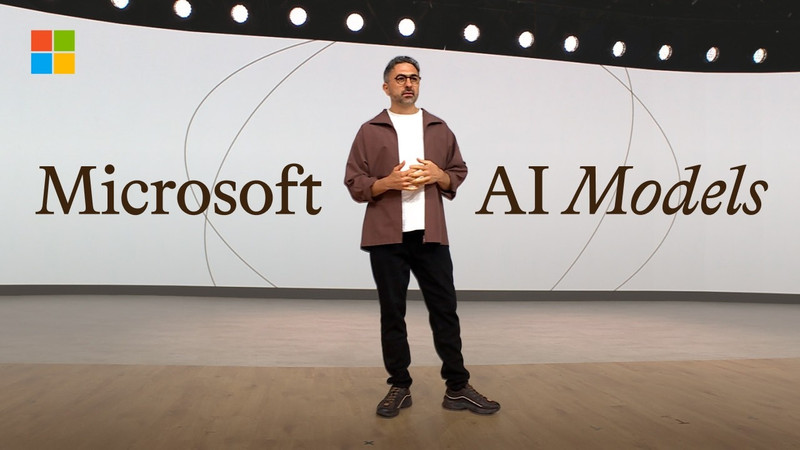
Microsoft Unveils Seven New AI Models with Human-Centric Superintelligence Vision
Microsoft introduces a powerful family of seven AI models spanning image, voice, and code, designed to empower developers and organizations with a strong ethical foundation.
Latest news
View all
Elon Musk Plans Space Data Centers to Ease AI Energy Crisis
The escalating energy demand for artificial intelligence and terrestrial data centers is driving SpaceX to explore space-based solutions, with Starship being key to economic viability.

Windows 95 Runs on Texas Instruments Graphing Calculator
A modder successfully ported Windows 95 to a TI-Nspire CX II, showcasing modern calculator hardware capabilities.

Humanoid Robot Pemba Climbs Chimborazo, Sets Sights on Everest Summit
The humanoid robot Pemba, an adaptation of the Unitree G1, recently ascended over 6,000 meters on Chimborazo and now aims to conquer Mount Everest. This technological feat paves the way for new forms of exploration in extreme environments.
Comments (0)
No comments yet. Be the first!
Leave a comment