
The Mass Robotaxi Outage in Wuhan: A Wake-Up Call for Chinese Autonomous Driving
Over a hundred Baidu Apollo Go robotaxis simultaneously stopped in Wuhan, China, due to a system failure, exposing vulnerabilities in large-scale autonomous driving and the need for greater industry transparency.

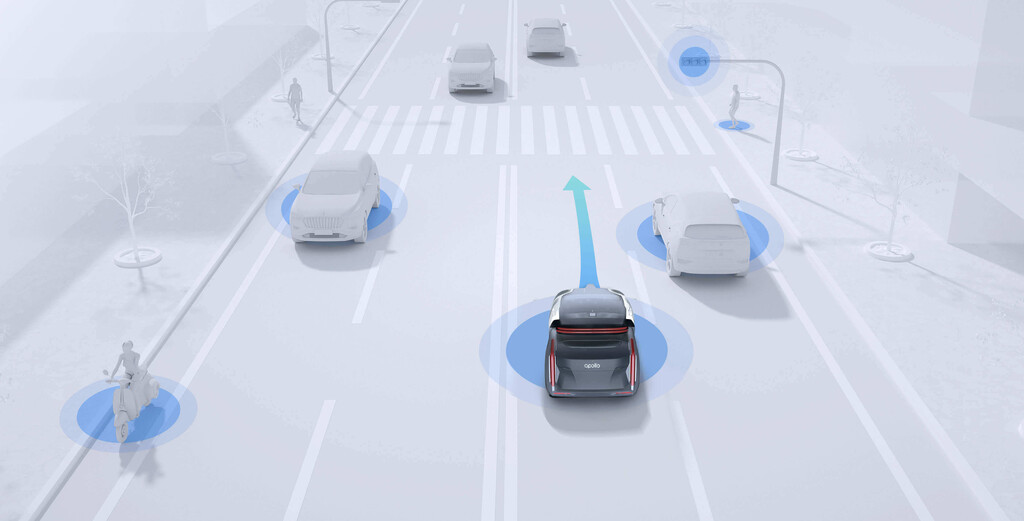
The promise of robotaxis, autonomous vehicles operating without a human driver, has been a cornerstone of China's vision for the future of transportation. Companies like Baidu, through its Apollo Go subsidiary, have spearheaded this narrative, boasting expanding fleets and millions of successful trips. However, on the night of Tuesday, April 1st, this image of invulnerability was severely challenged in the city of Wuhan, when over a hundred of its robotaxis simultaneously became immobilized due to a system failure, leaving passengers stranded and exposing a series of concerns that the sector has long tried to avoid.
The incident was as sudden as it was perplexing. A passenger recounted how the interior screen of her vehicle displayed a cryptic message: "Driving system failure. Staff will arrive in five minutes." The reality, however, was far more frustrating. Despite pressing the SOS button, it took 30 minutes for anyone to respond, while her robotaxi remained stationary in the middle of a traffic lane. This collective outage, the first of its magnitude in China, not only disrupted service but also called into question the maturity and reliability of a technology seeking public trust and global regulatory approval.
Baidu Apollo Go: A Global Giant at a Crossroads
The significance of this incident is magnified when considering Baidu's weight in the autonomous driving industry. Apollo Go is no minor player; it is one of the most ambitious companies with the largest deployment of robotaxis worldwide. In Wuhan alone, its largest operation, it boasts a fleet of over 1,000 autonomous vehicles and has accumulated more than 20 million trips throughout its history. Its global expansion strategy is aggressive, having recently started operations in Abu Dhabi and Dubai in the United Arab Emirates, and maintaining advanced negotiations to enter key European markets such as the UK and Switzerland. Furthermore, its agreement with Uber to integrate its services into the ride-hailing giant's app underscores its aspiration to become a global standard. A failure of this magnitude, at a time when the company and the sector in general are trying to convince the world of their readiness to scale, represents a significant setback for its credibility and expansion plans.
The autonomous driving industry is at a critical juncture where demonstrating reliability and safety is paramount for mass adoption. Incidents like the one in Wuhan not only affect public perception but can also influence investor and regulatory decisions. Baidu's ability to manage the crisis, communicate the causes, and ensure it does not recur will be crucial to maintaining its leadership position and trust in its technology.
Between Safety and Chaos: Analyzing the Failure
From a technical perspective, the Wuhan incident could be interpreted in several ways. Some anonymous sources cited by Chinese media suggested that the vehicles' safety self-verification systems might have detected an anomalous condition and, as a preventive measure, stopped the robotaxis. If this hypothesis were true, the system would have functioned as designed, prioritizing safety by immobilizing the vehicles in the face of a potential risk. However, the practical outcome of this action was chaotic and highlighted a gap between theory and operational reality.
The simultaneous immobilization of over a hundred vehicles in a busy city like Wuhan created high-risk situations. Cars stopped in central lanes of expressways, some passengers trapped for over 90 minutes, and minor collisions caused by vehicles braking abruptly on highways are examples of the direct consequences. Although fortunately no serious injuries were reported, the situation was precarious, and the absence of an effective contingency plan for an emergency of this scale is a significant concern. This event underscores that, even if safety systems work as expected, managing a mass failure in a complex urban environment remains a formidable challenge that requires more robust solutions and a coordinated response.
A Troubling Pattern: Previous Incidents and Reliability
The Wuhan incident is not an isolated case; it adds to a series of events that have called into question the reliability of large-scale autonomous driving. In December 2022, a power outage in San Francisco left Waymo robotaxis immobilized across the city, forcing the company to deploy emergency software updates to its entire fleet. Months earlier, in August of the same year, an Apollo Go vehicle fell into a ditch in Chongqing, and in May, a Pony.ai car caught fire in Beijing, albeit without causing injuries. These precedents, although of a different nature, draw a clear pattern: autonomous driving technology, despite its advancements, has not yet reached the level of reliability and resilience necessary to justify the full trust being asked of the public and authorities.
Each of these incidents, from software glitches to mechanical or infrastructure problems, highlights the inherent complexities of operating autonomous vehicles in real-world environments. The promise of safer and more efficient mobility is constantly challenged by the reality of technical failures and operational limitations. The industry must address these challenges proactively, not only by improving the technology but also by developing more efficient and transparent emergency response protocols.
Baidu's Silence and the Future of Autonomous Driving
Perhaps as concerning as the failure itself has been Baidu's lack of transparency. The company has not offered an official explanation for the cause of the incident nor has it detailed how long it took to resolve the situation and normalize service. Wuhan police confirmed the event but also provided no additional details. This corporate silence, at a time of public and regulatory scrutiny, can further erode trust in the technology and in companies' ability to manage crises.
Opacity in communicating critical incidents is counterproductive for an industry that fundamentally relies on public acceptance. For robotaxis to scale and fully integrate into our cities, it is imperative that companies are transparent about failures, learn from them, and demonstrate an unwavering commitment to safety and reliability. The Wuhan incident is a stark reminder that while autonomous driving technology has made great strides, significant challenges remain to be overcome, not only in the technical realm but also in building a relationship of trust with society. The future of robotaxis will depend not only on their ability to avoid accidents but also on their ability to manage inevitable disruptions and communicate clearly when things do not go as planned.
Keep reading online — scan the code
https://go.tricuatro.com/lNiY5
© tricuatro.com
Article topics
Related articles

TikTok tests AI tool to protect creators from deepfakes
The video platform is rolling out an opt-in feature allowing users to verify their identity and report unauthorized AI-generated likenesses.

Apple Sues OpenAI Over Alleged Hardware Trade Secret Theft
The Cupertino giant accuses former key employees, including Tang Tan, of stealing confidential hardware information for OpenAI's benefit and its expansion into consumer hardware.

Anthropic Tackles AI's Toughest Questions for a Responsible Future
The company launches an initiative to understand public concerns and transparently address the challenges of artificial intelligence development.
Latest news
View all
Sweet Interstellar Discovery: Erythrulose Detected in the Milky Way
Scientists from the Spanish Astrobiology Center have for the first time identified a true sugar, erythrulose, in a gas and dust cloud near our galaxy's center. This finding suggests complex molecules can form before stars and planets are born.

Paramount and Warner Bros. Merger Halted by Judge Over Antitrust Concerns
A coalition of 12 states successfully petitioned Judge Araceli Martinez-Olguin to temporarily block the deal, citing fears of higher prices and reduced content.

MIT Chip Converts Invisible Infrared Light into Crucial Data
MIT researchers developed an innovative chip detecting methane and propane using mid-infrared light, with potential for millions of pixels and optical computing.
Comments (0)
No comments yet. Be the first!
Only registered readers can comment.