
Scientists Build Synthetic Cell Capable of Self-Replication
Researchers at the University of Minnesota have successfully constructed a cell from non-living chemical components, ushering in an era of custom-designed organisms.

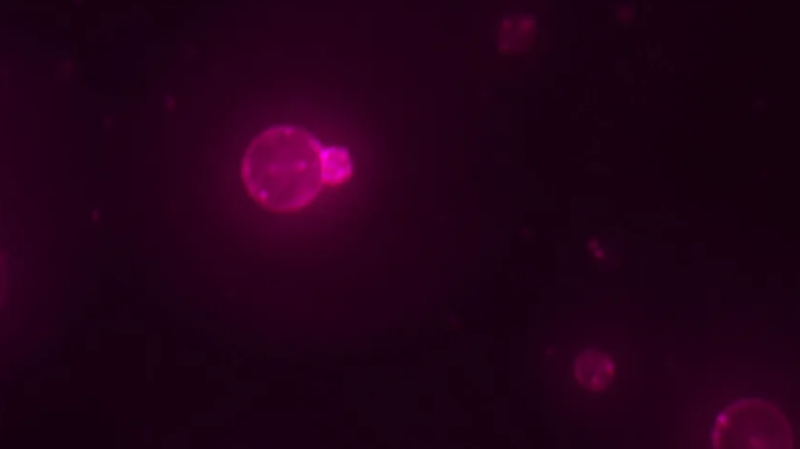
On July 1, 2026, scientists at the University of Minnesota, led by synthetic biologist Kate Adamala, announced a groundbreaking achievement: the first-ever construction of a synthetic cell from scratch, capable of feeding, growing, and replicating like a natural cell. This advance in synthetic biology promises to usher in an era of custom-designed organisms that function as living machines.
The creation, named "SpudCell" by Adamala, was assembled piece by piece from non-living chemical components. While currently a limited and fragile prototype, its existence offers unprecedented insights into the origin of life and holds the potential to address some of the world's most significant biological challenges. SpudCell resembles a simple bacterium, not fitting into plant or animal categories.
Adamala emphasized the transparency and complete control over her invention, a crucial aspect for the future design of these entities.
"I know the complete list of ingredients of the cell. I know exactly what chemicals and what molecules it contains, as well as their concentrations. It is completely defined, which means we can design it," Kate Adamala stated.
This achievement marks the "next frontier" in synthetic biology, moving beyond traditional bioengineering that modifies natural cells. Historically, scientists have inserted genes (such as human insulin genes into _E. coli_ bacteria to treat diabetes). Now, the focus shifts to designing entirely new biological systems from their basic components.
Yuval Elani, an associate professor of Biochemical Technologies at Imperial College London, who was not involved in the research, highlighted that building a cell from scratch frees researchers from the "limitations and evolutionary baggage of natural biology." This capability opens up the possibility to design and program systems for functions that living cells might not easily perform or cannot do at all.
Despite its potential, Adamala described SpudCell as an "incredibly weak organism" that, for now, "basically does nothing more than feed and, occasionally, produce a daughter cell." Composed of between 150 and 200 molecules, it can replicate for approximately five generations, yet it is significantly less complex than a natural biological cell, which contains millions or billions of molecules.
The differences from natural cells are notable. SpudCell takes about 12 hours to replicate at a temperature of 30 degrees Celsius, in contrast to _E. coli_ bacteria, which divide every 30 minutes. Its genome is 90,000 base pairs, significantly smaller than _E. coli_'s 4.6 million base pairs. Furthermore, the synthetic cell lacks a cytoskeleton and cannot produce its own ribosomes, relying on those supplied from _E. coli_ during its feeding.
The researchers are clear: they have not "created life in the lab." Drew Endy, an associate professor of Bioengineering at Stanford University and co-founder of Biotic, the institution seeking to expand the technology, noted that "we still don't fully understand what life is, let alone." In its current form, SpudCell poses no biosecurity risks, as it can only divide if all necessary components, including ribosomes, are supplied.
Adamala and Endy assert that, by being built from scratch, safety measures and protective mechanisms can be incorporated directly into SpudCell's genome to prevent risks if it were released into the environment. Through Biotic, they hope the core SpudCell technology will become a globally shared standard for synthetic cell biology, functioning as an open-source platform similar to the Linux operating system. Academic institutions and non-profit organizations will be able to use it for free, while commercial uses will require licensing fees.
Although SpudCell "cannot produce anything useful" at this moment, Adamala is enthusiastic about bringing together the international community to accelerate its development. Tom Ellis, from Imperial College London, while calling the work "probably the biggest recent advance in the field of synthetic cells," is unsure if this specific work will become the standard that all other researchers worldwide will want to align with. The primary goal is collaboration to transform SpudCell into a truly useful tool.
Keep reading online — scan the code
https://go.tricuatro.com/scientis
© tricuatro.com
Article topics
Related articles
National Geographic Museum of Exploration Opens in Washington D.C.
With a US$300 million investment, the new space offers immersive experiences and a journey through 138 years of discoveries, inviting visitors to become explorers.
Japanese Scientists Create Crystal Converting Sunlight to UV for Air Purification
A team of Japanese scientists has developed a novel crystalline material, iBu-DHI, capable of transforming visible sunlight into ultraviolet radiation. This breakthrough could revolutionize air purification and solar hydrogen production without requiring electricity.
Google's Electricity Use Jumped 37% in 2025 Due to AI
Google reported a historic surge in its annual electricity consumption, primarily driven by the expansion of AI data centers. Despite this, the company claims to keep operational carbon emissions in check.
Latest news
View all
OpenAI Considers Ceding 5% Stake to US Government
The proposal aims to address concerns about AI misuse and how US citizens can benefit from the sector's growth, as reported by the Financial Times.

Anthropic Details Fable 5 Cyber Safeguards and Jailbreak Framework
Anthropic's advanced Fable 5 AI model, now globally available, enhances its protection with safety classifiers and proposes a new framework to assess AI "jailbreak" severity.
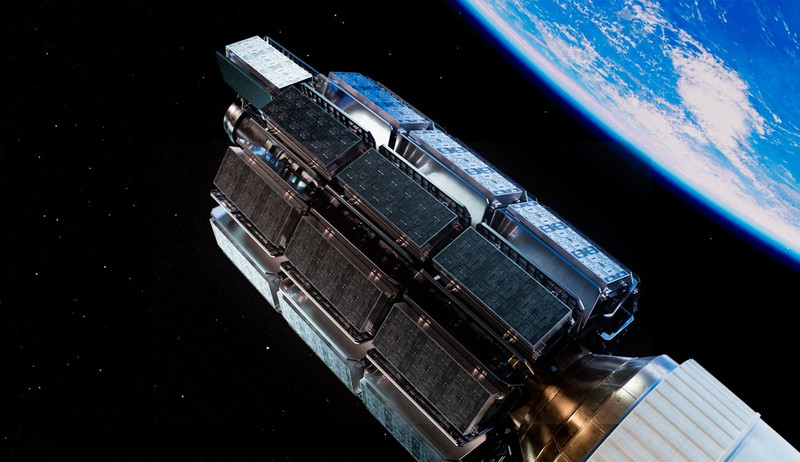
Amazon Leo Reaches 396 Satellites, Satellite Internet Service Launching This Year
Amazon Leo, the company's low-orbit satellite network, now has enough units to offer continuous service in initial latitudes, preparing for its launch this year and competing with Starlink.
Comments (0)
No comments yet. Be the first!
Only registered readers can comment.