
Palantir Declares SaaS Dead, Embraces Custom Software Model
The data analytics and AI company argues that standard solutions no longer meet business needs, betting on AI-driven custom software engineering.
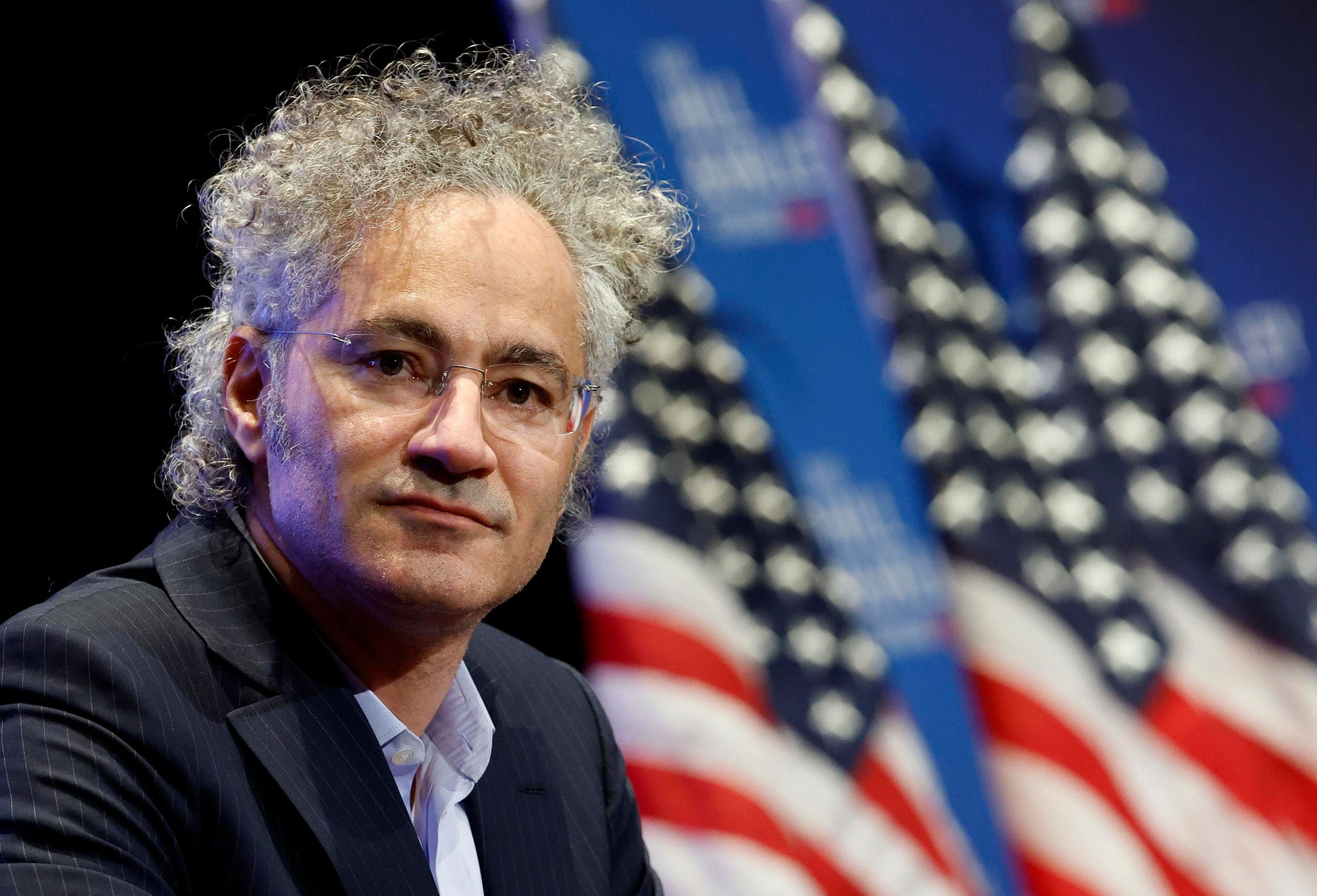
In a bold move that could reshape the enterprise software landscape, Palantir Technologies has declared "SaaS is dead." Danny Lukus, a deployment strategist at Palantir, asserted that the traditional model of off-the-shelf software is no longer sufficient for the complex demands of modern businesses, particularly in supply chain management (SCM).
Lukus explained that while companies once developed their own software, this was a risky and expensive endeavor. The rise of enterprise software companies and eventually SaaS offered standardized solutions from vendors like SAP and Oracle. However, Palantir contends that these rigid solutions often force businesses back to manual workflows and spreadsheets, an implicit admission that standard software doesn't align with their unique operations.
Palantir's critique of the SaaS model hinges on two main points. First, the rigidity of standard solutions limits a company's ability to differentiate itself from competitors. By using common templates, businesses cede their strategic advantage. Second, every time a company asks its software partner to develop functionality, it's essentially giving those same capabilities to its rivals.
In contrast, Palantir employs a radically different approach. They utilize "forward-deployed engineers" who work directly with clients to build bespoke solutions. These engineers identify the capabilities and processes needed to fill the gaps left by standard software, building on platforms like SAP and Oracle. The result is custom software, initially developed by Palantir engineers, which clients can eventually adapt themselves.
Central to this approach is Palantir's "abstraction layer," described as an operating system that sits atop any underlying infrastructure. This layer manages data integration (structured and unstructured), business logic, and defines who can make what decisions, as well as how data is written back. This architecture is built upon Palantir's "Ontology," a core component that integrates various applications and datasets, representing real-world objects and the business logic required to run a large enterprise.
"SaaS is dead," stated Danny Lukus, a deployment strategist at Palantir Technologies, arguing that standard solutions no longer meet business needs.
In the age of AI, Palantir sees even greater potential for creating customer-specific models and workflows. Tools like Anthropic's Claude or OpenAI's Codex can accelerate code generation, dramatically reducing the time and cost of software development. This allows Palantir's engineers to rapidly build prototypes, gather feedback, and iterate until solutions precisely fit client needs.
Lukus also highlighted the use of AI in the form of "agents." These agents mimic human actions in a specific role and can collaborate to execute complex processes. For instance, one agent might identify and parse a new purchase order, while another determines stock availability or the need for manufacturing, utilizing optimization models like linear programming.
Despite Palantir's enthusiasm, skepticism remains regarding the scalability of AI-generated code to handle the immense transaction volumes in complex environments like warehouses. It's also yet to be fully proven if AI-generated optimization agents can solve large-scale problems, an area where specialized software companies have spent decades developing advanced algorithms.
Nevertheless, Palantir is already showcasing the effectiveness of its approach. Many of their manufacturing clients use the solution for Sales & Operations Execution (S&OE), a system based on exception sensing and automatic responses. The company points to testimonials from clients like Wendy's and Tyson's, which attest to the effectiveness of their solutions, suggesting that the future of enterprise software may lie in deep customization powered by AI, rather than one-size-fits-all solutions.
Article topics
Related articles

Elon Musk Plans Space Data Centers to Ease AI Energy Crisis
The escalating energy demand for artificial intelligence and terrestrial data centers is driving SpaceX to explore space-based solutions, with Starship being key to economic viability.
US Government Suspends Access to Anthropic's Fable 5 and Mythos 5 AI Models
A national security directive forces Anthropic to disable its advanced AI models, Fable 5 and Mythos 5, for all customers starting June 12, 2026.

Google Launches Gemini 3.5 Live Translate for Instant Voice Translation
Google expands real-time translation availability with Gemini 3.5 Live Translate, offering lower latency and support for over 70 languages.
Latest news
View all
Windows 95 Runs on Texas Instruments Graphing Calculator
A modder successfully ported Windows 95 to a TI-Nspire CX II, showcasing modern calculator hardware capabilities.

Humanoid Robot Pemba Climbs Chimborazo, Sets Sights on Everest Summit
The humanoid robot Pemba, an adaptation of the Unitree G1, recently ascended over 6,000 meters on Chimborazo and now aims to conquer Mount Everest. This technological feat paves the way for new forms of exploration in extreme environments.
SpaceX IPO Values Company at $1.77 Trillion on Nasdaq
SpaceX's anticipated public offering on the Nasdaq positions it as the seventh most valuable U.S. listed company, marking a significant financial milestone.
Comments (0)
No comments yet. Be the first!
Leave a comment