
Google Home's Latest Update Supercharges Gemini for More Natural Smart Home Control
Google has rolled out a significant update to its Home app, promising to make smart home control via its Gemini AI assistant "more natural and reliable." This enhancement allows users to interact with their devices more fluidly, from adjusting lighting with creative descriptions to controlling appliances with precise, conversational commands.

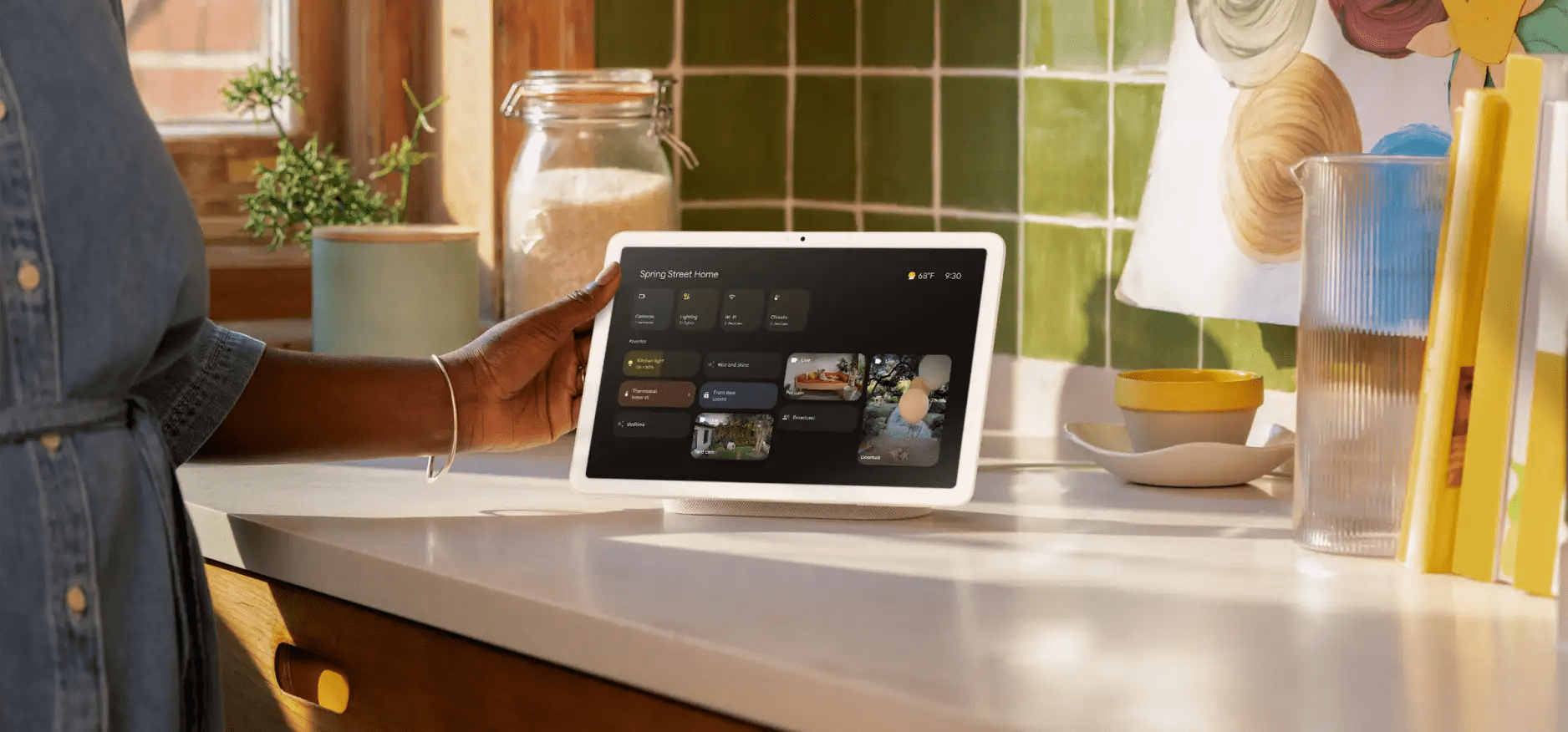
Google's smart home ecosystem is taking a significant leap towards more intuitive and seamless interaction with its latest update for the Google Home app. This enhancement focuses on bolstering the capabilities of the Gemini artificial intelligence assistant, promising a home control experience that is, in Google's own words, "more natural and reliable." In a world where technology aims to integrate invisibly into our daily lives, the ability to communicate with our devices conversationally and without friction is paramount. This update not only simplifies the management of connected devices but also brings closer the vision of a truly intelligent home that is responsive to our needs.
Conversational Interaction: The Heart of the Improvement
The essence of this update lies in Gemini's enhanced Natural Language Processing (NLP) capabilities. Gone are the days of rigid, specific commands that required memorization. Now, users can express themselves in a much more colloquial and descriptive manner. Gemini has been trained to understand nuances and context, meaning that interacting with your smart home feels less like giving orders to a machine and more like conversing with a personal assistant. This evolution is crucial for the mass adoption of smart home technology, as it lowers the learning curve and increases convenience for users of all ages and technological skill levels.
Intuitive Lighting Control: Beyond Standard Colors
One of the most prominent features of this update is the ability to control lighting with creative and evocative descriptions. There's no longer a need to recall specific color codes or predefined shade names. Now, you can simply ask Gemini to set the light to "the color of the ocean," and the assistant will interpret your request to select an appropriate blue-green hue. This functionality opens up a wide range of possibilities for personalizing the ambiance of any room, allowing users to create specific atmospheres for relaxation, work, or entertainment, based on their own imagination and preferences, without the need for technical commands.
Precise and Natural Control of Appliances and Climate
The flexibility of natural language also extends to the control of appliances and climate systems. The update enables users to issue more detailed and specific commands. For instance, instead of a simple "turn on the oven," you can now say "preheat the smart oven to 350 degrees," and Gemini will execute the action with the exact temperature. Similarly, climate control becomes more granular, allowing for specific humidity levels to be set, which is ideal for maintaining a comfortable and healthy environment in the home. This precision in commands not only saves time but also optimizes device usage, improving energy efficiency and overall comfort.
Enhanced Device Identification: Less Frustration, More Efficiency
A common challenge in smart homes with multiple similar devices is the assistant's ability to correctly identify which one the user is referring to. Google has addressed this by improving Gemini's capability to identify your devices more accurately. This means that if you have several lights or speakers in different rooms, Gemini is less likely to confuse your instructions. This enhancement is fundamental to preventing frustration and ensuring that commands are executed on the correct device, contributing to a smoother and more uninterrupted user experience in an increasingly connected environment.
The Future of the Smart Home: Towards Autonomy and Intuition
This update to Google Home and Gemini represents a significant step in the evolution of the smart home. By making interaction more natural, intuitive, and reliable, Google is paving the way for a future where technology adapts to us, rather than the other way around. The vision is a home that not only responds to our commands but anticipates our needs and proactively adjusts to enhance our quality of life. As artificial intelligence continues to advance, we can expect to see even more innovations that transform our homes into truly intelligent, autonomous, and, above all, human-centric spaces.
Keep reading online — scan the code
https://go.tricuatro.com/T1Oex
© tricuatro.com
Article topics
Related articles

TikTok tests AI tool to protect creators from deepfakes
The video platform is rolling out an opt-in feature allowing users to verify their identity and report unauthorized AI-generated likenesses.

Apple Sues OpenAI Over Alleged Hardware Trade Secret Theft
The Cupertino giant accuses former key employees, including Tang Tan, of stealing confidential hardware information for OpenAI's benefit and its expansion into consumer hardware.

Anthropic Tackles AI's Toughest Questions for a Responsible Future
The company launches an initiative to understand public concerns and transparently address the challenges of artificial intelligence development.
Latest news
View all
Sweet Interstellar Discovery: Erythrulose Detected in the Milky Way
Scientists from the Spanish Astrobiology Center have for the first time identified a true sugar, erythrulose, in a gas and dust cloud near our galaxy's center. This finding suggests complex molecules can form before stars and planets are born.

Paramount and Warner Bros. Merger Halted by Judge Over Antitrust Concerns
A coalition of 12 states successfully petitioned Judge Araceli Martinez-Olguin to temporarily block the deal, citing fears of higher prices and reduced content.

MIT Chip Converts Invisible Infrared Light into Crucial Data
MIT researchers developed an innovative chip detecting methane and propane using mid-infrared light, with potential for millions of pixels and optical computing.
Comments (0)
No comments yet. Be the first!
Only registered readers can comment.