
Goodbye HDMI: The Wireless Technology Transmitting 4K Without Cables and Beyond 30 Meters
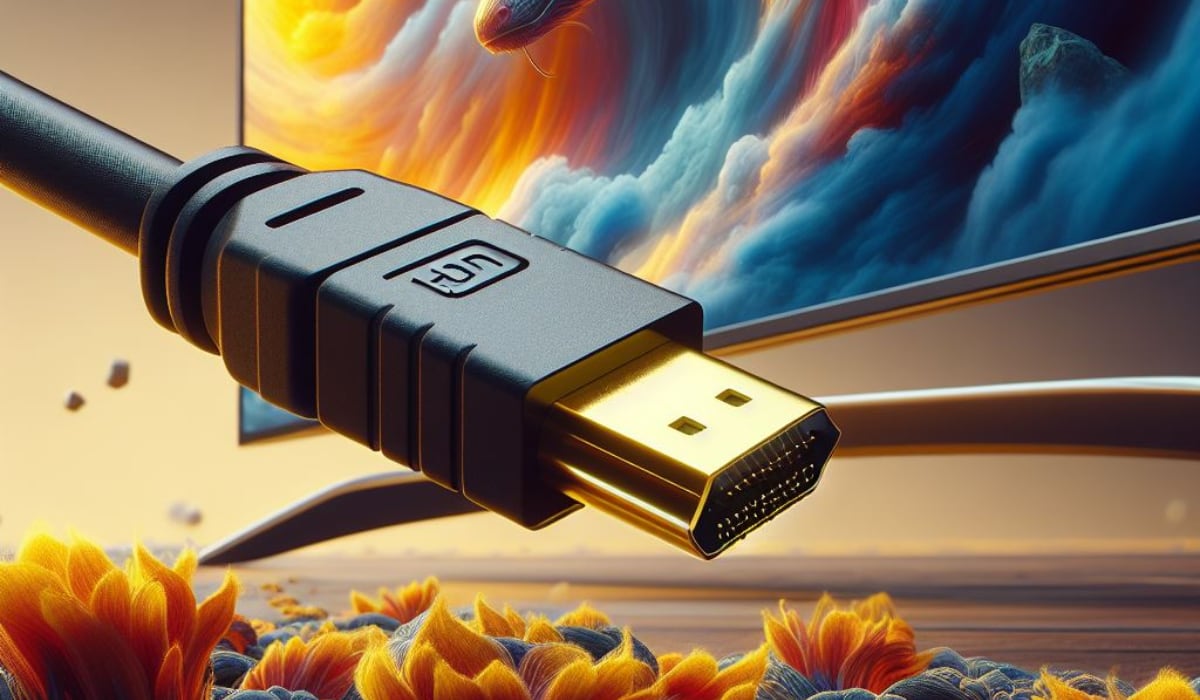
Wireless 4K video transmission is emerging as a real alternative to traditional HDMI cables, enabling high-quality signal transfer over distances of up to 30 meters without physical connections.
The Shift Toward Wireless 4K Transmission
High-definition video and audio transmission is undergoing a significant evolution with the rise of wireless 4K solutions that aim to free users from HDMI cable dependency. These systems enable high-resolution audio and video signals to be sent without physical connections, reaching distances of up to 30 meters while maintaining visual and audio quality comparable to current standards. This technological shift is not just a technical advancement but also a practical response to the challenges posed by modern installations in homes, offices, and professional environments, where cabling can become intrusive, expensive, or technically complex.
Wireless kits typically consist of two main components: a transmitter and a receiver. The transmitter connects directly to the signal source—such as a gaming console, laptop, Blu-ray player, or set-top box—while the receiver connects to the display or projector. Once paired, the two devices transmit audio and video wirelessly through dedicated radio bands, eliminating the need to run long cables across walls, ceilings, or floors. This setup simplifies installation and allows for greater flexibility in device placement, especially in aesthetically sensitive or hard-to-wire spaces.
How Wireless Transmission Technology Works
These systems primarily operate on the 2.4 GHz and 5 GHz frequency bands, leveraging efficient transmission protocols and compression technologies like H.265 (also known as HEVC). This compression reduces data stream size without significantly compromising visual quality, enabling 4K resolution (3840 x 2160 pixels) to be transmitted at refresh rates of up to 30 Hz—sufficient for most content, including movies, streaming services, and multimedia presentations.
Additionally, many of these devices support HDCP 2.2, the copy protection standard required to play protected 4K content from platforms like Netflix, Amazon Prime Video, or Disney+. This ensures users won’t encounter content blocking when using wireless solutions. Operation is typically plug-and-play: users simply connect both units to power and the corresponding HDMI ports, and transmission begins automatically, without complex configurations or additional software or driver installations.
Range, Latency, and Real-World Performance
One of the most notable features of these systems is their ability to transmit signals up to 30 meters, provided there is a clear line of sight between the transmitter and receiver. In environments with obstacles such as walls or furniture, the effective range may decrease, though many models include signal amplification and interference management technologies to maintain stability. Typical latency is around 100 milliseconds—a delay that may be noticeable in competitive gaming or real-time editing but is imperceptible for most everyday uses like watching films or delivering presentations.
Devices like the B127-1A1-WHD1 from Tripp Lite exemplify this technology in action: they support multichannel audio (including Dolby Digital and DTS), require no additional setup, and maintain stable connections in environments with multiple Wi-Fi networks. This makes them attractive for meeting rooms, classrooms, or home entertainment setups where flexibility and reliability are essential.
Advantages Over Traditional HDMI Cables
The main advantage of wireless transmission does not lie in surpassing HDMI in technical quality—since HDMI 2.1 still offers higher refresh rates, dynamic HDR support, and lower latency—but in solving practical installation challenges. Eliminating long cables improves aesthetics, reduces the risk of physical damage, and simplifies space reconfiguration. This is particularly valuable for wall-mounted TVs, ceiling-mounted projectors, or rooms with multiple input sources.
Another key benefit is range. A standard HDMI cable can maintain a stable Full HD signal up to about 16 meters, but for 4K content, that distance drops to approximately 8 meters without using signal boosters or active cables, which significantly increase cost. In contrast, wireless systems are designed to cover longer distances without additional hardware, making them more cost-effective and easier to deploy in many professional settings. While they won’t fully replace HDMI in high-performance applications, they represent a mature and viable alternative for a wide range of everyday uses.
Related articles
Elon Musk Plans Space Data Centers to Ease AI Energy Crisis
The escalating energy demand for artificial intelligence and terrestrial data centers is driving SpaceX to explore space-based solutions, with Starship being key to economic viability.

Windows 95 Runs on Texas Instruments Graphing Calculator
A modder successfully ported Windows 95 to a TI-Nspire CX II, showcasing modern calculator hardware capabilities.

SpaceX IPO Values Company at $1.77 Trillion on Nasdaq
SpaceX's anticipated public offering on the Nasdaq positions it as the seventh most valuable U.S. listed company, marking a significant financial milestone.
Latest news
View all
US Government Suspends Access to Anthropic's Fable 5 and Mythos 5 AI Models
A national security directive forces Anthropic to disable its advanced AI models, Fable 5 and Mythos 5, for all customers starting June 12, 2026.

Google Launches Gemini 3.5 Live Translate for Instant Voice Translation
Google expands real-time translation availability with Gemini 3.5 Live Translate, offering lower latency and support for over 70 languages.

Humanoid Robot Pemba Climbs Chimborazo, Sets Sights on Everest Summit
The humanoid robot Pemba, an adaptation of the Unitree G1, recently ascended over 6,000 meters on Chimborazo and now aims to conquer Mount Everest. This technological feat paves the way for new forms of exploration in extreme environments.
Comments (0)
No comments yet. Be the first!
Leave a comment