
The Indistinguishable Future: Former Xbox VP Predicts Total Fusion of AI and Game Development
Ed Fries, former Vice President of Xbox, foresees a near future where artificial intelligence in video games will be so sophisticated that we won't be able to differentiate AI-generated content from human-created content, leading to its universal adoption by developers.

Generative artificial intelligence has burst into the video game industry with a mix of enthusiasm and skepticism. Currently, many players express strong resistance, even refusing to purchase titles that incorporate AI-generated content. This stance is not exclusive to the gaming community; some developers have also voiced their reservations. However, Ed Fries, a prominent figure and former Vice President of Xbox, offers a compelling and, for many, inevitable perspective: we are in a period of transition. According to Fries, in the near future, AI will deliver results so indistinguishable from human creations that the dividing line will completely disappear, prompting all developers to integrate it into their processes.
Current Resistance and the Path to Acceptance
The reluctance towards generative AI is not a new phenomenon. A few years ago, the technology faced considerable opposition, especially in the realm of image and video generation. Artists and creators expressed concerns about the use of human-created content to train these models, sparking ethical and copyright debates. Interestingly, text generation has been met with less animosity, and its use has rapidly become widespread. This pattern suggests a trend: as AI advances, becomes more precise, and generates more realistic results, initial resistance diminishes, and adoption accelerates. What we currently perceive as a barrier in video games, with technologies like DLSS 5 still exhibiting an "artificial look" that doesn't fully satisfy the community, might just be an early phase.
The Inevitable Transition: When AI Becomes Invisible
Ed Fries emphasizes that the current perception of AI in video games, where we can still discern its intervention, is temporary. His vision is that the technology will be refined to a point where the graphical quality and complexity of AI-generated elements will be indistinguishable from those manually created by a human artist or designer. At that moment, the "dividing line" Fries speaks of will cease to exist. It won't be about whether a game uses AI or not, but rather how it uses it to enhance creativity and efficiency. This evolution will not only affect visual aesthetics but will fundamentally transform development workflows.
A Future of Accelerated Development and Superior Graphics
The former Xbox VP does not specify when or how this transformation will occur, but he is convinced that AI's evolution is unstoppable. When the technology reaches this level of maturity, adoption will be universal. Developers, being able to create games more quickly and with higher-quality graphics without the "artificial filter" currently perceived, will have no reason not to use it. AI will become a fundamental tool, allowing teams to focus on innovation and storytelling, while repetitive or high-volume asset creation tasks are drastically optimized. This represents a paradigm shift in video game production.
Beyond Graphics: AI as a Pillar of the Gaming Ecosystem
Fries's vision extends beyond mere graphics generation. AI is destined to become an integral pillar of the video game ecosystem, not only as a tool for creating images, code, videos, or music, but also for generating complex assets. Furthermore, a substantial improvement in the intelligence of non-playable characters (NPCs) is expected, making them much more reactive, believable, and dynamic than they are in current titles. This evolution promises more immersive game worlds and richer interactive experiences. While it will still take years for these capabilities to fully materialize, AI's trajectory suggests its impact will be omnipresent and transformative.
Related articles

Stuntman Hollywood: Returns After 19 Years to PS5, Xbox Series, and PC
The iconic action and vehicular stunt franchise makes its comeback courtesy of Saber Interactive, promising a dose of nostalgia and adrenaline for the new generation.

Google Launches Gemma 4 12B: Local AI for Your Laptop with 16GB RAM
Google's new artificial intelligence model aims to democratize access to generative AI, allowing it to run on average consumer computers.

Nvidia Challenges Intel and AMD with RTX Spark Superchip for PCs
Nvidia introduced RTX Spark, a processor promising to bring advanced artificial intelligence directly to your PC, without cloud dependence, and boost gaming to unprecedented levels on conventional machines.
Latest news
View all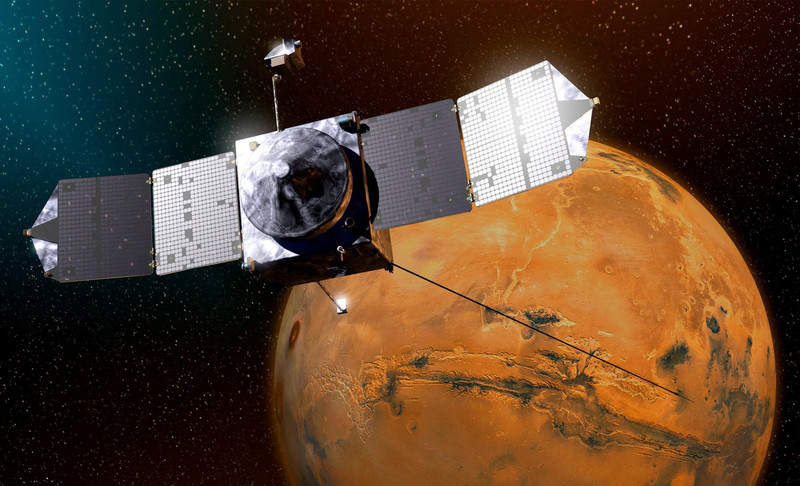
NASA's Maven Mars Orbiter Declared Out of Service After Six Months of Silence
Following an anomaly that disrupted its orbit and depleted its batteries, the Maven spacecraft, vital for understanding Mars' atmosphere, has ended its active mission. Its scientific data remains an invaluable legacy.

Windows Drops NTLM: Microsoft Boosts Security with Kerberos
Microsoft is taking a crucial step to bolster security in Windows 11, announcing the deprecation of NTLM, its oldest authentication protocol, in favor of Kerberos.

NASA Reveals New Path for Earth's Essential Life Elements
A recent study, published in Science Advances, uncovers how early Earth may have received phosphorus and nitrogen, highlighting Jupiter's critical role.
Comments (0)
No comments yet. Be the first!
Leave a comment