
Sony Patents Deformable Controller, Promising New Gaming Immersion
The Japanese company has unveiled a prototype controller that allows users to squeeze, twist, and physically modify its buttons. This innovation aims for an unprecedented tactile experience in gaming.

Sony has unveiled a prototype gaming controller featuring deformable controls. This innovation, detailed in a patent filed in 2022 and published in late March, promises to revolutionize tactile interaction in gaming. Users will be able to squeeze, twist, and physically modify the buttons, immersing themselves in an unprecedented gaming experience. This advancement aims to strengthen the connection between on-screen actions and the sensations felt in players' hands.
This advancement aims to strengthen the connection between on-screen actions and the sensations felt in players' hands.
Sony's central proposal focuses on a "manipulation device capable of transmitting tactile sensations similar to pressure." The controller integrates buttons, directional keys, and a control stick. All these elements are designed to deform or respond to the force applied by the user. Each physical action will have an immediate and recognizable consequence within the game.

The prototype incorporates an internal grid structure. This structure is formed by multiple linkage axes and nodal mechanisms. These components allow the controls to bend, stretch, sink, and twist in various ways. A layer of flexible, fabric-like material covers the entire matrix. This facilitates manipulation and offers a unique tactile sensation.
The patent describes a controller "of a size such that its opposite ends can be held by the user with both hands." This suggests an ergonomic design adaptable to different play styles. Additionally, a fabric cover that could envelop the entire device is contemplated. This cover would enhance comfort and the feeling of direct interaction with the virtual object.
This design moves away from traditional controllers. Traditional controllers limit physical interaction to pressing buttons or moving sticks. Sony proposes a system where the player can press, twist, lift, and contract different parts of the controller. This introduces new layers of immersion. It allows for richer communication between the person and the video game.
Sony's innovation is not limited to the mechanics of the controls alone. The controller is designed to emit signals to a console or computer. These signals depend on the modifications the player makes to it. Every gesture, pressure, twist, or stretch translates into a specific action within the digital environment. This adapts to game needs and developers' creativity.
Internal sensors detect changes in the controller's shape. They then transmit precise information to the corresponding computer equipment. In this way, the controller can simulate sensations like force, weight, impact, or vibrations. This leads players to perceive the game in a much more realistic and immersive way.
Article topics
Related articles

Windows Drops NTLM: Microsoft Boosts Security with Kerberos
Microsoft is taking a crucial step to bolster security in Windows 11, announcing the deprecation of NTLM, its oldest authentication protocol, in favor of Kerberos.

Stuntman Hollywood: Returns After 19 Years to PS5, Xbox Series, and PC
The iconic action and vehicular stunt franchise makes its comeback courtesy of Saber Interactive, promising a dose of nostalgia and adrenaline for the new generation.

Tomb Raider: Legacy of Atlantis Arrives February 2027 with Pre-Order Bonuses
Crystal Dynamics and Amazon Games announce the release date for the reimagining of the 1996 classic, along with details on editions and exclusive pre-order content.
Latest news
View all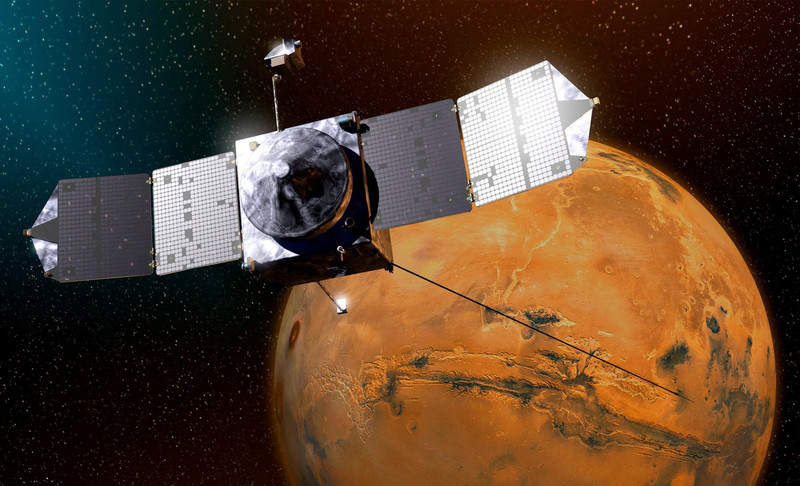
NASA's Maven Mars Orbiter Declared Out of Service After Six Months of Silence
Following an anomaly that disrupted its orbit and depleted its batteries, the Maven spacecraft, vital for understanding Mars' atmosphere, has ended its active mission. Its scientific data remains an invaluable legacy.

NASA Reveals New Path for Earth's Essential Life Elements
A recent study, published in Science Advances, uncovers how early Earth may have received phosphorus and nitrogen, highlighting Jupiter's critical role.

Google Launches Gemma 4 12B: Local AI for Your Laptop with 16GB RAM
Google's new artificial intelligence model aims to democratize access to generative AI, allowing it to run on average consumer computers.
Comments (0)
No comments yet. Be the first!
Leave a comment