
Nations Build AI Factories for Strategic Sovereignty and Growth
Governments globally are investing in AI infrastructure and localized models to drive economic growth, national security, and cultural preservation, leveraging advanced computing.


Artificial intelligence and accelerated computing are becoming increasingly vital for nations to strengthen their resilience and sustainability. These advanced technologies are crucial for tackling pressing global challenges, from climate change and boosting energy efficiency to defending against cybersecurity threats, making national AI capabilities a strategic imperative.
A new class of essential infrastructure, dubbed "AI factories," has emerged as the bedrock for AI production. These are next-generation data centers designed to host advanced, full-stack accelerated computing platforms, specifically built for the most computationally intensive tasks, transforming raw data into actionable intelligence.
Countries are actively building domestic computing capacity through various innovative models. Some governments are opting to procure and operate AI clouds in collaboration with state-owned telecommunications providers or utilities. Others are sponsoring local cloud partners to establish shared AI computing platforms, catering to both public and private sector needs.
"The AI factory will become the bedrock of modern economies across the world," stated Jensen Huang, founder and CEO of NVIDIA.
The long-term vision for this infrastructure is ambitious and far-reaching. This statement highlights the foundational role AI is set to play in global economic landscapes.
Beyond the hardware, large language models (LLMs) are showcasing incredible versatility. Their applications extend far beyond understanding and generating human language; they can also write software code, aid in drug discovery, help protect consumers from financial fraud, and even teach robots physical skills. Crucially, these models can be fine-tuned to specific dialects, cultural contexts, and domains, enabling them to preserve, promote, and revitalize indigenous languages.
To effectively harness these capabilities and ensure technological sovereignty, nations are formulating comprehensive AI strategies. These strategies typically comprise five key ingredients, addressing everything from the economic imperative of AI to the development of a skilled workforce and localized data models.
- AI Imperative: Domestic AI capabilities are critical for economic growth, national security, cultural preservation, and innovation, emphasizing responsible, trustworthy AI aligned with local policies and national goals.
- AI-Ready Workforce: Fostering a wide spectrum of local AI skills and talent, alongside basic AI literacy across the population, through education from early STEM programs to applied AI across industries.
- AI Models and Data: Developing foundation models and large language models trained and fine-tuned with local data, hosted on local infrastructure, and governed by local laws to ensure outputs are tailored to language, culture, and context.
- AI Ecosystem: Cultivating a robust local ecosystem of AI investors, developers, scientists, entrepreneurs, enterprise customers, and government organizations.
- AI Factories: Locally owned, operated, and governed AI clouds for training and inference, with their greatest utility stemming from public-private partnerships that scale infrastructure to meet growing innovation needs.
Since 2019, NVIDIA's AI Nations initiative has actively supported countries worldwide in building out their AI ecosystems and workforce, fostering environments where engineers, developers, scientists, and public sector officials can pursue their AI ambitions domestically. In Europe, for instance, AI agents from ThinkDeep, powered by the NVIDIA AI platform, are assisting France’s Ministry of Economy and Finance. These agents automate complex public-service workflows, processing millions of documents and data sources, drastically cutting document search times from two days to just two minutes. This innovation has resulted in savings of 2 million euros for 10,000 employees and reduced energy consumption through more efficient, in-country infrastructure control.
Across Asia, India’s Sarvam platform, built entirely on domestic infrastructure and powered by NVIDIA GPUs, delivers multilingual AI models and voice agents optimized for the country’s 22 official languages. This enables government and enterprise services to reach hundreds of millions of people in their native tongues, while maintaining national control over data, compute, and governance. In Latin America, specifically Brazil, AI solutions from Widelabs, running on NVIDIA-accelerated infrastructure, are modernizing and expanding access to legal services for the Public Ministry of Rio Grande do Sul. These solutions streamline internal investigations and make justice records more accessible for over 8 million citizens across nearly 500 municipalities, demonstrating how advanced computing can foster more efficient, transparent, and inclusive public administration.
These global initiatives underscore how AI can transform domestic infrastructure, local data, and homegrown talent into powerful solutions for social good. For those interested in exploring these advancements further, NVIDIA encourages participation in the "AI for Good Summit," scheduled from July 7-10 in Geneva, Switzerland.
Keep reading online — scan the code
https://go.tricuatro.com/nations
© tricuatro.com
Related articles

OpenAI Considers Ceding 5% Stake to US Government
The proposal aims to address concerns about AI misuse and how US citizens can benefit from the sector's growth, as reported by the Financial Times.

Anthropic Details Fable 5 Cyber Safeguards and Jailbreak Framework
Anthropic's advanced Fable 5 AI model, now globally available, enhances its protection with safety classifiers and proposes a new framework to assess AI "jailbreak" severity.
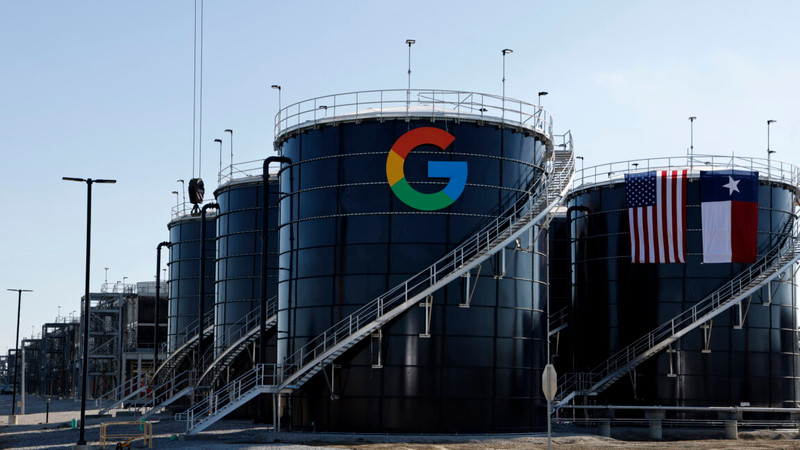
Google's Electricity Use Jumped 37% in 2025 Due to AI
Google reported a historic surge in its annual electricity consumption, primarily driven by the expansion of AI data centers. Despite this, the company claims to keep operational carbon emissions in check.
Latest news
View all
Webb Telescope Uncovers Millions of Stars in Centaurus A Galaxy
The James Webb Space Telescope has transformed our view of Centaurus A, a nearby and active galaxy, revealing a complex stellar history and the influence of its supermassive black hole.

Scientists Build Synthetic Cell Capable of Self-Replication
Researchers at the University of Minnesota have successfully constructed a cell from non-living chemical components, ushering in an era of custom-designed organisms.

Amazon Leo Reaches 396 Satellites, Satellite Internet Service Launching This Year
Amazon Leo, the company's low-orbit satellite network, now has enough units to offer continuous service in initial latitudes, preparing for its launch this year and competing with Starlink.
Comments (0)
No comments yet. Be the first!
Only registered readers can comment.