
UK AI Minister Challenges OpenAI Over "Stargate Project" Pause
Kanishka Narayan, Britain's AI minister, criticized OpenAI for halting a major data center project in the UK, citing energy costs and regulation.
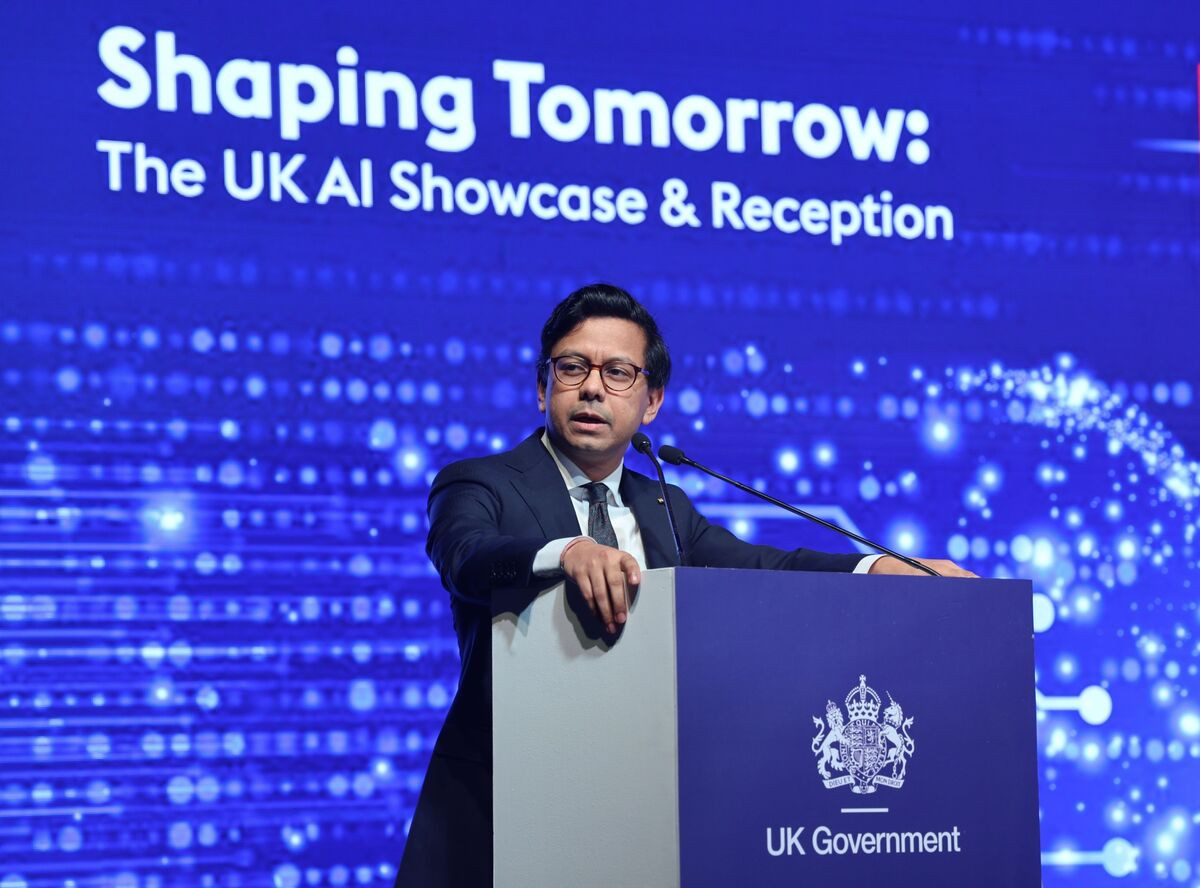
The United Kingdom's Minister for Artificial Intelligence and Online Safety, Kanishka Narayan, expressed strong disapproval of OpenAI's decision to pause its ambitious "Stargate Project." This significant data center initiative in the UK was reportedly halted by OpenAI due to the country's high energy costs and regulatory environment. Minister Narayan voiced his concerns on February 19, 2026, in New Delhi, India, during the "Shaping Tomorrow" event, a celebration of the AI Impact Summit 2026.
The "Stargate Project" represents a substantial investment in critical infrastructure vital for advancing artificial intelligence. Halting such a project raises significant questions, especially as the UK aims to establish itself as a global leader in the AI sector. The government's vision includes attracting talent and foreign investment, and the withdrawal of key projects could undermine this objective.
OpenAI, a leading company in generative AI, had envisioned this data center as a cornerstone for its future operations. Data centers are facilities housing thousands of servers and networking equipment, essential for processing and storing the immense data volumes required by AI models. Their continuous operation demands considerable energy, making operational costs a critical factor in their feasibility.
Minister Narayan's remarks highlight a growing tension between national governments and major technology companies. On one hand, countries strive to foster innovation and attract investment. On the other, corporations meticulously evaluate the economic and regulatory viability of their projects. Investment in data infrastructure is fundamental for the advancement of artificial intelligence.
Investment in data infrastructure is fundamental for the advancement of artificial intelligence.
Narayan, speaking at the event hosted at the British High Commissioner Lindy Cameron's residence, emphasized the importance of a conducive environment for technological development. The UK has been actively developing regulatory frameworks for AI, aiming to balance safety, ethics, and innovation. However, OpenAI's perspective suggests these frameworks might be creating friction for large-scale investments.
The technology community and investors will closely monitor the unfolding of this situation. The pause of the "Stargate Project" is not merely a setback for the UK's AI ambitions. It also raises broader questions about the future of major tech investments in regions facing high costs or perceived restrictive regulations. Finding solutions that benefit both innovation and economic development remains a crucial challenge.
Related articles
Google Launches Gemma 4 12B: Local AI for Your Laptop with 16GB RAM
Google's new artificial intelligence model aims to democratize access to generative AI, allowing it to run on average consumer computers.

Nvidia Challenges Intel and AMD with RTX Spark Superchip for PCs
Nvidia introduced RTX Spark, a processor promising to bring advanced artificial intelligence directly to your PC, without cloud dependence, and boost gaming to unprecedented levels on conventional machines.

Anthropic's Claude Opus 4.8 boosts "honesty" and reduces code flaws
Anthropic's new AI model, Claude Opus 4.8, launches this Thursday with a focus on transparency and error reduction, giving users more control over computational effort.
Latest news
View all
Stuntman Hollywood: Returns After 19 Years to PS5, Xbox Series, and PC
The iconic action and vehicular stunt franchise makes its comeback courtesy of Saber Interactive, promising a dose of nostalgia and adrenaline for the new generation.

NASA's Maven Mars Orbiter Declared Out of Service After Six Months of Silence
Following an anomaly that disrupted its orbit and depleted its batteries, the Maven spacecraft, vital for understanding Mars' atmosphere, has ended its active mission. Its scientific data remains an invaluable legacy.

Windows Drops NTLM: Microsoft Boosts Security with Kerberos
Microsoft is taking a crucial step to bolster security in Windows 11, announcing the deprecation of NTLM, its oldest authentication protocol, in favor of Kerberos.
Comments (0)
No comments yet. Be the first!
Leave a comment