
The Sea Unicorn: Its Horn Is Actually a Tooth Filled with Nerves
The narwhal, known as the sea unicorn, has an iconic horn that is actually a long tooth filled with nerves, a result of unique evolution.

The narwhal, often called the 'sea unicorn,' surprises with its appearance and evolutionary story. Its distinctive long, twisted 'horn' is not a horn in the traditional sense but an elongated tooth that can reach up to 3 meters long. Few realize that this tooth is packed with nerves and sensory cells, allowing it to detect environmental changes in the water with high precision.
The development of this tooth was driven by multiple evolutionary forces competing over time. Its main function is not just display or attracting mates but also serving as a sensory organ. Recent studies have shown that it contains around 10 million nerves, making it a biological antenna for the narwhal.
The narwhal's horn is actually a nerve-filled tooth that functions as a biological antenna in the ocean.
This discovery helps us better understand how marine animals adapt their organs to survive in extreme environments. The narwhal's uniqueness highlights the incredible diversity of aquatic evolution and its ability to develop astonishing solutions to environmental challenges.
The story of the narwhal and its 'horn' remains partly a mystery, but each new finding about its anatomy brings us closer to understanding its role in marine ecosystems and its extraordinary evolution.
Article topics
Related articles

NASA Reveals New Path for Earth's Essential Life Elements
A recent study, published in Science Advances, uncovers how early Earth may have received phosphorus and nitrogen, highlighting Jupiter's critical role.
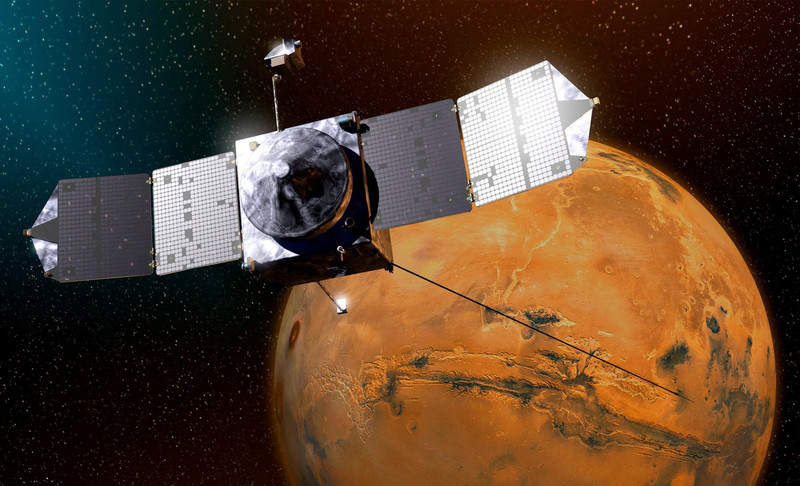
NASA's Maven Mars Orbiter Declared Out of Service After Six Months of Silence
Following an anomaly that disrupted its orbit and depleted its batteries, the Maven spacecraft, vital for understanding Mars' atmosphere, has ended its active mission. Its scientific data remains an invaluable legacy.
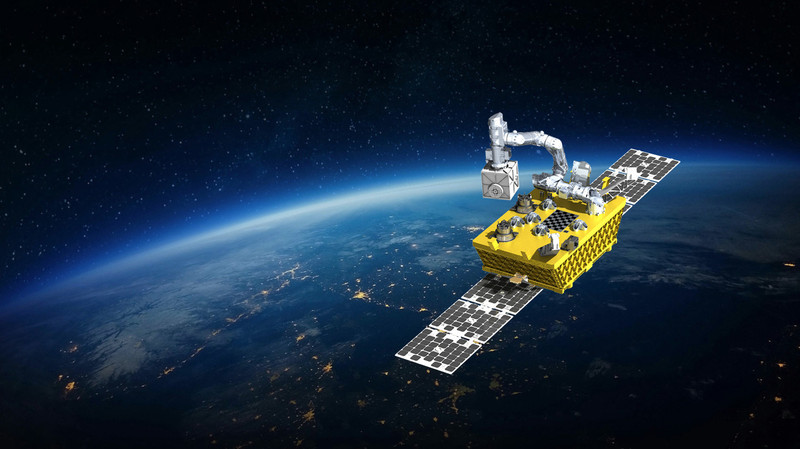
NASA Space Robotics Challenge
NASA invites U.S. researchers to submit proposals for experiments using a robotic arm that will be sent to low Earth orbit as part of the Fly Foundational Robots mission.
Latest news
View all
Stuntman Hollywood: Returns After 19 Years to PS5, Xbox Series, and PC
The iconic action and vehicular stunt franchise makes its comeback courtesy of Saber Interactive, promising a dose of nostalgia and adrenaline for the new generation.

Windows Drops NTLM: Microsoft Boosts Security with Kerberos
Microsoft is taking a crucial step to bolster security in Windows 11, announcing the deprecation of NTLM, its oldest authentication protocol, in favor of Kerberos.
Google Launches Gemma 4 12B: Local AI for Your Laptop with 16GB RAM
Google's new artificial intelligence model aims to democratize access to generative AI, allowing it to run on average consumer computers.
Comments (0)
No comments yet. Be the first!
Leave a comment