
The Milky Way Has a Boundary, and Scientists Have Just Mapped It
An international team of astronomers has identified the galaxy's outer edge for the first time, where star formation stops and stars age as they migrate outward.
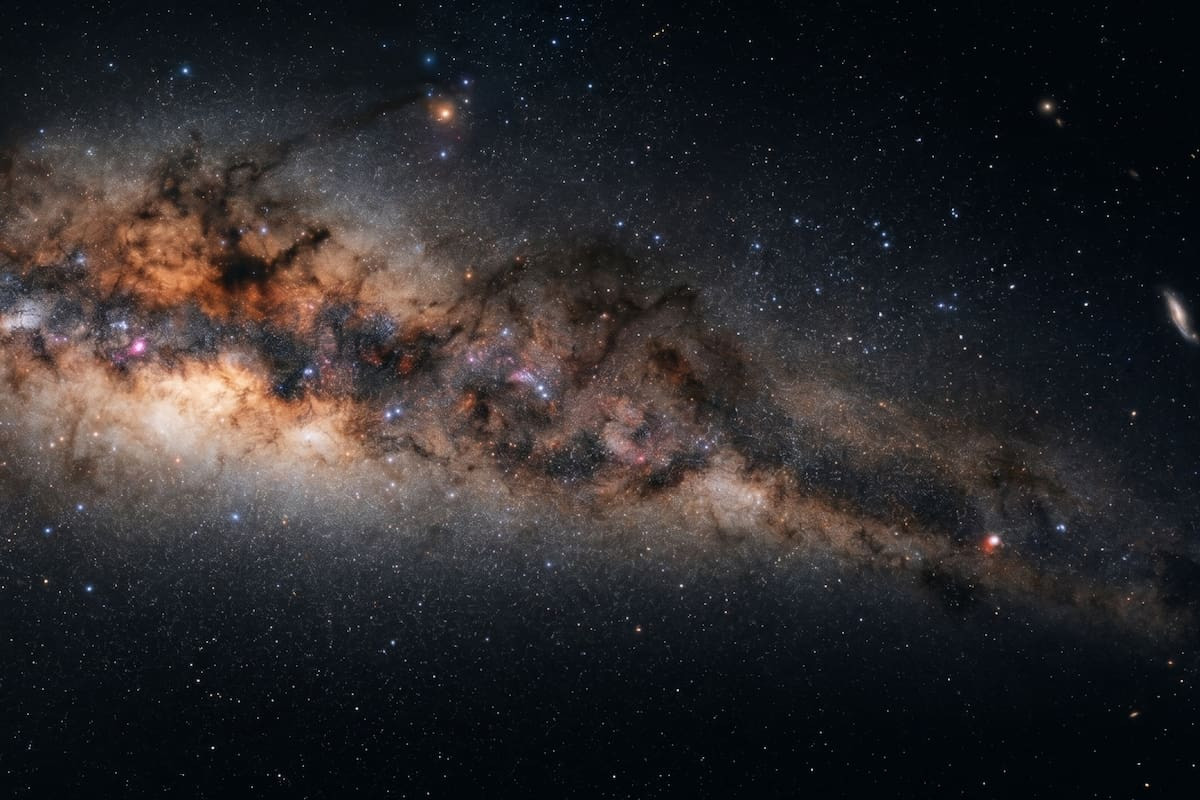
The Milky Way, our spiral galaxy, hosts between 100 billion and 400 billion stars. However, its outer boundary has remained a mystery until now for the scientific community.
A recent study, led from the University of Malta with international collaboration, successfully mapped the galaxy's star-forming edge. Researchers found that this boundary lies between 35,000 and 40,000 light-years from the galactic center.
"The disk of the Milky Way does not end abruptly but gradually fades into the void of space".
To identify this frontier, scientists analyzed over 100,000 bright giant stars using spectroscopic catalogs like APOGEE-DR17 and LAMOST-DR3, along with precise measurements from the Gaia satellite. They also compared their observations with advanced computer simulations of galaxy evolution.
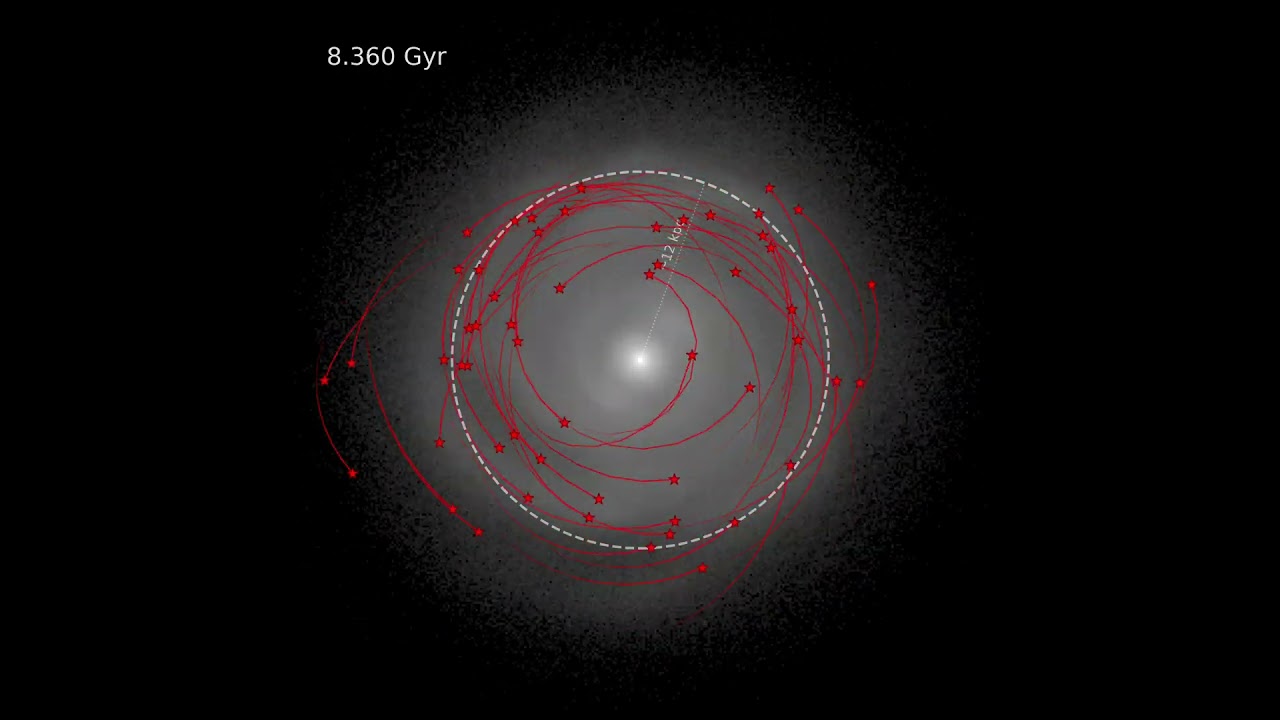
The study revealed that star ages increase with distance from the core, reaching a maximum at the galaxy's edge. From the center to 40,000 light-years, stars are progressively younger, but beyond that, they begin to age again, forming a 'U'-shaped profile.
This pattern is explained by stellar migration, a process where stars slowly move outward from their birthplaces following spiral density waves. Since migration is a slow process, the most distant stars are actually the oldest.
Scientists also observed that stars outside the boundary originate in the disk and migrate outward, rather than being dispersed by infalling satellite galaxies. This confirms that the galactic disk structure is nearly circular and stable in its orbit.
This discovery opens a new era for understanding the history and evolution of the Milky Way, as stellar ages and migration patterns help reconstruct how it formed and changed over time.
Ultimately, the galaxy's boundary is not a rigid limit but a gradual transition revealing how stars migrate and age in the vast space surrounding us.
Article topics
Related articles
NASA Reveals New Path for Earth's Essential Life Elements
A recent study, published in Science Advances, uncovers how early Earth may have received phosphorus and nitrogen, highlighting Jupiter's critical role.
NASA's Maven Mars Orbiter Declared Out of Service After Six Months of Silence
Following an anomaly that disrupted its orbit and depleted its batteries, the Maven spacecraft, vital for understanding Mars' atmosphere, has ended its active mission. Its scientific data remains an invaluable legacy.

NASA Space Robotics Challenge
NASA invites U.S. researchers to submit proposals for experiments using a robotic arm that will be sent to low Earth orbit as part of the Fly Foundational Robots mission.
Latest news
View all
Stuntman Hollywood: Returns After 19 Years to PS5, Xbox Series, and PC
The iconic action and vehicular stunt franchise makes its comeback courtesy of Saber Interactive, promising a dose of nostalgia and adrenaline for the new generation.

Windows Drops NTLM: Microsoft Boosts Security with Kerberos
Microsoft is taking a crucial step to bolster security in Windows 11, announcing the deprecation of NTLM, its oldest authentication protocol, in favor of Kerberos.

Google Launches Gemma 4 12B: Local AI for Your Laptop with 16GB RAM
Google's new artificial intelligence model aims to democratize access to generative AI, allowing it to run on average consumer computers.
Comments (0)
No comments yet. Be the first!
Leave a comment