
The AI Paradox: More or Fewer Software Engineers in the Future?
The advancement of artificial intelligence sparks a crucial debate about the future of software engineers: while some warn of job displacement, others, like Aaron Levie, argue that AI expands the need for these professionals, a view that contrasts with Jensen Huang's prediction of a world where human language is the new programming.
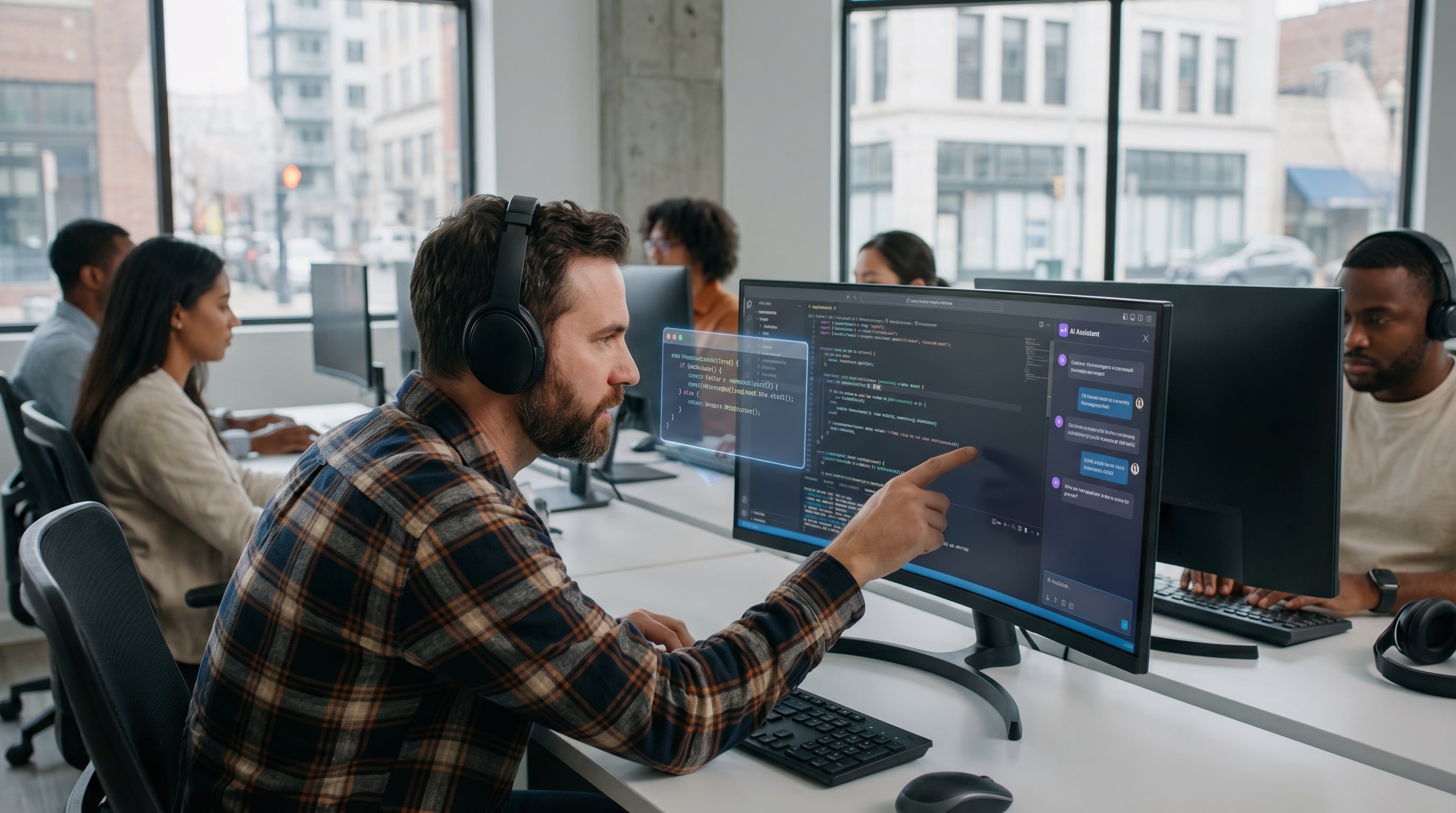
Artificial intelligence (AI) is fundamentally reshaping the global labor landscape and the way businesses operate. This transformation has ignited an intense debate about the future of various professions, including software engineering. Prominent figures such as Christopher Pissarides, a Nobel laureate in Economics, have expressed concerns, warning that the rapid progress of AI could ultimately lead to the replacement of those who develop and maintain it, such as software engineers. However, this perspective is not universal, and an optimistic school of thought suggests that AI, far from reducing demand, is expanding and transforming it.
The Optimistic View: AI as a Catalyst for Software Demand
Aaron Levie, co-founder of the renowned tech company Box, is a leading proponent of a more hopeful outlook. According to Levie, artificial intelligence not only doesn't threaten the role of the software engineer but actually empowers it. He argues that AI has made a multitude of programming projects economically viable that were previously unfeasible due to their high cost or complexity. The ability of AI agents to increase an engineer's productivity by two to ten times means that companies can now tackle ambitious initiatives that were once beyond their reach, opening new avenues for innovation and technological development.
This increase in productivity does not translate into a reduced need for engineers, but rather an expansion of software demand into virtually all areas of the economy. From marketing and legal departments to accounting and any other corporate function, AI offers unprecedented opportunities for automation and process optimization. In this scenario, software engineers become indispensable. They are the ones who must manage and redesign existing workflows, organize data infrastructure to support new AI capabilities, and make critical technical decisions about when to implement AI solutions versus maintaining deterministic code. The modernization of enterprise systems and the precise management of context in complex digital environments require advanced technical knowledge, solidifying the need for highly skilled professionals in software development and maintenance.
The Disruptive Perspective: Human Language as Code
In contrast to Levie's vision, Jensen Huang, the charismatic CEO of NVIDIA, has presented a radically different perspective on the future of programming. During the World Governments Summit in Dubai, Huang challenged the entrenched belief that learning to code is a fundamental skill for new generations. "I'm going to say something that may sound completely opposite to what many people think," Huang stated. "You probably remember that, over the last 10 or 15 years, almost every expert has insisted that it is critical for your children to learn computer science, that everyone should know how to program."
However, Huang continued with a statement that reverses this premise: "But, in reality, it's almost the opposite. Our task is to create computer technology that eliminates the need for programming, so that the programming language is human language. Now, everyone is a programmer. That's the miracle of artificial intelligence." This bold assertion suggests a future where interaction with technology is completely democratized. AI, according to Huang, will allow anyone, without the need for specialized technical training in software engineering or coding knowledge, to "program" complex systems simply by using natural language. This would imply a paradigm shift where the barrier to entry for technological creation is drastically reduced, transforming the very nature of what it means to "develop" software.
The Evolving Role of the Software Engineer in the AI Era
The visions of Aaron Levie and Jensen Huang, while seemingly opposed, converge on a crucial point: artificial intelligence is redefining the value and application of technology. While Huang predicts an era of "no-code programming" driven by natural language, Levie emphasizes the growing need for engineers to orchestrate and optimize the infrastructure that makes this AI possible. The future likely lies in a synthesis of both perspectives. Software engineers will not disappear, but their role will evolve. They will become architects of complex systems, experts in AI integration, designers of intuitive user experiences, and guardians of ethics and security in an increasingly automated world. The demand for professionals capable of understanding, implementing, and managing these advanced technologies, whether through traditional code or by configuring natural language-based systems, will remain critical for global technological and economic progress.
Related articles
Google Launches Gemma 4 12B: Local AI for Your Laptop with 16GB RAM
Google's new artificial intelligence model aims to democratize access to generative AI, allowing it to run on average consumer computers.
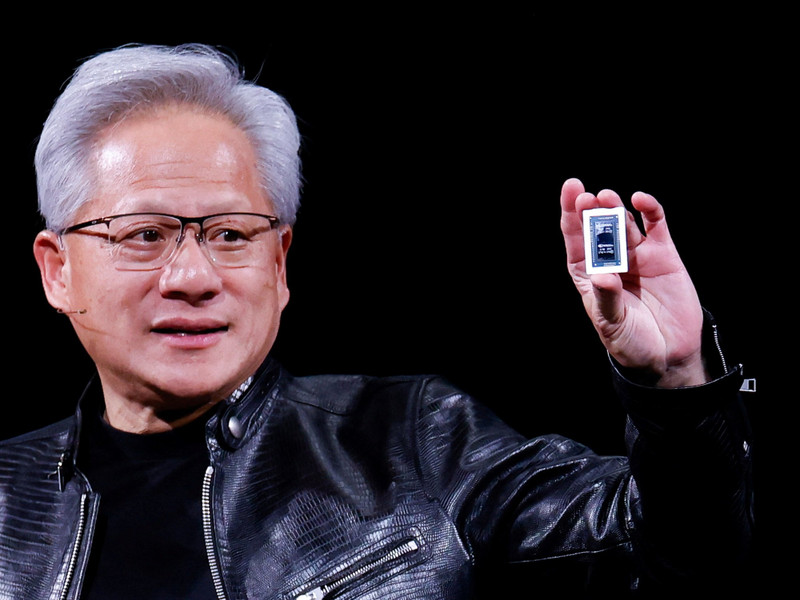
Nvidia Challenges Intel and AMD with RTX Spark Superchip for PCs
Nvidia introduced RTX Spark, a processor promising to bring advanced artificial intelligence directly to your PC, without cloud dependence, and boost gaming to unprecedented levels on conventional machines.

Anthropic's Claude Opus 4.8 boosts "honesty" and reduces code flaws
Anthropic's new AI model, Claude Opus 4.8, launches this Thursday with a focus on transparency and error reduction, giving users more control over computational effort.
Latest news
View all
Stuntman Hollywood: Returns After 19 Years to PS5, Xbox Series, and PC
The iconic action and vehicular stunt franchise makes its comeback courtesy of Saber Interactive, promising a dose of nostalgia and adrenaline for the new generation.
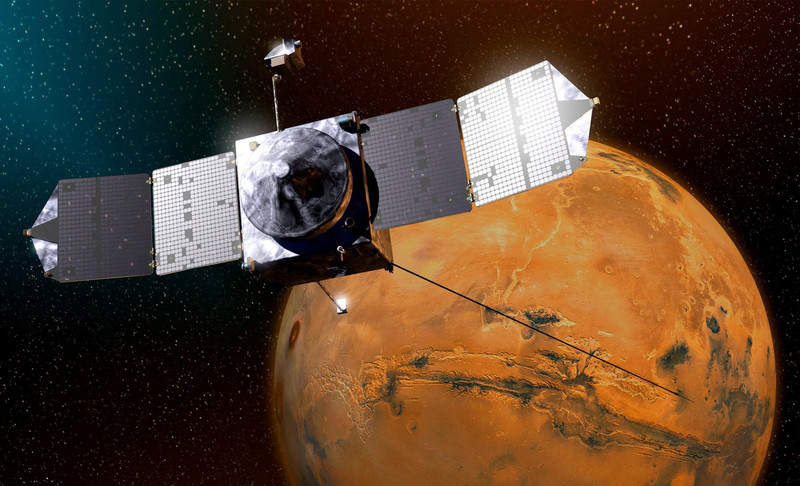
NASA's Maven Mars Orbiter Declared Out of Service After Six Months of Silence
Following an anomaly that disrupted its orbit and depleted its batteries, the Maven spacecraft, vital for understanding Mars' atmosphere, has ended its active mission. Its scientific data remains an invaluable legacy.

Windows Drops NTLM: Microsoft Boosts Security with Kerberos
Microsoft is taking a crucial step to bolster security in Windows 11, announcing the deprecation of NTLM, its oldest authentication protocol, in favor of Kerberos.
Comments (0)
No comments yet. Be the first!
Leave a comment