
Sony creates a robot that beats humans in competitive table tennis
Sony's Project Ace introduces a robotic arm capable of competing and winning against professional players in real time.
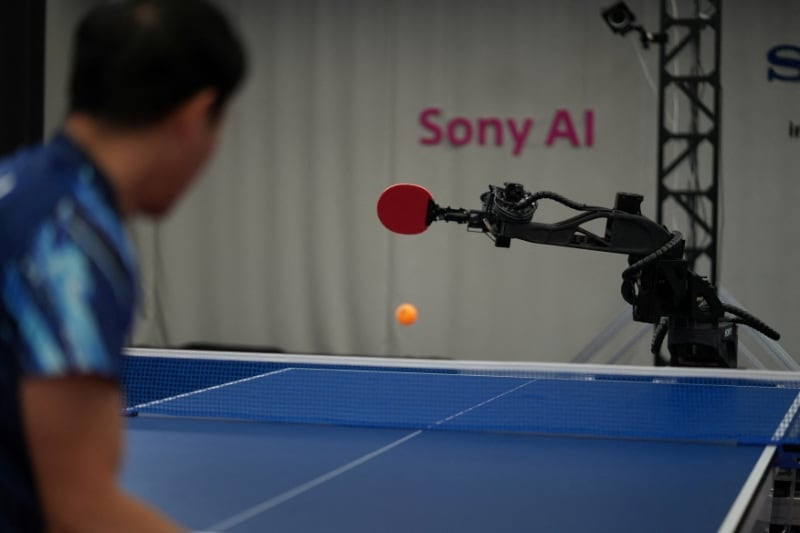
Sony has achieved a groundbreaking milestone by developing a robot that can play and win in table tennis against elite athletes. Their Project Ace, published in Nature, proves that AI and robotics can now operate effectively in real-world sports scenarios. This breakthrough marks a significant step forward, as it overcomes one of the biggest challenges: real-time physical interaction and decision-making in a fast-paced sport.
Until now, AI systems excelled mainly in digital environments like chess or video games, where physical constraints are absent. Sony’s Ace project changes that by using a robotic arm built with reinforcement learning, high-precision hardware, and an advanced sensor network. These technologies enable the robot to react and decide within milliseconds, competing directly with human players in live matches.
Peter Dürr, head of Sony AI in Zurich and project leader, emphasized the importance of this achievement: “This shows that an autonomous robot can compete in physical sports, matching or surpassing human reaction times and decision-making.” He added that table tennis presents a unique challenge for AI because it demands split-second decisions, adaptation to unpredictable ball trajectories, and quick responses to human movements.
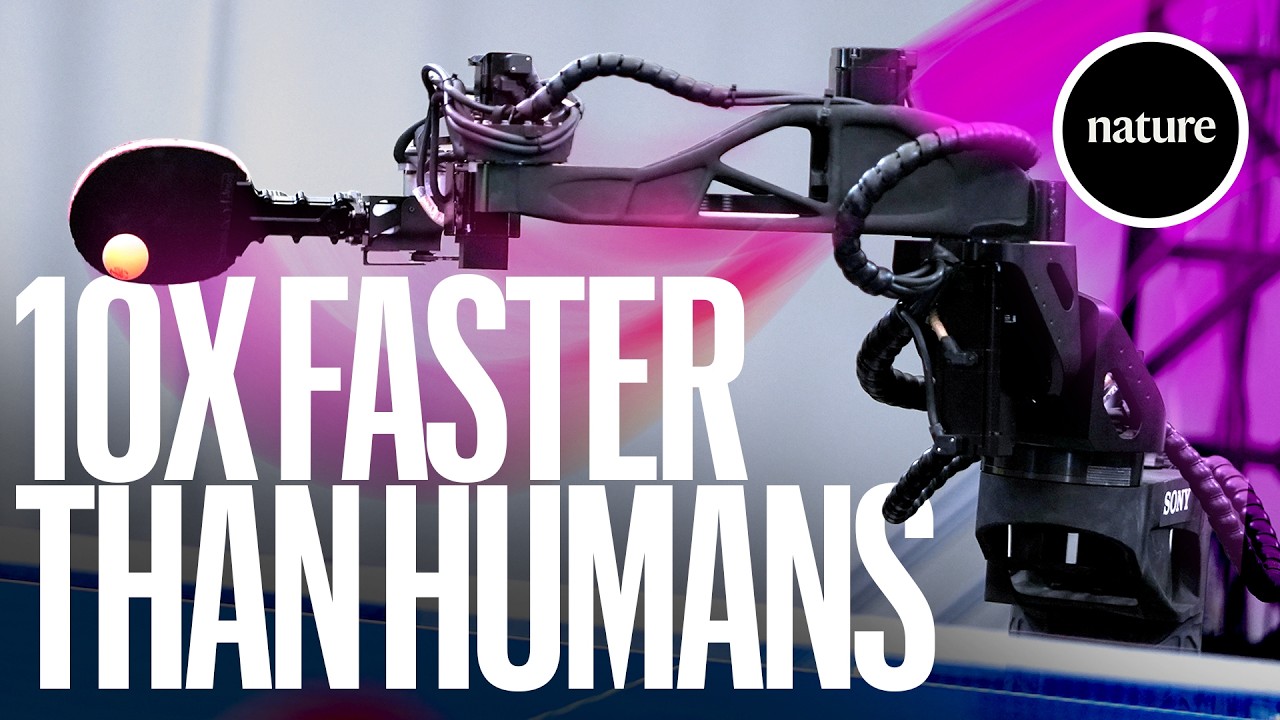
The core of the robot’s technical prowess is a high-speed perception system. It employs nine cameras with Sony’s active pixel sensors, capable of pinpointing the ball’s position with millimeter accuracy. This data is integrated with three visual control systems that measure the ball’s speed and spin in real time, even when faced with unpredictable human actions. While inspired by Sony’s experience with AI agents like Gran Turismo Sophy, adapting this tech to a physical environment required tackling new challenges in perception, movement planning, and physical execution.
Beyond table tennis, Dürr states that “this progress highlights the potential of physical AI agents for real-time interactive tasks and paves the way for robots with broader applications in fast, precise human interactions.”
Article topics
Related articles

Windows Drops NTLM: Microsoft Boosts Security with Kerberos
Microsoft is taking a crucial step to bolster security in Windows 11, announcing the deprecation of NTLM, its oldest authentication protocol, in favor of Kerberos.

Google Launches Gemma 4 12B: Local AI for Your Laptop with 16GB RAM
Google's new artificial intelligence model aims to democratize access to generative AI, allowing it to run on average consumer computers.
Nvidia Challenges Intel and AMD with RTX Spark Superchip for PCs
Nvidia introduced RTX Spark, a processor promising to bring advanced artificial intelligence directly to your PC, without cloud dependence, and boost gaming to unprecedented levels on conventional machines.
Latest news
View all
Stuntman Hollywood: Returns After 19 Years to PS5, Xbox Series, and PC
The iconic action and vehicular stunt franchise makes its comeback courtesy of Saber Interactive, promising a dose of nostalgia and adrenaline for the new generation.
NASA's Maven Mars Orbiter Declared Out of Service After Six Months of Silence
Following an anomaly that disrupted its orbit and depleted its batteries, the Maven spacecraft, vital for understanding Mars' atmosphere, has ended its active mission. Its scientific data remains an invaluable legacy.

NASA Reveals New Path for Earth's Essential Life Elements
A recent study, published in Science Advances, uncovers how early Earth may have received phosphorus and nitrogen, highlighting Jupiter's critical role.
Comments (0)
No comments yet. Be the first!
Leave a comment