
New tech enables robots to handle complex, irregular objects
Researchers from EPFL and Idiap developed a system that allows robots to manipulate, cut, and peel any object, even in messy environments.
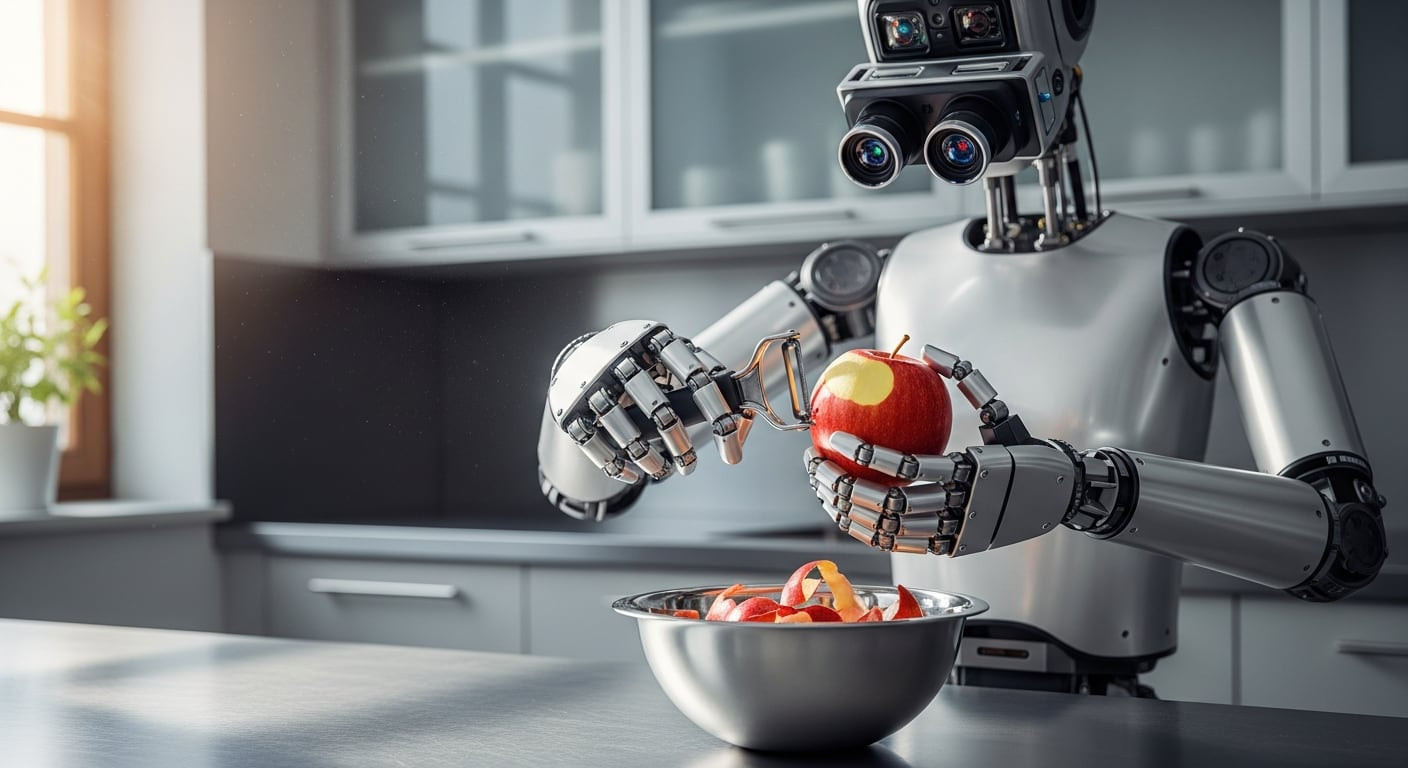
Handling irregular and complex-shaped objects has long been one of the biggest challenges in robotics. Current systems, which rely on large databases and rigid models, struggle to adapt to unpredictable tasks and environments. However, a breakthrough introduced by researchers at the Swiss Federal Institute of Technology in Lausanne (EPFL) and the Idiap Research Institute opens new doors for industrial and service robots.
This new approach enables robots to manipulate, cut, and peel any object, even in cluttered settings with incomplete data. The core of the system is based on adaptable geometry, creating a “point cloud map” of any object regardless of its shape or size. This map identifies key surface points and generates a smooth geometric representation tailored to the task.
As Interesting Engineering reports, this structure helps robots understand and handle objects with varying geometries, overcoming limitations of traditional methods. What’s innovative is that it doesn’t require perfect models or large training datasets. Instead, it uses principles of discrete differential geometry to build local reference frames guided by the surface and key points of the object.
These orientation fields make it possible for robots to perform basic actions—like sliding, cutting, or peeling—invariant to the object’s shape. This allows skill transfer between very different objects, mimicking human flexibility. The technology addresses the variability in geometry that often hampers robotic manipulation.
The system can be integrated with various control schemes, from teleoperation to trajectory planning and reinforcement learning. By generating real-time orientation fields from vision and depth data, robots can quickly adapt to new objects and situations, boosting their efficiency and versatility.
The key to this breakthrough is generating an orientation field from real-time vision and depth data.
Article topics
Related articles
Google Launches Gemma 4 12B: Local AI for Your Laptop with 16GB RAM
Google's new artificial intelligence model aims to democratize access to generative AI, allowing it to run on average consumer computers.

Nvidia Challenges Intel and AMD with RTX Spark Superchip for PCs
Nvidia introduced RTX Spark, a processor promising to bring advanced artificial intelligence directly to your PC, without cloud dependence, and boost gaming to unprecedented levels on conventional machines.

Anthropic's Claude Opus 4.8 boosts "honesty" and reduces code flaws
Anthropic's new AI model, Claude Opus 4.8, launches this Thursday with a focus on transparency and error reduction, giving users more control over computational effort.
Latest news
View all
Stuntman Hollywood: Returns After 19 Years to PS5, Xbox Series, and PC
The iconic action and vehicular stunt franchise makes its comeback courtesy of Saber Interactive, promising a dose of nostalgia and adrenaline for the new generation.
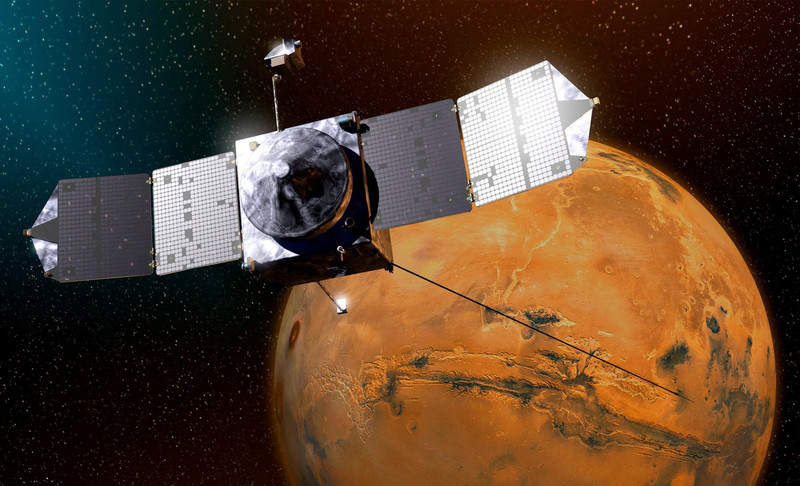
NASA's Maven Mars Orbiter Declared Out of Service After Six Months of Silence
Following an anomaly that disrupted its orbit and depleted its batteries, the Maven spacecraft, vital for understanding Mars' atmosphere, has ended its active mission. Its scientific data remains an invaluable legacy.

Windows Drops NTLM: Microsoft Boosts Security with Kerberos
Microsoft is taking a crucial step to bolster security in Windows 11, announcing the deprecation of NTLM, its oldest authentication protocol, in favor of Kerberos.
Comments (0)
No comments yet. Be the first!
Leave a comment